Citizens Property Insurance Under Fire after Hurricane Debby

On August 5, 2024, Hurricane Debby made landfall in Florida, bringing 99 mph winds, a 6-foot storm surge, and dozens of tornadoes. The storm caused extensive flooding and wind damage, leaving thousands of homes and businesses demolished and tragically resulting in eight fatalities.

Why are claims being denied?

Citizens Property Insurance, Florida’s largest insurer with over 1.2 million policies, denied 77% of claims related to Hurricane Debby. According to Newsweek, Citizens spokesperson Michael Peltier explained:

“That area received minimal wind damage but significant flood/surge damage. Since surge and flood are excluded, most of the claims have been denied or closed with no payment” (Newsweek, 2024).

Flood damage, not covered under standard property insurance, forces many homeowners without flood insurance to rely on FEMA grants for financial support.

How does this impact Florida homeowners?

The effects of Hurricane Debby highlight ongoing challenges in Florida’s insurance market. While Citizens is designed as a “last-resort” insurer, its high denial rates leave many policyholders struggling with repair costs. U.S. Senator Sheldon Whitehouse has raised concerns about the company’s financial stability, warning:

“Citizens is potentially one catastrophic storm or storm season away from losses that exceed its immediate ability to pay by billions” (Newsweek, 2024).

Floridians face rising premiums, limited coverage options, and uncertainty about their insurance claims. The state’s insurance crisis underscores the importance of understanding policy limitations and exploring flood insurance as an additional safeguard.

Source: Newsweek, Florida’s Largest Insurer Denies Hurricane Debby Claims, 2024. Read the full article here.
Tips for 2024 Derecho and Hurricane Beryl Storm Claims


Texas residents and property owners continue to be absorbed in the post-derecho of 2024, and Hurricane Beryl. Navigating the storm of insurance claims can be maddening and confusing. But that’s not surprising when your house or business is damaged or destroyed and you are dealing with property damage and loss. Here’s a brief blog to address the concerns that most Texas citizens will have after going through a tumultuous time and dealing with an insurer or insurers on a claim.

Reviewing Policy for Derecho and Beryl Claims

Whether you have suffered a home covered by your insurance or not, the first thing you want to do with your insurance company is to read – or better yet, have an attorney read – your policy. This is the document that spells out what is and is not covered in the event of windstorms, hail damage, flood damage and other natural disasters that are often a part of a derecho and a hurricane.

  • Make sure there’s no exclusion on the policy for the things you care about – for example, water damage from certain types of plumbing problems or mold.
  • You Live in the Family Home: Did you know that, for a fire-related claim, you must stay in the home and ensure it is habitable? Know Your Deductibles: Did you know that you have to pay deductibles out of pocket before insurance starts paying your claims?

Common Reasons for Claim Delays and Denials

There why an insurance claim might be delayed or denied – none of them absolute nightmare scenarios, but all of them worth knowing about so you can avoid the common traps.

  • Incomplete Documentation:

    One of the most significant causes for delays is incomplete documentation.
    • Submit all required forms and evidence promptly.
    • Keep detailed records, including photos and receipts.
  • Policy Exclusions:

    Policies often contain specific exclusions that can complicate claims.
    • Carefully read the exclusions section to understand what is not covered.
    • Consult with an attorney if you have concerns about the language of your policy.

Handling Disputes with Your Insurance Company

Unfortunately, disagreements over benefits are not uncommon between policyholders and insurers, especially after a widespread disaster has occurred. Here are some things you can do if you find yourself in a dispute.

  • Always request detailed explanations for any denials or reductions of your claim.
  • Ask for an Unbiased Review: Hire an independent appraiser to come in and review what was broken and objectively describe what was damaged.
  • Keep a Timeline: Keep a meticulous timeline of all your interactions and communications with your insurance company.
  • Document Everything: Writing is better than talking, if you get the message in writing.

Legal Recourse

And if everything else fails, filing a lawsuit may be your last resort. The Chad T. Wilson Law Firm represents policyholders in this regard.

When to Contact an Attorney

It’s not easy to know when to contact an attorney, but typically if your claim is significantly delayed, if you are wrongly denied, or if settlements are extremely low, you should consider hiring an attorney.

  • Prolonged Delays:

    If your claim is delayed without reasonable cause.
  • Unfair Denials:

    If you believe your claim has been unjustly denied.

How We Can Help

Our firm, the Chad T Wilson Law Firm, helps policyholders recover the full measure of their recoverable benefits. We are skilled insurance policy specialists and work to make sure you receive the benefits you are owed.

  • Free Consultation:

    We offer a free consultation to evaluate your case.
  • Contingency Basis:

    based on contingency fees – you don’t pay unless we recover a settlement on your behalf.

Steps to Strengthen Your Claim

Here are some things you can do to prepare yourself well in advance to make a stronger case:

  • Photograph Everything:

    Take multiple photographs of the damage from various angles.
  • Secure Temporary Repairs:

    If possible, secure temporary repairs to prevent further damage.
  • Collect Receipts:

    Obtain receipts for temporary repairs and lodging if you need to leave your home.
  • Keep All Communications:

    Save every email, letter, and note related to your claim.
  • Create a Claim Diary:

    A diary keeping track of every step you take and every person you contact can be useful.

Conclusion

Despite the trauma of surviving the 2024 derecho and Hurricane Beryl (and the aftermath of the record-breaking insurance claims), you don’t have to feel that you’re back in the deep end. You can educate yourself about your policy; know what kinds of claims are most commonly denied; and, when needed, work with an attorney.

The Chad T Wilson Law Firm is dedicated to helping Texans rebuild and recover through these trying times. If you find yourself in a fight with your insurance company over a claim, call us today for a free consultation and let us help you get the compensation you deserve.

Learn more about us at cwilsonlaw.com or call 833-942-0678 to schedule a consultation.

Chad T. Wilson – Blogs and Resources
February, 5th 2024
Updated: February, 13th 2024 11:22 a.m.
Source: https://cwilsonlaw.com/

types of water Damage Insurance Claims

Water damage claims can arise from various sources, and the types of water damage can be categorized based on the cause and the affected property. The most common types of water damage insurance claims often result from common household issues, accidents, or environmental factors.

Here are some of the most prevalent types:

Insurance Coverage

Different types of water damage may be covered or excluded under your insurance policy. Insurance policies often have specific provisions for certain types of water damage, such as sudden and accidental leaks versus gradual or long-term damage. Understanding the nature of the damage will help you determine whether it falls within the scope of your coverage.

Claim Approval 

Knowing the specific cause and type of water damage enables you to provide accurate and detailed information when filing a claim. Insurance companies require thorough documentation, and providing precise details helps in the approval process. Misidentifying the cause may lead to claim denial or delays.

Cost Estimation 

The cost of repairs can vary depending on the type of water damage. Identifying the source and extent of the damage allows you to obtain accurate estimates for repairs. This information is crucial for both you and the insurance company to assess the financial impact of the claim.

Preventing Further Damage 

Different types of water damage may require different mitigation strategies. Knowing the cause allows you to take immediate steps to prevent further damage and minimize the impact on your property. Prompt action can also demonstrate to the insurance company that you are taking responsible measures to mitigate the loss.

Professional Assistance

Identifying the type of water damage often requires the expertise of professionals, such as water damage restoration specialists or plumbers. Their assessment can provide valuable documentation for your insurance claim and help ensure that all relevant information is considered.

Understanding the type of water damage in your home is crucial for a smooth and successful insurance claims process. It helps you navigate your policy coverage, provides accurate information for the claim, ensures appropriate actions are taken to prevent further damage, and allows for accurate cost estimation for repairs.

Is your claim being denied or underpaid? Call Chad T. Wilson Law Firm, PLLC.

Speak with one of our attorney if you’re having trouble getting your claim processed or if the insurance company is attempting to pay less for the claim than is reasonable.

Contact us: https://cwilsonlaw.com/contact-us/ 

Learn more about our attorneys:
https://cwilsonlaw.com/meet-the-team-chad-t-wilson-law-firm-pllc-insurance-attorney/

Follow us on Social media:
https://beacons.ai/chadtwilsonlaw

Chad T. Wilson – Blogs and Resources
February, 5th 2024
Updated: February, 5th 2024 01:55 p.m.
Source: https://cwilsonlaw.com/

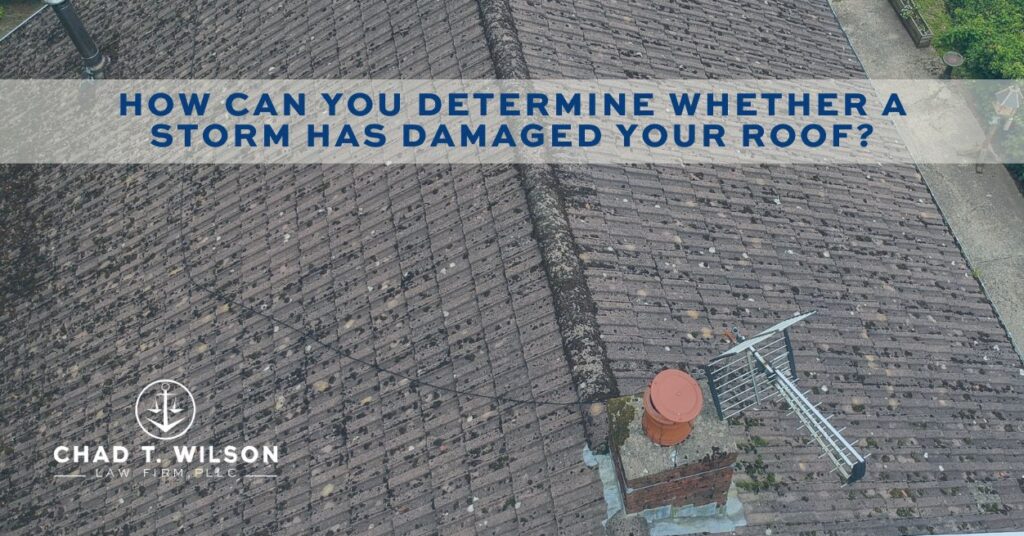
How can you determine whether a storm has damaged your roof?

Detecting damage on your roof is essential for timely repairs and insurance claims after any storm. If your home was hit by a hailstorm, windstorm, hurricane, tornado, fire, or other natural disaster, you should follow the following inspection steps.

Note: Before inspecting your roof, ensure your safety. Use a sturdy ladder and take necessary precautions to prevent accidents.

How can you determine whether a storm has damaged your roof?

What should you examine on your roof after a storm?

  • Check gutters, downspouts, and vents:
    Examine your gutters, downspouts, and roof vents for signs of damage. Look for dents, dings, or pockmarks on the metal surfaces.
  • Inspect the roof visually:
    Look for visible signs of damage from the ground. Binoculars may help you get a closer look. Pay attention to any dislodged or missing shingles.
  • Examine shingles:
    Go up on the roof to inspect the shingles more closely. Look for circular or semi-circular dents, cracks, or splits in the shingles. Hail damage may also cause granule loss, exposing the underlying asphalt.
  • Check for bruising:
    Press on the shingles gently to check for bruising. Hail damage can sometimes cause soft spots or depressions in the shingles.
  • Inspect metal components:
    Examine metal components such as flashing, vents, and chimney caps for dents or damage.
  • Look for signs of leaks:
    Check your attic for any signs of water leaks. Water stains, dampness, or mold growth are indicators that your roof may be compromised.
  • Document the damage:
    Take clear photographs of any hail damage you find. This documentation can be crucial when filing an insurance claim.
  • Professional inspection:
    If you’re unsure or if the damage seems extensive, consider hiring a professional roofing inspector. They have the expertise to assess the full extent of the damage.
  • Contact your insurance company:
    If you find roof damage, contact your insurance company as soon as possible. Provide them with the documentation and photographs you’ve taken. Follow their instructions for filing a claim.

Remember that roof damage may not always be immediately apparent. It’s advisable to inspect your roof after a severe weather event, especially if there has been hail. Early detection and prompt repairs can prevent further damage and ensure the longevity of your roof.

Is your claim being denied or underpaid? Call Chad T. Wilson Law Firm, PLLC.

Speak with one of our attorney if you’re having trouble getting your claim processed or if the insurance company is attempting to pay less for the claim than is reasonable.

Contact us: https://cwilsonlaw.com/contact-us/ 

Learn more about our attorneys:
https://cwilsonlaw.com/meet-the-team-chad-t-wilson-law-firm-pllc-insurance-attorney/

Follow us on Social media:
https://beacons.ai/chadtwilsonlaw

Chad T. Wilson – Blogs and Resources
February, 5th 2024
Updated: February, 5th 2024 01:55 p.m.
Source: https://cwilsonlaw.com/

How can you determine whether a storm has damaged your roof?

Detecting damage on your roof is essential for timely repairs and insurance claims after any storm. If your home was hit by a hailstorm, windstorm, hurricane, tornado, fire, or other natural disaster, you should follow the following inspection steps.

Note: Before inspecting your roof, ensure your safety. Use a sturdy ladder and take necessary precautions to prevent accidents.

How can you determine whether a storm has damaged your roof?

What should you examine on your roof after a storm?

  • Check gutters, downspouts, and vents:
    Examine your gutters, downspouts, and roof vents for signs of damage. Look for dents, dings, or pockmarks on the metal surfaces.
  • Inspect the roof visually:
    Look for visible signs of damage from the ground. Binoculars may help you get a closer look. Pay attention to any dislodged or missing shingles.
  • Examine shingles:
    Go up on the roof to inspect the shingles more closely. Look for circular or semi-circular dents, cracks, or splits in the shingles. Hail damage may also cause granule loss, exposing the underlying asphalt.
  • Check for bruising:
    Press on the shingles gently to check for bruising. Hail damage can sometimes cause soft spots or depressions in the shingles.
  • Inspect metal components:
    Examine metal components such as flashing, vents, and chimney caps for dents or damage.
  • Look for signs of leaks:
    Check your attic for any signs of water leaks. Water stains, dampness, or mold growth are indicators that your roof may be compromised.
  • Document the damage:
    Take clear photographs of any hail damage you find. This documentation can be crucial when filing an insurance claim.
  • Professional inspection:
    If you’re unsure or if the damage seems extensive, consider hiring a professional roofing inspector. They have the expertise to assess the full extent of the damage.
  • Contact your insurance company:
    If you find roof damage, contact your insurance company as soon as possible. Provide them with the documentation and photographs you’ve taken. Follow their instructions for filing a claim.

Remember that roof damage may not always be immediately apparent. It’s advisable to inspect your roof after a severe weather event, especially if there has been hail. Early detection and prompt repairs can prevent further damage and ensure the longevity of your roof.

Is your claim being denied or underpaid? Call Chad T. Wilson Law Firm, PLLC.

Speak with one of our attorney if you’re having trouble getting your claim processed or if the insurance company is attempting to pay less for the claim than is reasonable.

Contact us: https://cwilsonlaw.com/contact-us/ 

Learn more about our attorneys:
https://cwilsonlaw.com/meet-the-team-chad-t-wilson-law-firm-pllc-insurance-attorney/

Follow us on Social media:
https://beacons.ai/chadtwilsonlaw

Chad T. Wilson – Resources
January 15, 2024
Updated: January 15, 2024 09:20 a.m.
Source: https://cwilsonlaw.com

What to do if your pipes freeze during a winter storm 2024 Update

  • In frigid weather, set your home’s thermostat above 55 degrees.
  • Pour cold water into the faucet that is furthest away from your main valve. Water in motion prevents pipes from freezing.
  • Find emergency shut-off valves.
  • In locations without heat, insulate pipes.
  • To warm the pipes, open the cabinets and vanities.
  • Shut off the internal water supply valves.
  • Open the outside spigots to allow to drain water out.
  • Keep the outside valve open to allow any leftover water in the pipe to expand without rupturing.
  • Turn off the water at outside spigots and remove all water from the line when freezing weather is predicted.

Water utilities are responsible for water mains and pipe lines that connect to your home, but not pipes located on your property. If a pipe bursts on your property, call a plumber immediately for repairs. Help protect your pipes from potential damage and avoid costly repairs by following these steps.

Here are some tips to help avoid frozen pipelines in the future:

  • In frigid weather, set your home’s thermostat above 55 degrees.
  • Pour cold water into the faucet that is furthest away from your main valve. Water in motion prevents pipes from freezing.
  • Find emergency shut-off valves.
  • In locations without heat, insulate pipes.
  • To warm the pipes, open the cabinets and vanities.
  • Shut off the internal water supply valves.
  • Open the outside spigots to allow to drain water out.
  • Keep the outside valve open to allow any leftover water in the pipe to expand without rupturing.
  • Turn off the water at outside spigots and remove all water from the line when freezing weather is predicted.

Water utilities are responsible for water mains and pipe lines that connect to your home, but not pipes located on your property. If a pipe bursts on your property, call a plumber immediately for repairs. Help protect your pipes from potential damage and avoid costly repairs by following these steps.

How can you Prevent Your Pipes From Freezing During a Winter Storm in the future?

The pipes in unheated interior spaces, such as garages, attics, and basements, are the most vulnerable. However, pipes that pass through external walls or cupboards may also freeze. The good news is that you can maintain dry conditions in your home and running water by taking a few easy steps.

The American Red Cross, which deals with emergency preparedness, and the IBHS both offer helpful tips on how to keep your pipes from freezing and how to thaw them if they do.

Why Pipe Freezing is Such a Serious Problem:

One peculiar characteristic of water is that it expands when it freezes. Anything holding it in place, such as metal or plastic pipes, is under extreme pressure from this expansion. Expanding water has the potential to shatter pipes, regardless of how sturdy the container is.

The most commonly freezing pipes are:

  • Pipes that are subjected to extreme cold, such as sprinkler lines, swimming pool supply lines, and outdoor hose bibs.
  • Water supply pipes in unheated interior places such basements and crawl spaces, attics, garages, or kitchen cabinets.
  • Pipes that run against exterior walls that have minimal or no insulation.

Here are some tips to help avoid frozen pipelines in the future:

  • In frigid weather, set your home’s thermostat above 55 degrees.
  • Pour cold water into the faucet that is furthest away from your main valve. Water in motion prevents pipes from freezing.
  • Find emergency shut-off valves.
  • In locations without heat, insulate pipes.
  • To warm the pipes, open the cabinets and vanities.
  • Shut off the internal water supply valves.
  • Open the outside spigots to allow to drain water out.
  • Keep the outside valve open to allow any leftover water in the pipe to expand without rupturing.
  • Turn off the water at outside spigots and remove all water from the line when freezing weather is predicted.

Water utilities are responsible for water mains and pipe lines that connect to your home, but not pipes located on your property. If a pipe bursts on your property, call a plumber immediately for repairs. Help protect your pipes from potential damage and avoid costly repairs by following these steps.

What to do if your pipes freeze during a winter storm: 2024 Update

Even interior pipes can freeze in subzero conditions.

The likelihood of your pipes freezing and rupturing increases dramatically when the weather drops. According to the Insurance Institute for Business and Home Safety, burst pipes are one of the most frequent reasons for property loss during extremely cold weather. They can quickly result in thousands of dollars worth of water damage, or even more. If you experience frozen pipes at your home or business after a winter storm, continue reading this article.

Here are several steps you can take if your pipes freeze during a winter storm this 2024:

  • Activate the faucet and leave it running. In the future, a burst pipe can be avoided by letting the faucet drip, even a little bit.
  • Use a hair dryer to gently apply heat to the frozen spot. Air should be directed toward the faucet end of the pipe and progressively moved toward the coldest part. Take caution not to blow a fuse or overheat the hair dryer. Avoid using a propane torch since it might cause damage to the pipe and increase the risk of a fire.
  • Don’t stop heating until the water pressure is fully restored. Keep applying heat. Even so, after the pipe has thawed, it’s a good idea to leave the faucet open for a few minutes. This will allow the ice to get far enough away from the line.
  • Examine every faucet in your house to look for any further frozen pipes and prevent pipes from freezing in the future. It’s possible that other pipes have been impacted by one frozen pipe.

The pipes will probably take half an hour to thaw. This might change, though, based on the temperature, the length of time the pipe has been frozen, and its location. If none of the aforementioned actions work for you, you should contact a plumber for help.

How urgent is a burst pipe?

Put an end to the leaky pipes as soon as possible!

Even over brief periods of time, undetected burst pipes can result in significant property damage and higher water costs. Known as “water damage,” this problem can lead to flooding, damage walls and furniture, and ruin existing flooring.

Will homeowner insurance cover damage from frozen pipes?

Most homeowner and commercial property insurance policies, in general, will cover damage from a frozen pipe that bursts.

What to do if your insurance claim is denied or underpaid after a pipe burst causes water damage?

You might be able to file a lawsuit against your insurance provider if a burst pipe caused damage to your property and they either rejected your claim or paid you significantly less than the true cost of the damage. A pipe damage attorney can assist you in determining what to do next. Allow The Chad T. Wilson Law Firm insurance lawyers in Houston to defend your rights to justice and recompense. For a free consultation, reach out to us today. If your lawsuit is unsuccessful, there will be no payment due.

How can you Prevent Your Pipes From Freezing During a Winter Storm in the future?

The pipes in unheated interior spaces, such as garages, attics, and basements, are the most vulnerable. However, pipes that pass through external walls or cupboards may also freeze. The good news is that you can maintain dry conditions in your home and running water by taking a few easy steps.

The American Red Cross, which deals with emergency preparedness, and the IBHS both offer helpful tips on how to keep your pipes from freezing and how to thaw them if they do.

Why Pipe Freezing is Such a Serious Problem:

One peculiar characteristic of water is that it expands when it freezes. Anything holding it in place, such as metal or plastic pipes, is under extreme pressure from this expansion. Expanding water has the potential to shatter pipes, regardless of how sturdy the container is.

The most commonly freezing pipes are:

  • Pipes that are subjected to extreme cold, such as sprinkler lines, swimming pool supply lines, and outdoor hose bibs.
  • Water supply pipes in unheated interior places such basements and crawl spaces, attics, garages, or kitchen cabinets.
  • Pipes that run against exterior walls that have minimal or no insulation.

Here are some tips to help avoid frozen pipelines in the future:

  • In frigid weather, set your home’s thermostat above 55 degrees.
  • Pour cold water into the faucet that is furthest away from your main valve. Water in motion prevents pipes from freezing.
  • Find emergency shut-off valves.
  • In locations without heat, insulate pipes.
  • To warm the pipes, open the cabinets and vanities.
  • Shut off the internal water supply valves.
  • Open the outside spigots to allow to drain water out.
  • Keep the outside valve open to allow any leftover water in the pipe to expand without rupturing.
  • Turn off the water at outside spigots and remove all water from the line when freezing weather is predicted.

Water utilities are responsible for water mains and pipe lines that connect to your home, but not pipes located on your property. If a pipe bursts on your property, call a plumber immediately for repairs. Help protect your pipes from potential damage and avoid costly repairs by following these steps.

How does hail form?

How does hail form?

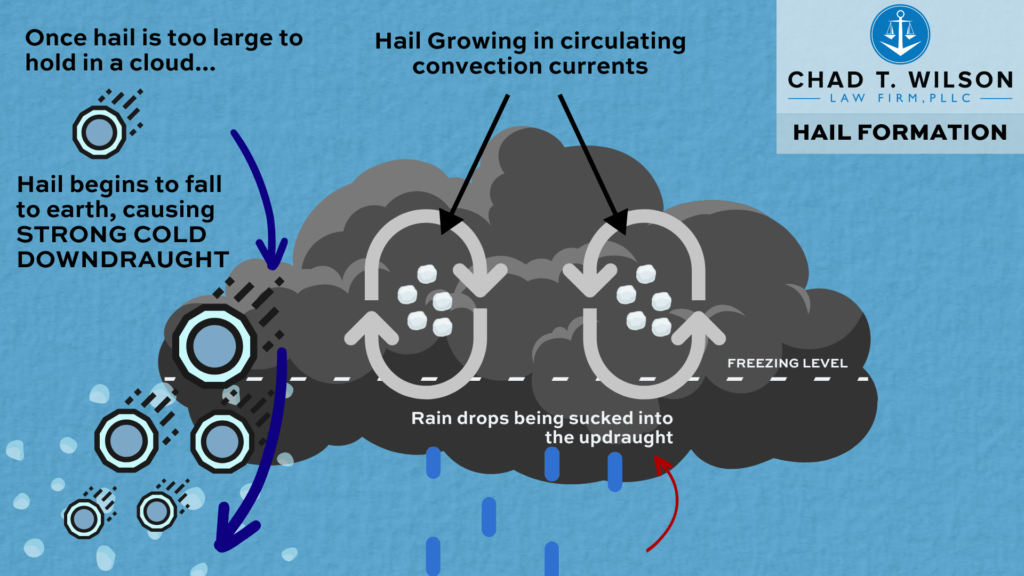
The answer is fairly simple: When water droplets are lifted by an updraft from a thunderstorm over the freezing point of the atmosphere, hail is created. The cooled water or water vapor that frozen water droplets accumulate later freezes when they come into contact with the storm. Therefore, hailstones grow as a result of this process.

Hail and other forms of freezing precipitation, such as sleet, are frequently mistaken. Sleet does not occur in thunderstorms and is more common during the colder months. Hail, by contrast, only occurs during thunderstorms because the updrafts created by the storm cause raindrops that are higher in the atmosphere to freeze.

How does Hail form? Watch the video here.

As the hailstone passes through the updraft and encounters various concentrations of water vapor and cooled water, it frequently takes on a ringed appearance.

Hailstones frequently have a ringed look. The rings stand in for the various settings that the hailstone encounters as it travels through the updraft. A white or opaque layer develops when the hailstone is in an atmosphere that is primarily composed of water vapor. This happens because, as the vapor particles freeze, little air pockets become trapped between them. A transparent layer occurs when the hailstone is surrounded by mostly super-cooled water because the super-cooled water instantly freezes into the hailstone.

In a process known as “wet growth,” hailstones can also expand by adhering to one another. Larger hailstones will move more slowly through the updraft than smaller hailstones do. These hailstones may collide and stick together if the outer layer is not totally frozen. A hailstone can expand swiftly if this technique is repeated repeatedly. Because the smaller hailstones that make up the larger hailstone keep their distinct shapes, when these aggregated hailstones hit the ground, they frequently have a rough or spiky appearance.

Hailstorm damage

Hail can cause a great deal of damage to crops and property. The size of a hailstone affects its terminal velocity, or maximum speed, which increases damage to anything the hailstone strikes. Hail the size of a baseball can travel to the ground at a speed of about 70 mph. Larger hailstones have a speed range between 90 and 100 miles per hour. That is comparable to being struck by a Major League fastball!

Hailstorm Crop harm

Hail damage can be extremely dangerous for crops. When a big hail event occurs, smaller cereals like wheat and barley may have significant yield losses. Early to mid-stage corn plants may typically recover from hail shock, while older plants are more vulnerable to harm. Hail can obliterate a plant’s leaves and topple its stalks, causing sterilization or plant death. To guard against yield losses brought on by hail damage, farmers frequently get crop insurance.

Hailstorm property damage

Property can also be seriously threatened by hail. Cars are frequently the most susceptible to damage since the sheet metal that covers them is easily dented. Hail can easily crack and shatter sunroofs, moonroofs, and windshields, which can be deadly if passengers are inside the car. Additionally, hail seriously harms roofing shingles. Larger hailstones have the potential to enter a house through the roof!

Hail that has been blown by the wind can damage siding and smash windows. This extensive damage necessitates pricey repairs and replacements. Since 1949, hail has caused more than $50 billion in property damage in current currencies in the United States. That equals annual hail damage of more than $850 million.

What is the best course of action during a hailstorm?

If you’re inside a building, go into a room inside that isn’t near any windows. Wind-blown hail can hurt people by breaking windows. Stay inside even if the hail has stopped falling since there is still a chance of lightning and high winds during a thunderstorm. Your security is crucial!

If you’re driving, get off the road and into a neighboring parking lot or off to the side. To alert other drivers that you have stopped, make sure to activate your emergency flashers. Driving during hail just makes it more likely that it may harm your car. Vehicle windows and windshields are easily damaged by hail. To shield your head from flying glass, turn your body and head toward the center of the car. In case you are struck by glass, cover yourself with blankets and soft things. Move out from under the glass if your car has a sunroof or moon roof since these roofs are particularly prone to breaking from hail.

Standing beneath a tree for cover may seem like a smart idea, but doing so simply raises your risk of getting hurt. Standing beneath a tree increases your risk of electrocution since trees are frequently struck by lightning.

The most instantly devastating type of precipitation is unquestionably hail. Install a NOAA All Hazards radio in your house or place of business to do your part to be weather-savvy. You may protect yourself from the potentially dangerous threat of hail by keeping up with local thunderstorm predictions from the National Weather Service and thunderstorm outlooks from the Storm Prediction Center.

Is your claim being denied or underpaid? Call Chad T. Wilson Law Firm, PLLC.

Speak with one of our attorney if you’re having trouble getting your claim processed or if the insurance company is attempting to pay less for the claim than is reasonable.

Insurance appraisal process

Insurance Appraisal Process

To begin the insurance appraisal process, each party needs an appraiser, including you and your insurance provider. A separate appraiser must be hired by each side. Additionally, the cost of the umpire and appraisal must be divided equally by both sides.

What is an Umpire when it comes to insurance claims?

You and your insurance provider will each employ an appraiser, and the two appraisers will collaborate to choose an appraisal umpire.

If the two appraisers are unable to agree, the appraisal umpire, a qualified, objective, and disinterested person, may make a final legally enforceable decision.

A competent umpire could be anyone capable of providing an objective assessment based on their competence in the field, such as an engineer, contractor, or retired judge.

The two appraisers may take advantage of their current professional relationships to find an umpire for an insurance appraisal. The appraisal umpire will decide if the two appraisers are unable to agree on the size of the loss.

What distinguishes appraisers from adjusters?

Appraisers are tasked with determining the worth of your property and the projected cost of repairs. Adjusters are responsible for deciding whether the insurance should pay for the damages to your car and how much.

Why should you get a property damage appraiser and a reliable attorney?

It is often more beneficial to employ both. Appraisers are typically most helpful during your property claim process. When an insurance company has partially or completely rejected a policyholder’s claim, property insurance attorneys are most helpful.

It’s important to choose the right property damage appraiser and attorney when filing a claim. The insurance appraiser you select should ideally be a specialist who is familiar with the specifics of insurance claims similar to the one you are handling.

Some appraisers might have extensive experience in particular insurance-related industries.

The following are specialists who advertise appraisal services:

  • Appraisers of Hurricane Damage
  • Appraisers of Fire Damage
  • Appraisers of Hail Damage
  • Appraisers of Wind Damage
  • Appraisers of Flood Damage
  • Appraisers of Water Damage

You can increase your chances of getting a fair result by choosing an experienced appraiser and attorney.

In conclusion, the actual appraisal procedure varies between properties and insurance policies. For information on how to initiate the appraisal procedure and how a typical appraisal functions, consult the “conditions” portion of your insurance policy.

Is your claim being denied or underpaid? Call Chad T. Wilson Law Firm, PLLC.

Speak with one of our attorneys if you’re having trouble getting your claim processed or if the insurance company is attempting to pay less for the claim than is reasonable.

Contact us: https://cwilsonlaw.com/contact-us/ 

Learn more about our attorneys:
https://cwilsonlaw.com/meet-the-team-chad-t-wilson-law-firm-pllc-insurance-attorney/

Follow us on Social media:
https://beacons.ai/chadtwilsonlaw

Contact our Chad T. Wilson Law Firm Office Locations to Schedule a free Consultation.


Chad T. Wilson is an attorney whose firm specializes in property insurance disputes.

Written By:
Alejandro Caro

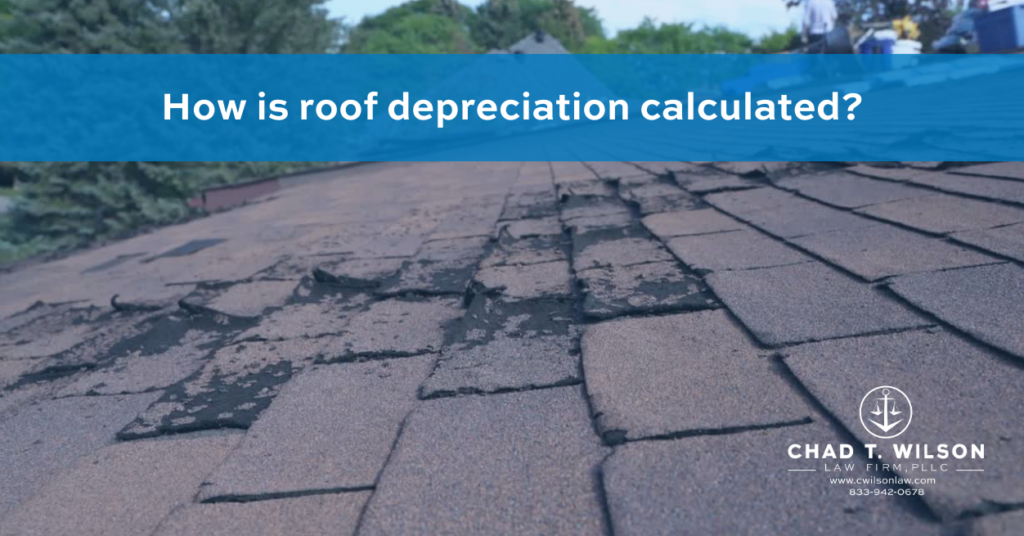
How is roof depreciation calculated?

How is roof depreciation calculated?

Insurance companies frequently use different components to determine a roof’s depreciation. The procedure entails determining the roof’s age, estimated lifespan, and degree of wear and tear.

It is simple to determine depreciation depending on age. Assume your roof has a 20-year lifespan and is five years old when it becomes damaged. Yearly, a roof loses around 5-20% of its worth.

When examining a roof, a claims adjuster will take its age and condition into account. There might be little to no adjustment for the condition if the roof is in respectable condition for its age. The adjuster may, however, increase the depreciation estimate if the roof is in bad condition, has received insufficient repairs, or has been the subject of earlier claims.

What Depreciation Means for Your Roof Insurance Claim.

As your house gets older and wears out, its value may decrease. Depreciation is a term used in finance to describe this loss of value. You need to be aware of how depreciation affects the claim procedure if a storm damages the roof of your home.

It’s vital to remember that insurance companies may use various methods to determine the depreciation of roofs. The precise calculation procedures can change depending on the insurer, the conditions of the insurance, and regional laws.

To understand how depreciation is computed in their specific scenario, policyholders should check their insurance policy and speak with their insurance agent or adjuster.

Insurance companies make an estimation of the depreciation value by taking into account the age of the roof, anticipated lifespan, wear and tear, and upkeep. To make sure that homeowners repair their roof to its pre-loss condition while accounting for its current value, this aids in determining the amount withheld and then issued as a depreciation check.

Here is an explanation of how insurance companies often determine a roof’s depreciation:

Age

The age of the roof affects its depreciation considerably. The age of the roof at the time of the claim is taken into account by insurance carriers. Older roofs have a higher likelihood of having noticeable signs of wear and tear, which can lower their value and increase the depreciation rate. The installation date or the homeowner’s information helps calculate the age.

Maintenance

 Maintenance and upkeep affect the roof’s depreciation. The homeowner’s efforts to maintain the roof, such as routine inspections, repairs, and cleaning, may be taken into account by insurance carriers. The lifespan of the roof can be increased, and depreciation can be reduced, with proper maintenance.

Wear and tear

Exposure to different elements, such as sunlight, rain, wind, and temperature changes, can cause wear and tear on the roof. To evaluate the roof’s condition and spot wear and tear indicators like curled or broken shingles, missing granules, or sagging sections, insurance adjusters inspect it. The depreciation estimate takes into account the degree of wear and tear.

Lifespan

Insurance firms also take into account the anticipated lifetime of the roofing material. The lifespans of various roofing materials vary. For instance, metal roofs can last 40–70 years, whereas asphalt shingles normally only last 20–30 years. The amount of depreciation is calculated by the insurance provider using the predicted lifespan as a percentage of the actual lifespan.

Insurance firms compute depreciation using a variety of estimating techniques. Some people may rely on depreciation charts that are considered industry standards and that determine the amount of depreciation based on the age of the roof. Others may use computer systems or internal estimators that take criteria into account while calculating the depreciation value.

Actual Cash Value

The claim’s cash value (ACV) is often determined to include the roof’s depreciation. The ACV is the depreciation-adjusted value of the damaged goods at the time of the loss. The insurance provider deducts the depreciation amount from the roof’s replacement cost value (RCV) to get the ACV.

If your roof is ever damaged, give The Chad T. Wilson Law Firm a call right away. We are here to assist you if your insurance claim is being denied or underpaid.

Is your claim being denied or underpaid? Call Chad T. Wilson Law Firm, PLLC.

Speak with one of our attorney if you’re having trouble getting your claim processed or if the insurance company is attempting to pay less for the claim than is reasonable.

Contact us: https://cwilsonlaw.com/contact-us/ 

Learn more about our attorneys:
https://cwilsonlaw.com/meet-the-team-chad-t-wilson-law-firm-pllc-insurance-attorney/

Follow us on Social media:
https://beacons.ai/chadtwilsonlaw

Chad T. Wilson – News
September 25, 2023
Updated: September 25, 2023 11:20 a.m.
Source: https://cwilsonlaw.com/

What is the Time Limit for Filing a Claim for Property Damage?

People often put off filing their insurance claims for many reasons. If you own a home, live in an apartment, or run a business, you might put off filing your claim. You may also delay calling your insurance provider because of time, work, or life in general. However, some are not aware of the time limit for filing a claim for property damage

What-is-the-time-limit-for-filing-a-claim-for-property-damage

How long do you have to file your claim?

You could be let down if you were hoping for a straightforward response to the question of time restrictions. Unfortunately, solutions to time-related questions can be surprisingly difficult. State regulations may impact the amount of time you have to submit a claim, but your exact deadlines are sometimes determined more by the terms of your insurance policy than by state law. The majority of these questions have their direct answers in your policy. The length of time you have to act, however, may also depend on a variety of other factors.

The best course of action is to file your property damage claim as soon as possible.

You must “give prompt notice” to the insurance company following a loss, which is a requirement of nearly all homeowner’s insurance policies. This duty is frequently stated in the “Your Duties After Loss” clause. Acting fast gives your insurance provider time to look into the claim, identify the damages, and estimate the cost of repairs.

Your claim can be rejected if you don’t provide the insurance company with “prompt notice” of the loss.

The majority of insurance contracts provide that to be covered by the policy (for example, by promptly notifying a loss), you must adhere to all of its terms and conditions. Your claim can be rejected if you don’t provide “prompt notice” of the loss to the insurance company as required under the policy.

When property owners fail to provide “prompt notice” of a loss, the carrier can’t fully assess the cause of the damage or the required repairs because they can’t notice the damage when it’s fresh. Property insurance claims may be rejected, and your window of opportunity to get benefits may close if you disclose them too late.

How does a “prompt notice” work?

In general, prompt notice denotes a fair period of time after you become aware of the loss to report it. You are required by the policy as a property owner to disclose any losses that might be covered right away. You don’t have to wait until you can verify that the incident caused all of the damage or until you have a general contractor give you a price. Reporting the claim as soon as possible is the best line of action.

Get legal representation.

You must move quickly and learn about the deadlines that apply in your state if you are overwhelmed or having problems resolving your claim. Gathering all the data required to take action can take some time.

As you wait for the insurance provider to respond, you should also be prepared to limit further losses. You are responsible for doing everything you can to stop more losses, even though you should wait to make full repairs until everything has been properly documented.

Is your claim being denied or underpaid? Call Chad T. Wilson Law Firm, PLLC.

Speak with one of our attorney if you’re having trouble getting your claim processed or if the insurance company is attempting to pay less for the claim than is reasonable.

Contact us: https://cwilsonlaw.com/contact-us/ 

Learn more about our attorneys:
https://cwilsonlaw.com/meet-the-team-chad-t-wilson-law-firm-pllc-insurance-attorney/

Follow us on Social media:
https://beacons.ai/chadtwilsonlaw

Chad T. Wilson – News
September 25, 2023
Updated: September 25, 2023 11:20 a.m.
Source: https://weather.com/

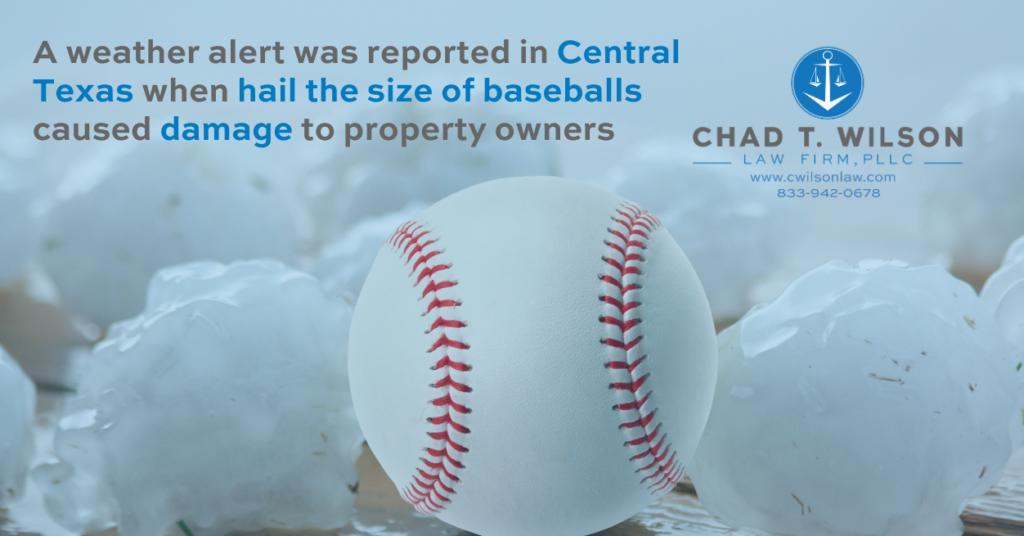
A weather alert was reported in Central Texas when hail the size of baseballs caused damage to property owners this past weekend.

Sunday night, severe storms swept through Central Texas, producing large hail. Police in Round Rock report that numerous residences and businesses sustained significant property damage. Additionally, there were sporadic power disruptions brought on by the storm.

Central Texas hail the size of baseballs caused damage to property owners

The City of Austin’s Homeland Security and Emergency Management division issued the following advice if your property has hail damage:

  • If you have insurance, get in touch with your agent to submit a claim.
  • Before cleaning up, take pictures and establish a note of all the damages you have.
  • Keep all of your invoices for cleaning and repairing damage.
  • Be wary of unauthorized door-to-door proposals for home remodeling. Your best bet, if your house requires repairs, is to contact a few local home repair companies and then check their references.
  • Selecting a contractor with a recognized physical address is a smart idea. In case issues emerge, you should make sure you can track down everybody who worked on your home.

On Sunday night, the City of Round Rock announced that it was one of the storm’s victims as well. 

In order to submit a claim to your insurance agent or firm, the TDI advised that you should: 

  • Make a note of everyone you spoke with about your business or home.
  • Be prepared to respond to inquiries on the damage.
  • If you require assistance right away, inquire about an advance payment.
  • Ask about the cost of living. If you are unable to reside in your home due to damage that is covered by your insurance, the majority of plans will help with some of your costs. Maintain your receipts for these expenses.

Call the Red Cross at 800-733-2767 if you require emergency shelter, food, or water.

TDI advises the following when it comes to fixing any harm to your property:

  • Make certain that your adjuster and firm have your current phone number.
  • Ensure that the street can see your address. You might need to put up a sign in the yard with your address on it.
  • When the adjuster comes, make an effort to be present and point out all damage.
  • Before you settle the claim, get several quotes from contractors and evaluate them in comparison to the adjuster’s report.
  • Keep the receipts for the deductible you paid on the claim. 

Is your claim being denied or underpaid? Call Chad T. Wilson Law Firm, PLLC.

Speak with one of our attorney if you’re having trouble getting your claim processed or if the insurance company is attempting to pay less for the claim than is reasonable.

Contact us: https://cwilsonlaw.com/contact-us/ 

Learn more about our attorneys:
https://cwilsonlaw.com/meet-the-team-chad-t-wilson-law-firm-pllc-insurance-attorney/

Follow us on Social media:
https://beacons.ai/chadtwilsonlaw

Contact our Chad T. Wilson Law Firm Office Locations to Schedule a free Consultation.


Chad T. Wilson is an attorney whose firm specializes in property insurance disputes.

Written By:
Alejandro Caro

1 2 3 4 5 6