Pine Island Bayou Flood Damage Is Keeping Sour Lake Properties Underwater

Pine Island Bayou Flood Damage

By Chad T. Wilson Law Firm Staff — based on reporting by the National Weather Service Lake Charles office, September 9–10, 2026. Read the original reporting here.

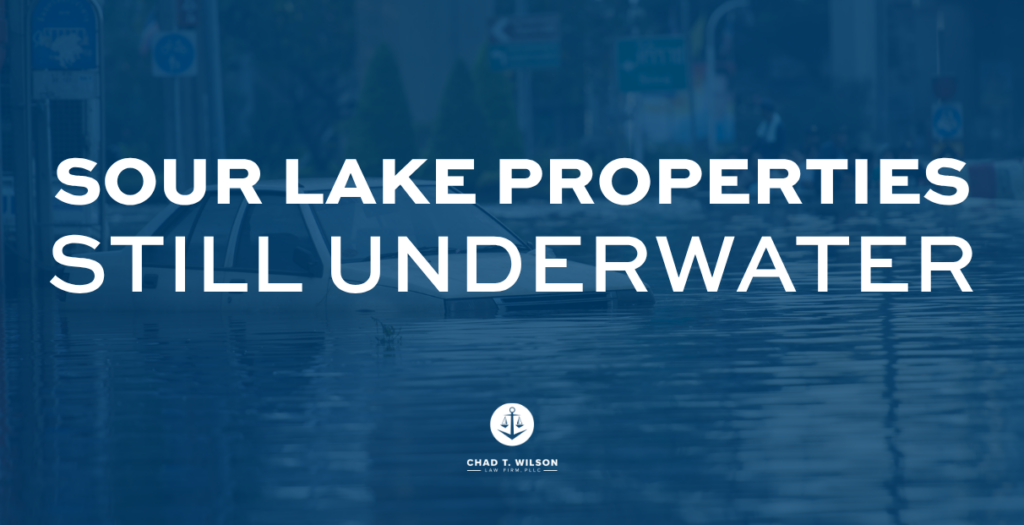
If you own a home or business near Sour Lake, Pine Island Bayou flood damage is not yet a closed chapter. Late Wednesday, September 9, the National Weather Service office in Lake Charles reported the bayou near Sour Lake sitting at 25.4 feet at 10:45 p.m. CDT — still above its 25-foot flood stage — and extended its flood warning again, this time through Thursday evening, September 10. Low portions of Old Sour Lake Road remained underwater, and minor flooding was both occurring and forecast. For policyholders still working through losses tied to the remnants of Tropical Storm Edouard, that second extension carries a quiet but important lesson: the timeline in your claim file should reflect what actually happened at your property — not an earlier forecast of when the water was supposed to be gone.

Key Takeaways

  • Pine Island Bayou near Sour Lake stayed above its 25-foot flood stage into Thursday, September 10, and the NWS extended its flood warning for a second time.
  • Delayed access can push back inspections, mitigation, and temporary repairs — and that delay is not the policyholder’s fault.
  • An earlier forecast of when the water would recede is not proof that a property was dry or reachable on any given date.
  • Photograph water lines, barricades, standing water, moisture readings, and incomplete repairs, and keep a dated log of every canceled or delayed appointment.
  • Whether flood water is covered depends on your policy, so preserving property-specific records now protects your options later.

What the National Weather Service Actually Reported

According to the National Weather Service in Lake Charles, the Pine Island Bayou gauge near Sour Lake read 25.4 feet at 10:45 p.m. CDT on Wednesday, September 9 — above the 25-foot flood stage — with minor flooding occurring and expected to continue. The office extended its flood warning through Thursday evening, September 10, marking the second meaningful extension of the expected recession timeline. Forecasters projected the bayou would fall below flood stage late Thursday morning, but a forecast is not the same as a confirmed observation. Until a later gauge reading confirms the drop, the responsible assumption is that conditions on the ground can still change.

That distinction matters more than it might seem. Recession forecasts are estimates, and this one has already moved twice. If your property sits in Sour Lake, Hardin County, or Jefferson County, the water near you may recede on a different schedule than the headline gauge suggests.

Why Delayed Access Matters to a Pine Island Bayou Flood Damage Claim

When roads stay closed and standing water lingers, the practical consequences stack up. Adjusters and inspectors may not be able to reach the property. Mitigation crews may not be able to start drying or removing damaged materials. Temporary repairs may sit unfinished, and moisture may continue to spread behind walls and under floors. Businesses may lose additional days of operation. None of that is within the policyholder’s control — yet the gaps it creates can later be misread as a lack of diligence.

This is where documentation does its heaviest lifting. If an inspection was delayed because a road was barricaded, that is a fact worth capturing. If a mitigation appointment was pushed back because a crew could not safely reach the property, that is worth capturing too. The goal is simple: make sure the record shows the delay was caused by conditions, not by inaction.

What to Document While the Water Is Still Down There

The most useful evidence is the kind that is easy to gather now and impossible to recreate later. Where it is safe to do so, photograph and date water lines on walls and foundations, road barricades and closed access routes, standing water on and around the property, moisture-meter readings if you have them, and any temporary repairs that remain incomplete. Keep a running log of every contractor, adjuster, or mitigation appointment that was delayed or canceled because of flooding, noting the date, the reason, and who you spoke with.

Because flood water is generally excluded under standard homeowners policies and is typically addressed through separate flood coverage, whether and how your loss is covered depends on the specific language of your policy. That is all the more reason to preserve property-specific facts — gauge readings, photos, and a clean timeline — rather than leaning on general forecasts. Good records keep your options open.

If Your Claim Was Denied, Delayed, or Underpaid

If you are already seeing friction on a flood or water loss, a few steps tend to help. Keep every piece of written communication from your insurer, and put important phone conversations in writing with a follow-up email. Ask for any denial or reservation-of-rights position in writing, with the policy language the carrier is relying on. Do not throw away damaged materials before they are documented, and hold on to receipts for temporary repairs and mitigation. If the process stalls or a decision does not square with what you experienced, it may be time to ask a policyholder-side firm to review the file.

How Chad T. Wilson Law Firm Can Help

Chad T. Wilson Law Firm represents policyholders — homeowners and businesses — not insurance companies. Our team has resolved more than 6,000 claims, and we handle water damage claims and delayed claims for property owners across Texas and beyond. From our headquarters in Webster, TX, we help people cut through the confusion after a flood, document what actually happened, and hold carriers to the terms of the policy. We work on contingency — no recovery, no fee — so getting a straight answer about your options costs nothing up front. Denied, delayed, or underpaid? Call us at (833) 942-0678.

Practice Areas

  • Water damage claims
  • Storm and flood damage claims
  • Delayed insurance claims
  • Denied insurance claims
  • Underpaid insurance claims

This article is for informational purposes only and is not legal advice. Coverage depends on the specific terms of your policy. No outcome is guaranteed.

Sources: NOAA/NWS — Pine Island Bayou near Sour Lake gauge (SOLT2); National Weather Service, Lake Charles; Yale Climate Connections — Edouard’s flash-flood impact on eastern Texas

Wind Driven Rain Versus Flood Water: What Louisiana Policyholders Should Know

Wind driven rain versus flood water

By Chad T. Wilson Law Firm Staff — based on reporting by Weather.com, September 1, 2026. Read the original reporting here.

As Edouard’s moisture lingers over southeast Louisiana, the distinction between wind-driven rain versus flood water is quietly deciding how many claims will be handled. Forecasters at the National Weather Service in New Orleans/Baton Rouge have called for numerous showers and thunderstorms through the weekend, with heavy downpours, frequent lightning, and localized flooding. To a homeowner mopping up, water is water. To a property policy, where that water came from — and how it got in — can be the difference between a covered loss and a denied one.

Key Takeaways

  • Wind-driven rain versus flood water is a coverage line, not just a weather description.
  • Rain that enters through a wind-created opening is often analyzed under a homeowners or wind policy; rising surface water is typically a flood-policy question.
  • Louisiana losses frequently require a layered look at wind, rain entry, drainage, flood, and code or ordinance issues.
  • Document the point of entry and the direction of damage, not just the wet result.
  • Having both a property policy and separate flood coverage does not settle the question by itself — the cause and sequence still matter.

Wind-Driven Rain Versus Flood Water: The Core Distinction

Most standard property policies can respond to rain that enters after wind creates an opening — a lifted shingle, a broken window, a torn soffit. That is wind-driven rain: the storm breached the building, and water followed. Flood water is different. When water rises from the ground — overflowing bayous, backed-up drainage, sheet flow across a yard — that is generally the province of a separate flood policy, often through the National Flood Insurance Program. The same storm can produce both, sometimes in the same room, which is exactly why carriers scrutinize the cause so closely.

Why Louisiana Claims Get Layered

Southeast Louisiana adds its own complications. Drainage capacity, local code and ordinance requirements, and the interplay between wind and water can turn a single wet floor into a multi-part analysis. A roof damaged by wind, rain that entered through that damage, and floodwater that later rose from the street may each be governed by different coverage. Sorting that out after the fact — without good documentation — often becomes a dispute rather than a straightforward payment.

Document the Path of the Water

The most useful evidence answers a simple question: how did the water get in? Photograph any exterior openings and roof or window damage before you repair them. Capture water lines on interior and exterior walls; a line that starts high suggests rain from above, while a line that rises from the floor suggests water from below. Note the direction of staining and where the water pooled. Keep damaged materials where it is safe to do so, and log the timing of each stage. These details let an adjuster — or a court — see the difference between wind-driven rain and flood water rather than guess at it.

Don’t Assume Your Coverage Answer

Policyholders sometimes assume that because they have flood coverage, everything is handled, or that because they only have a homeowners policy, nothing water-related is covered. Neither assumption is safe. The cause, the point of entry, and the sequence drive the outcome, and the only way to know how your policies respond is to read them against the actual facts of your loss.

If Your Claim Was Denied, Delayed, or Underpaid

If your claim was denied, delayed, or underpaid because the carrier called your loss “flood” when wind opened the building first, ask it to identify the specific policy language and the evidence behind that conclusion. Request the adjuster’s report and estimate, and preserve your own photos and materials. When wind-driven rain and flood water are both in play, a one-word label on a denial letter rarely tells the whole story.

How Chad T. Wilson Law Firm Can Help

Chad T. Wilson Law Firm represents policyholders — not insurers — and has resolved more than 6,000 property insurance claims. Our team can review how your policies treat wind and water, help you document the path of entry behind your storm damage claims and water damage claims, and press for a fair reading when a carrier leans on the flood label to avoid a wind-driven loss. Headquartered in Webster, Texas, we represent policyholders nationwide on contingency: no recovery, no fee. Denied, delayed, or underpaid? Call (833) 942-0678.

Practice Areas

  • Storm damage claims
  • Water damage claims
  • Wind versus flood coverage disputes
  • Denied, delayed, and underpaid claims

This article is informational only and is not legal advice. Coverage depends on your specific policies and facts, and no outcome is guaranteed.

Sources: Weather.com, National Hurricane Center, NWS New Orleans/Baton Rouge

Texas Property Insurance Affordability Review Reaches a Key Deadline

Texas Property Insurance Affordability Review

By Chad T. Wilson Law Firm Staff — based on reporting by the Office of the Texas Governor, August 24, 2026. Read the original reporting here.

The Texas property insurance affordability review reached a notable checkpoint today. On August 24, 2026, Governor Greg Abbott directed the Texas Department of Insurance (TDI) to identify immediate administrative actions and possible statutory changes aimed at rising property-and-casualty insurance costs, and the governor’s office set a deadline: those recommendations were due back by Monday, September 14, 2026. For Texas homeowners and commercial property owners who have watched their premiums climb, it is a development worth understanding clearly — including what it is, and what it is not.

Key Takeaways

  • Governor Abbott directed the Texas Department of Insurance on August 24, 2026 to pursue measures addressing property insurance affordability, with recommendations due to his office by September 14, 2026.
  • The directive itself is public; the recommendations returned to the governor’s office are a separate document that had not been publicly released as of this writing.
  • The directive is not a new law and does not, by itself, create any new right for policyholders today.
  • Texas homeowners’ premiums have risen sharply in recent years — the governor’s office cites a 79% increase over six years — which is the backdrop for the review.
  • Any statutory proposals coming out of this process would be aimed at the 2027 Texas legislative session, not immediate rule changes.

What the Texas property insurance affordability review actually is

The affordability review began with a directive, not a statute. According to the governor’s August 24 release, TDI was asked to “put consumers first” and to identify steps that could make property insurance more affordable, along with further administrative measures and proposed statutory changes ahead of the 2027 legislative session. The governor’s office framed the urgency in plain numbers, stating that “the average annual homeowners’ insurance premium in Texas has risen 79 percent in six years.”

Public reporting on the directive describes several specific items TDI was asked to pursue: factoring “FORTIFIED” roof status into rate calculations, addressing the practice of denying or non-renewing policies based on the age of a home or its components, issuing a bulletin on so-called “price optimization,” standing up an insurance fraud task force, and studying the drivers of claims costs across auto and homeowner markets. Those are the contents of the directive that launched the review. They are the starting instructions — not conclusions, and not enacted rules.

Why the September 14 deadline matters — and why it doesn’t change your claim today

The deadline that arrived today is a submission deadline. It marks when TDI’s recommendations were due back to the governor’s office, not a moment when any new protection took effect. Delivering a document to the governor’s office also does not automatically make that document public, and as of this writing the actual recommendations had not been located in public sources. We think the honest position is a patient one: the recommendations, once released, deserve to be read in full before anyone translates them into guidance for policyholders.

For a policyholder navigating a claim right now, the practical takeaway is steady rather than dramatic. Your policy, your deadlines, and your rights under existing Texas law are what govern your claim today. A regulatory review underway in Austin does not change the terms of the contract you are living under, and it is not a reason to wait on filing, documenting, or disputing a claim that needs attention now.

What the review signals for Texas policyholders

Even without the final recommendations in hand, the direction of the conversation is telling. Several of the items in the directive touch issues policyholders raise with us regularly: how roofs are rated and inspected, whether the age of a component should be grounds for a denial or non-renewal, and how personal data unrelated to actual risk factors into pricing. If the recommendations propose statutory changes on any of these fronts, they could preview some of the larger property-insurance questions the Texas Legislature takes up in 2027.

None of that is settled, and we will not pretend to know what the recommendations say before they are public. What we can say is that affordability and fair claims handling are two sides of the same coin. Lower premiums mean little if a covered loss is later denied, delayed, or underpaid — and that is the terrain where policyholders most often need an advocate.

If your claim was denied, delayed, or underpaid

Regardless of what any review recommends, a few steps tend to serve policyholders well when a claim goes sideways:

  • Get the reason in writing. If an insurer denies or reduces a claim, ask for the specific policy language and the basis for the decision in writing.
  • Document everything. Photographs, dated notes, repair estimates, and a log of every call and email create a record you can rely on later.
  • Watch the calendar. Texas claims carry deadlines for the insurer and for you; missing one can cost you options.
  • Read before you sign. A quick settlement offer is not always a full one, and a signed release can close the door on additional recovery.
  • Ask questions early. Understanding your rights before you accept an outcome is easier than unwinding one afterward.

How Chad T. Wilson Law Firm Can Help

Chad T. Wilson Law Firm represents policyholders — never insurance companies — and has resolved more than 6,000 insurance claims. If your claim has been denied or you believe an insurer is not honoring the coverage you paid for, our team can review your policy, explain your options, and, where appropriate, press your claim through our work as an insurance claim lawyer. Headquartered in Webster, Texas, we represent policyholders nationwide, and we work on contingency: no recovery, no fee. Denied, delayed, or underpaid? Call us at (833) 942-0678 for a straightforward look at where you stand.

Practice Areas

  • Denied insurance claims
  • Delayed insurance claims
  • Underpaid insurance claims
  • Storm and hail damage claims
  • Hurricane and windstorm damage claims
  • Bad faith insurance claims

This article is provided for informational purposes only and is not legal advice. It describes a regulatory directive and does not report the contents of any recommendations that have not been publicly released. No specific outcome is promised or guaranteed. For advice about your situation, consult a licensed attorney.

Sources: Office of the Texas Governor — Governor Abbott Directs TDI to Take Action to Make Property Insurance More Affordable (Aug. 24, 2026); Foley & Lardner — What Insurers Need to Know Now (Aug. 2026); National Law Review — Governor Abbott Directs the Texas Department of Insurance to Address Rising Property and Casualty Insurance Costs

Can a Power Outage Become a Business Interruption Claim?

power outage business interruption claim

By Chad T. Wilson Law Firm Staff — based on reporting by 12NewsNow, September 3, 2026. Read the original reporting here.

For many Southeast Texas businesses, the hardest part of Edouard was not a hole in the roof — it was the dark. Reporting indicated that, at the peak, roughly 80,000 Entergy Texas customers lost power, with restoration slowed by flooding, downed trees, and blocked roads across counties including Chambers, Liberty, and Montgomery. When the lights stay off for days, a power outage business interruption claim may become one of the most important parts of a commercial policyholder’s recovery — but only if the loss is documented correctly from the start.

Key Takeaways

  • A power outage business interruption claim often turns on your specific policy language, including any off-premises power or utility-service provisions.
  • Separate your losses clearly: physical damage, spoiled inventory, equipment failure, loss of access, and loss of utilities are treated differently.
  • Business-interruption and extra-expense coverage can apply even where the building itself was barely touched.
  • Preserve sales records, spoilage logs, generator and relocation costs, and payroll continuation.
  • Read the policy before assuming an outage is excluded — many require a specific trigger, waiting period, or physical-damage link.

How a Power Outage Business Interruption Claim Actually Works

Business-interruption coverage is designed to replace income a business loses when a covered event forces it to slow down or close. Extra-expense coverage helps pay the added costs of keeping the doors open — a rented generator, temporary relocation, or expedited restocking. The wrinkle with outages is the trigger. Some policies pay for lost income only when the loss follows direct physical damage to your own property. Others include off-premises power or utility-service interruption endorsements that reach damage at a substation or line miles away. A few impose a waiting period, meaning the first day or two of an outage is not covered. None of this is visible without reading your particular policy carefully.

Separate the Losses, Don’t Blend Them

After an outage, it is tempting to lump everything into one number. Carriers rarely see it that way. Keep distinct records for spoiled or unusable inventory, refrigeration and equipment that failed, the revenue you lost while closed, and any customers or contracts you could not serve because roads or access were cut off. A restaurant’s spoiled walk-in cooler, a clinic’s ruined vaccines, and a shop’s lost weekend sales are three different pieces of the same claim, and documenting them separately makes each one easier to prove.

What to Preserve Now

Pull the records that show your normal operations and what changed. That means point-of-sale and sales history for comparable periods, spoilage and disposal logs with photos, invoices for generators, fuel, dry ice, and temporary space, and payroll records if you kept staff on during the closure. Save utility notices, outage timelines, and any communication about when power was expected to return. A clear, dated timeline of when you closed, why, and when you reopened is the backbone of the claim.

If Your Claim Was Denied, Delayed, or Underpaid

Outage-driven claims are among the most likely to be denied, delayed, or underpaid, often because the carrier points to a waiting period or a physical-damage requirement. If that happens, ask the insurer to identify the exact provision it is relying on, request the adjuster’s worksheet, and keep documenting your ongoing losses — business interruption can continue to accrue while a dispute is open. An estimate that ignores extra expense or cuts your lost-income period short is worth a second look before you accept it.

How Chad T. Wilson Law Firm Can Help

Chad T. Wilson Law Firm has resolved more than 6,000 property insurance claims for policyholders, and our commercial work often lives in exactly these details. As an experienced insurance claim lawyer team, we can read your business-interruption and utility-service provisions, help you assemble the income and expense proof that carriers respect, and connect the outage to the underlying storm damage claims where the policy requires it. Headquartered in Webster, Texas, we represent policyholders nationwide on contingency: no recovery, no fee. Denied, delayed, or underpaid? Call (833) 942-0678.

Practice Areas

  • Commercial and business-interruption claims
  • Storm damage claims
  • Denied, delayed, and underpaid claims
  • Extra-expense and spoilage losses

This article is informational only and is not legal advice. Coverage depends on your specific policy and facts, and no outcome is guaranteed.

Sources: 12NewsNow, Entergy Storm Center, CW39 Houston

A Second Date of Loss Water Damage Event Deserves Its Own Record

second date of loss water damage

By Chad T. Wilson Law Firm Staff — based on reporting by the National Weather Service Lake Charles office, September 10, 2026. Read the original reporting here.

For property owners still drying out from the remnants of Tropical Storm Edouard, a second date of loss water damage event may be sitting in this week’s forecast. The National Weather Service in Lake Charles has placed a multi-day Marginal Risk for excessive rainfall across portions of Southeast Texas and Louisiana from Thursday, September 10, through Saturday, September 12, warning that typical Gulf Coast downpours could produce several rounds of storms over low-lying, poorly drained areas already sensitive to more water. This is not a confirmed new catastrophe — but if fresh rain finds its way through a damaged roof or a temporary covering, the water that enters may be its own, separately documentable loss. Treating it that way from the first drop can protect your claim.

Key Takeaways

  • NWS Lake Charles has a Marginal Risk for excessive rainfall across parts of Southeast Texas and Louisiana from September 10 through September 12.
  • New rain entering through existing damage can create a later, separately documentable date of loss.
  • Logging new water intrusion by exact date, time, room, and apparent entry point helps keep the events distinct.
  • Clear records make it harder for a carrier to fold a new loss into an earlier one — or to argue the two cancel each other out.
  • Whether a loss is covered depends on your policy, so preserving proof of each event matters more than guessing at coverage.

What the Forecast Actually Says

The National Weather Service office in Lake Charles reports that ordinary Gulf Coast rainfall may generate multiple rounds of storms through Saturday, with a Marginal Risk for excessive rainfall in place across portions of the forecast area. Forecasters are careful to note this is not a verified new disaster — it is a heightened risk over ground that is already saturated and, in places like the Pine Island Bayou basin near Sour Lake, still recovering from recent flooding. The concern is not a single dramatic event but the cumulative effect of repeat rain on structures that have not fully dried and repairs that are not yet complete.

Why a Second Date of Loss Water Damage Event Matters

In property insurance, when water entered — and how — can be as important as how much damage it caused. Repeat rain over damaged property can do several things at once. It can cause new water entry through roofs or temporary coverings that were holding until now. It can slow structural drying and mold remediation already underway. And it can create a later date of damage that is genuinely separate from the original loss.

That separation cuts both ways. A clear, well-dated record of a new intrusion helps establish that the damage is real and recent. Without one, a carrier may fold the new water into the earlier claim, dispute when and how the interior got wet, or treat overlapping events as one. Careful documentation is what keeps a second loss from quietly disappearing into the first.

How to Document New Water Intrusion Before and After the Rain

The best time to prepare is before the next round arrives. If you have active damage from Edouard, photograph your temporary repairs and interior conditions now, while they are dry, so there is a clear “before” to compare against. Save the rainfall alerts and any warnings for your area, along with contractor communications about scheduling and materials.

When new water does come in, log it precisely: the exact date and time, the specific room, and the apparent point of entry. Photograph the intrusion as it happens where it is safe to do so, and record moisture-meter readings if you have them. Keep these records separate from your original loss file so the two events stay distinct. The more specific the record, the harder it is to blur one loss into another.

If Your Claim Was Denied, Delayed, or Underpaid

If a carrier is already questioning your loss — or if a new intrusion gets waved off as “the same old damage” — a measured response helps. Keep every written communication, and follow up important calls with a confirming email. Ask for any denial or coverage position in writing, along with the policy language behind it. Preserve damaged materials until they are documented, and hold on to receipts for mitigation and temporary repairs. If a decision does not match what you lived through, a policyholder-side review of the file can clarify where you stand.

How Chad T. Wilson Law Firm Can Help

Chad T. Wilson Law Firm represents policyholders — never insurance companies. With more than 6,000 claims resolved, our team handles water damage claims and underpaid claims for homeowners and businesses across Texas and beyond. Headquartered in Webster, TX and serving policyholders nationwide, we help people document overlapping storm losses, keep separate events separate, and hold carriers to the terms of the policy. We work on contingency — no recovery, no fee. Denied, delayed, or underpaid? Call us at (833) 942-0678.

Practice Areas

  • Water damage claims
  • Storm and flood damage claims
  • Underpaid insurance claims
  • Denied insurance claims
  • Delayed insurance claims

This article is for informational purposes only and is not legal advice. Coverage depends on the specific terms of your policy. No outcome is guaranteed.

Sources: National Weather Service, Lake Charles; Yale Climate Connections — Edouard’s flash-flood impact on eastern Texas; AccuWeather — Edouard brings flash flooding to Texas

Edouard Flood Damage Documentation: Where Southeast Texas Policyholders Should Start

Southeast Texas Edouard Flood

By Chad T. Wilson Law Firm Staff — based on reporting by ABC News, September 2, 2026. Read the original reporting here.

As the water recedes across Southeast Texas, careful Edouard flood damage documentation is the single most valuable thing a homeowner or business owner can do right now. Reporting described nearly two feet of rain in parts of the region, flooded homes and roads, downed trees, and rescue operations, with Hardin County among the hardest-hit areas. When a loss involves both wind and water, the quality of your records — not the size of the storm — often decides how smoothly your claim moves forward.

Key Takeaways

  • Strong Edouard flood damage documentation starts before cleanup: photograph everything, then mitigate.
  • Wind, wind-driven rain, roof openings, surface water, and sewer backup are treated differently by many policies, so record how the damage happened.
  • Keep damaged materials when you safely can — carpet cuttings, drywall sections, and soaked belongings can matter later.
  • Save receipts, utility records, and every communication with contractors and your carrier.
  • Do not assume any single cause is covered or excluded; a coverage review comes after the evidence is preserved.

Why Edouard Flood Damage Documentation Decides So Many Claims

Property policies rarely treat “storm damage” as one thing. A wind-created opening in the roof that let rain in is analyzed differently from rising surface water, which is analyzed differently again from a sewer backup. After a complex event like Edouard, carriers frequently raise disputes over flood versus wind, wind-driven rain, and the exact sequence of events. The policyholder who can show, with time-stamped evidence, how the damage unfolded is in a far stronger position than one relying on memory weeks later.

Think of it the way a ship’s crew keeps a log: steady, dated entries that no one can later argue about. Your phone is your logbook. Every photo you take today is a fixed point on the chart.

What to Photograph and Preserve

Before you move anything, capture wide shots of each affected room and the exterior, then close-ups of specific damage. Photograph any roof or wall openings, water lines on the walls, standing water, and damaged contents in place. Note the date and time — most phones record this automatically, and it is worth confirming that setting is on.

When you begin mitigation, keep samples of what you remove where it is safe to do so: a section of soaked drywall, a piece of ruined flooring, or a photograph of a serial-numbered appliance before it goes to the curb. Save invoices for tarps, pumps, drying equipment, and any emergency repairs. Preserve utility records and any closure or evacuation notices. Keep a simple written chronology: when the wind arrived, when you first saw interior water, when water rose, when the power failed, and when you started drying out.

Mitigate — but Document First

Most policies require you to take reasonable steps to prevent further damage, so drying out and covering openings is important and expected. The key is to document before and during that work, not to choose between protecting your home and protecting your claim. A few minutes of photos before the drywall comes out can save weeks of dispute later.

If Your Claim Was Denied, Delayed, or Underpaid

Sometimes even a well-documented loss meets resistance. If your claim was denied, delayed, or underpaid, keep every letter and email, ask your carrier to identify the specific policy language it is relying on, and request a copy of any field adjuster’s report and estimate. Do not throw away damaged materials while a dispute is open. If an estimate seems low or a denial seems to gloss over the wind-driven portion of your loss, it is reasonable to have the file reviewed before you accept it as final.

How Chad T. Wilson Law Firm Can Help

Chad T. Wilson Law Firm represents policyholders — never insurance companies — and has resolved more than 6,000 property insurance claims. Our team can review your policy, help you organize your water damage claims and storm damage claims evidence, and press for a fair evaluation of both the wind and water elements of your Edouard loss. Headquartered in Webster, Texas, we represent policyholders across the country on a contingency basis: no recovery, no fee. Denied, delayed, or underpaid? Call us at (833) 942-0678 for a straightforward look at where your claim stands.

Practice Areas

  • Storm damage claims
  • Water damage claims
  • Denied, delayed, and underpaid claims
  • Commercial property claims

This article is informational only and is not legal advice. Every claim is different, and no outcome is guaranteed. Coverage depends on your specific policy and facts.

Sources: ABC News, AccuWeather, Yale Climate Connections

Date of Loss Documentation: Proving What Happened First After Edouard

date of loss documentation

By Chad T. Wilson Law Firm Staff — based on reporting by Weather.com, September 2, 2026. Read the original reporting here.

Edouard did not damage Southeast Texas all at once. Wind came first, then rain, then rising water, and now repeated downpours over already-saturated ground. When a loss happens in stages like that, date of loss documentation — a clear, dated record of what happened and when — often matters as much as the damage photos themselves. The National Weather Service in Lake Charles has warned that additional moisture could keep rain chances elevated through the weekend, which means many homeowners are stacking a second or third round of water on top of the first.

Key Takeaways

  • Date of loss documentation establishes the order of events: wind, roof opening, first interior water, rising water, and later rainfall.
  • The sequence can determine which coverage applies and how deductibles are calculated.
  • Build a written chronology with exact times, backed by time-stamped photos and outside records.
  • Repeated flooding makes “which event caused this?” a live dispute — separate each round of damage.
  • Do not guess at dates on your claim forms; anchor them to evidence you can show.

Why Date of Loss Documentation Drives the Whole Claim

Insurers frequently analyze storm losses by cause and by sequence. A wind-created opening that let rain in before any flooding began can be treated very differently from water that rose up from the ground later. Some policies apply separate deductibles to named storms or hurricanes, and many contain language about ensuing loss and concurrent causes that turns entirely on timing. If you cannot show when each type of damage occurred, the carrier’s version of the timeline becomes the default — and that version is not always in your favor.

The remedy is not complicated, but it does take discipline. Think of it as keeping an honest logbook of the storm: fixed, dated entries that hold up when memories fade.

Build a Storm Chronology Worksheet

Write down, as precisely as you can, the time and date of each stage: when the wind picked up, when you first noticed a roof or window opening, when interior water first appeared, when water began rising from outside, when you evacuated, when the power failed, when you started mitigation, and when any new round of rain added damage. Next to each entry, note the evidence that supports it — a photo, a text message to a family member, a call to a contractor, or a utility outage record. This worksheet becomes the spine your entire claim hangs on.

Anchor Your Timeline to Outside Records

Your own notes are strong; independent records are stronger. Time-stamped phone photos and videos, National Weather Service statements for your area and date, utility outage logs, 911 or rescue records, and receipts with dates all help fix the timeline in a way a carrier cannot easily dispute. When a second or third round of rain hits, photograph the new damage separately and log it as its own event rather than folding it into the original loss.

Watch the Repeat-Flooding Trap

Saturated ground and additional storms create a genuine risk that later damage gets blamed on an uncovered cause, or that all the damage gets lumped into a single, harder-to-prove event. Keep each round distinct in your records. If your home floods again this weekend, that is a new date of loss with its own photos, its own chronology entry, and potentially its own coverage analysis.

If Your Claim Was Denied, Delayed, or Underpaid

If your claim was denied, delayed, or underpaid over a timing question, ask the insurer to state exactly which date and cause it assigned to your loss and why. Request the adjuster’s report and any weather data the carrier relied on. Keep your own chronology and evidence intact while the dispute is open. A denial that rests on an assumed sequence of events is worth challenging when your own dated records tell a different story.

How Chad T. Wilson Law Firm Can Help

Chad T. Wilson Law Firm represents policyholders and has resolved more than 6,000 property insurance claims. We can help you assemble a defensible timeline, connect it to your water damage claims evidence, and, as a dedicated property damage lawyer team, push back when a carrier’s assumed date of loss shortchanges your recovery. Headquartered in Webster, Texas, we represent policyholders nationwide on contingency: no recovery, no fee. Denied, delayed, or underpaid? Call (833) 942-0678.

Practice Areas

  • Storm and flood claims
  • Water damage claims
  • Denied, delayed, and underpaid claims
  • Sequence-of-loss and causation disputes

This article is informational only and is not legal advice. Coverage depends on your specific policy and facts, and no outcome is guaranteed.

Sources: Weather.com, FOX Weather, CBS17 / Associated Press

San Antonio Storm Business Interruption Claim: What to Document After the Outages

San Antonio storm business interruption claim

By Chad T. Wilson Law Firm Staff — based on reporting by Texas Public Radio, August 29, 2026. Read the original reporting here.

The lights are coming back on across San Antonio, but for many business owners the harder work is just beginning. A San Antonio storm business interruption claim is not built in the first frantic hours after the power fails — it is built in the days that follow, from records, receipts, and a clear timeline of what the outage cost. After the August 28 storms knocked out power for as many as 112,000 CPS Energy customers at their peak, the mass-outage phase is ending. The claim-documentation phase is where lost income is either proven or quietly forfeited.

Key Takeaways

  • Friday’s August 28 storms cut power to roughly 100,000–112,000 CPS Energy customers at their peak, according to reporting and utility updates.
  • By early Monday, outages had fallen to about 1,810 customers as crews repaired more than 100 downed wires and cleared hundreds of fallen trees.
  • A San Antonio storm business interruption claim depends on documented lost income, extra expenses, and a verified timeline — not estimates from memory.
  • Prolonged localized outages can signal physical damage to poles, transformers, or service equipment, which matters for utility-service and business-income coverage.
  • Keep August 28 as your date of loss, and do not discard spoiled inventory, damaged equipment, or building materials before photographing and logging them.

Where San Antonio Stands After the August 28 Storms

As of roughly 6:20 a.m. Monday, CPS Energy outages had dropped to about 1,810 customers, down from a peak reported near 112,000. Crews had repaired more than 100 downed wires and removed or collected hundreds of fallen trees, though some localized outages and campus closures remained. For homeowners, that progress is welcome relief. For businesses that lost a full weekend of operations — restaurants, grocers, medical offices, warehouses — the financial impact does not end when the meter starts spinning again.

What Goes Into a San Antonio Storm Business Interruption Claim

Business interruption coverage is designed to replace income a business would have earned had the loss never happened, along with certain continuing and extra expenses. To make that real, an insurer will want proof. Pull your sales records for the same period in prior weeks and prior years to establish a baseline. Log the exact hours or days you were closed or operating at reduced capacity. Track continuing costs you paid anyway — payroll, rent, loan payments — and any extra expenses you took on to keep going, such as a generator rental or a temporary location. Save utility restoration records that pin down when power actually returned. The more precisely you can tie dollars to the outage window, the stronger the claim.

Do Not Throw Anything Away Yet

Spoiled food, ruined stock, and damaged equipment are evidence before they are trash. Photograph and inventory everything before it goes to the dumpster — quantities, values, and the date. If a walk-in cooler or a server room went down, document the temperature logs if you have them. Prolonged localized outages sometimes reflect physical damage to poles, transformers, or service equipment near your property, and that detail can matter when a policy’s utility-service or off-premises power provisions come into play. A steady hand with the records now keeps your claim on course later.

If Your Claim Was Denied, Delayed, or Underpaid

Business interruption claims are among the most heavily scrutinized an insurer handles, and disputes are common. If your San Antonio storm business interruption claim is denied, dragged out, or paid far below your documented losses, take practical steps. Get every reason for a denial in writing. Request a complete copy of your commercial policy, including business-income and extra-expense endorsements and any waiting-period or utility-service language. Keep a running log of adjuster contacts. And be wary of a lowball offer built on incomplete numbers — an insurer that never saw your full baseline cannot fairly value what you lost. You do not have to accept the first figure on the table.

How Chad T. Wilson Law Firm Can Help

Chad T. Wilson Law Firm represents policyholders and business owners — never insurance companies — and has resolved more than 6,000 property insurance claims. Headquartered in Webster, Texas, and representing policyholders nationwide, our team understands how carriers calculate — and undercut — business-income losses. If your San Antonio loss becomes a fight over the numbers, we can review your policy, help assemble the proof, and press for full payment. We work on contingency — no recovery, no fee. Denied, delayed, or underpaid? Call (833) 942-0678 to talk through your storm damage claims or a potentially underpaid claim. For a broader look at how an insurance claim lawyer approaches these cases, we are one call away.

Practice Areas

  • Commercial property and business interruption claims
  • Storm and wind damage claims
  • Denied, delayed, and underpaid property claims
  • Extra-expense and utility-service claims
  • Equipment and inventory loss claims

This article is informational only and is not legal advice. No outcome is guaranteed. Coverage depends on the specific language of your policy and the facts of your loss.

Sources: Texas Public Radio, CPS Energy Outage Center, City of San Antonio / CPS Energy Storm Update

The American Capital Assurance Receivership Deadline Has Passed:
What AmCap Policyholders Should Do Now

American Capital Assurance Corp Receivership

By Chad T. Wilson Law Firm Staff — based on the Florida Department of Financial Services receiver notice, August 2026. Read the official notice here.

What the American Capital Assurance Receivership Bar Date Means

AmCap, a Florida-based insurer placed into receivership, once wrote homeowners and commercial property coverage across several states — including Texas, Florida, Georgia, Louisiana, South Carolina, and North Carolina. A “bar date” is the court’s final cutoff for submitting a proof of claim against the estate. With that date now passed, this is no longer an open filing window — it’s a verification and preservation issue.

What AmCap Policyholders Should Do Now

  • Confirm your filing was received. If you submitted a claim, preserve your timestamps, confirmation pages, certified-mail records, and copies — don’t assume delivery.
  • Don’t assume the window is still open. The deadline has passed; treat anything suggesting otherwise with caution.
  • Know the difference between two kinds of claims. A proof of claim against the estate is distinct from a claim handled by a state guaranty association, and they follow different rules.
  • If you missed or dispute a filing, talk to counsel promptly about the receivership order and what remedies, if any, may remain.

Because the specifics turn on the court’s order and your own records, this is a situation where a quick review by an attorney is worth more than a general answer.

How Chad T. Wilson Law Firm Can Help

At Chad T. Wilson Law Firm, we represent policyholders whose property claims were denied, delayed, or underpaid — and our insurance claim lawyers can help you make sense of where an AmCap-related claim stands. With more than 6,000 claims resolved and roots in Webster, Texas, we serve policyholders across the states AmCap once covered. Denied, delayed, or underpaid? Contact us today for a free claim review.

Practice Areas

  • Denied & Underpaid Claims
  • Storm & Hurricane Damage Claims
  • Hail Damage Claims
  • Water Damage & Frozen Pipe Claims
  • Fire & Smoke Damage Claims
  • Commercial & Large Loss Claims

This article is for general informational purposes only and is not legal advice. Deadlines and rights depend on the court’s orders and your specific circumstances; consult an attorney promptly.

Sources: Florida DFS — American Capital Assurance Corp. receivership; TPCIGA — American Capital liquidation.

San Antonio Storm Damage on August 28: What to Document Before You Clean Up

San Antonio Storm Damage

By Chad T. Wilson Law Firm Staff — based on reporting by Texas Public Radio and KSAT, August 29, 2026. Read the original reporting here.

Strong storms swept through San Antonio on the night of Friday, August 28, and the cleanup is now underway across Bexar County. If you’re dealing with San Antonio storm damage, what you do in the first day or two — before you start clearing debris — can make or break your insurance claim.

What Happened on August 28

The storms brought strong winds — with gusts reported around 60 mph — heavy rain, frequent lightning, and a flash-flood warning across the area. At the peak, more than 100,000 CPS Energy customers lost power, and tens of thousands were still in the dark the next morning, with officials warning that some outages could take days to restore. An outage on that scale is an early sign of a real wind-and-lightning event, even before anyone has tallied the structural damage.

Document San Antonio Storm Damage Before You Clean Up

It’s natural to want to clear the yard and patch the roof right away. But your insurer will evaluate your claim based on what you can show them, so before you clean up:

  • Photograph everything — roof, siding, windows, fences, and any interior water intrusion — from several angles.
  • Keep damaged items when it’s safe to do so, rather than hauling them off before they’re documented.
  • Save every receipt — emergency repairs, tarps, a generator, temporary lodging, spoiled food or inventory.
  • Note the outage window — when your power went out and came back — which can matter for spoilage and business-interruption losses.
  • Report downed lines to CPS Energy and stay well clear of them.

Wind, Water, or Surge — Why the Cause Matters

Storms like this one cause damage in several ways, and your policy may treat them differently. Wind-driven rain entering through a roof opening is usually handled differently from rising floodwater; an electrical surge that fries an appliance or HVAC unit is different again. Documenting exactly how the damage happened — wind, a fallen tree, water intrusion, or a power surge — helps make sure each covered loss is counted.

If Your San Antonio Storm Damage Claim Is Denied or Underpaid

Most claims move forward without a fight. But if your insurer denies a clearly storm-related loss, blames “wear and tear,” or offers far less than your contractor’s estimate, you don’t have to accept that as the final word. Keep your documentation, get an independent inspection, and know that a lowball offer can be challenged.

How Chad T. Wilson Law Firm Can Help

At Chad T. Wilson Law Firm, our property damage lawyers represent Texas policyholders whose claims were denied, delayed, or underpaid — including storm damage claims across the San Antonio area. Headquartered in Webster, Texas, with more than 6,000 claims resolved, we help homeowners and businesses recover the full value of a covered loss. Denied, delayed, or underpaid? Contact us today for a free claim review.

Practice Areas

  • Storm Damage Claims
  • Hail Damage Claims
  • Windstorm & Hurricane Claims
  • Water Damage & Frozen Pipe Claims
  • Fire & Smoke Damage Claims
  • Commercial & Large Loss Claims

This article is for general informational purposes only and is not legal advice, and no outcome is guaranteed.

Sources: Texas Public Radio; KSAT; FOX San Antonio.

1 2