
snakeoilblog-min

Patrick McGinnis

I have handled bad faith insurance cases all of my 30 years as a trial lawyer, but I predominantly started handling first-party property damage cases in 2005 after Hurricane Rita hit the Beaumont area.  Since then, I have noticed certain claims handling trends are cyclical.  They are popular…they die out…then they come back again as if they were brand new.  I see this most in the area of appraisal.  When I was handling Hurricane Rita cases from about 2006 to 2009, all the public adjusters and policyholder lawyers were invoking appraisal and the insurance companies resisted it fiercely.  By the time I started handling Hurricane Ike cases from about 2009 to 2012 the roles had reversed.  The carriers were routinely invoking appraisal, and those of us representing policyholders were resisting appraisal as much as we could.

There is another aspect of appraisal that I find amusing.  Anytime I go to a roofer conference or public adjuster conference, there is always at least one or two folks there touting that they have a new way (or secret unique way) to go to appraisal and win every time.  It sounds like an ad for one of those “no money down” real estate seminars (“…make millions of dollars for no money down.”).  I find this amusing, not because I am pompous or smug, but because, no matter the cycles, appraisal is always the same.  It is a fairly simple process, the procedures for which are set out in the insurance policy and, aside from a few tweaks of late, that procedure has been the same for years.  There is no trick to appraisal.  Like any process, it has its pros and its cons.  I am the first to say that it is a very good avenue in certain claims (i.e. where causation and scope are fairly well admitted by the carrier and, for the most part, the only issue is pricing).  However, appraisal is not, and has never, been some sort of secret panacea where policyholders can go to get paid full claim value every time.

Here is a typical appraisal clause from a State Farm policy:

Appraisal. If you and we disagree on the value of the property or the amount of loss, either may make a written demand for an appraisal of the loss. In this event, each party will select a competent and impartial appraiser.  Each party will notify the other of the selected appraiser’s identity within 20 days after receipt of the written demand for an appraisal.  The two appraisers will select an umpire. If the appraisers cannot agree upon an umpire within 15 days, either may request that selection be made by a judge of a court having jurisdiction. The appraisers will state separately the value of the property and amount of loss. If they fail to agree, they will submit their differences to the umpire.  A decision agreed to by any two will be binding. Each party will:

  1. Pay its chosen appraiser; and
  2. Bear the other expenses of the appraisal and umpire equally.

If we submit to an appraisal, we will still retain our right to deny the claim.

That last sentence (the one in bold) has been standard in appraisal clause for years.  It can make appraisal very unfair to the policyholder.  Because of that sentence, the carrier can have its cake and eat it too.  The carrier can agree to appraisal with little risk.  Why?  If the award comes back low or to the carrier’s liking, the carrier can accept it, and pay it, and the policyholder is done.  All the policyholder’s legal causes of action are gone.  There is no breach of contract, no bad faith, and no attorney fees.  If there is any interest owed under the Texas Prompt Payment of Claims Act (“TPPCA”), it will be so small that the carrier will compute it and pay that too.

People like to talk about Barbara Technologies[1], which is a great case for policyholders, who have been fighting the claim for a year or two, and then the carrier jumps up and invokes appraisal.  Because of Barbara Technologies, if that happens, the carrier will be on the hook for TPPCA interest and attorney fees.  Another awesome case for policyholders when carriers invoke appraisal late in the process is Hinojos v. State Farm Lloyds[2], a federal case Chad T. Wilson won for all policyholders and their representatives.  Hinojos took Barbara Technologies a step further by holding that even if the carrier makes a partial payment on the claim and then invokes appraisal and pays the claim, the carrier remains liable for Section 542 damages (including attorney fees) because the carrier did not pay the full amount of damages within the time limits in Section 542.

Barbara Technologies and Hinojos are great cases when the carrier invokes appraisal after a lawsuit has been filed (years after the first notice of loss), but people forget that Ortiz[3] was decided by the Texas Supreme Court on the same day as Barbara TechnologiesOrtiz upheld the longstanding law in Texas that when an insurance company pays an appraisal award all the policyholder’s causes of action (except maybe under the Texas Prompt Payment of Claims Act) are dead.  Therefore, if the policyholder invoked appraisal early, but the award comes in low, and the carrier pays it, the policyholder is done.  Neither Barbara Technologies nor Hinojos can save the policyholder in that scenario.  Thus, appraisal can be a great tool for an insurance carrier to cheaply get out of a claim if the award turns out low.  No snake oil can fix that.

Here is the kicker.  If the award is in favor of the policyholder, or is more than the carrier wants to pay, the carrier can simply reject the award (as per the last sentence of the appraisal clause).  What a deal!  It reminds me of a childhood friend who would flip a coin with you and say, “Heads I win and tails you lose.”  Again, there is no secret formula to making an insurance company pay an award it has rejected and refuses to pay.  The only thing the policyholder can do is hire a lawyer, start all over again, and file suit.  While refusal to pay the award might be good evidence of unfair claims handling practices, it comes at a heavy cost to the policyholder.  Setting aside the fact that the appraisal was a waste of time, given typical fees for appraisers and umpires, the policyholder will be several thousand dollars in the hole before he or she ever hires a lawyer.  There is no trick to get back wasted time and wasted money.

Finally, while it may not always be a problem, the appraisal award tends to set the ceiling on actual damages (at least that is what the carriers tend to argue).  I have had cases that were appraised before I got hired, and the award was more than the carrier wanted to pay but was not really a fair amount for actual damages.  (I could have proved more).  However, because the award was done before I was hired, I was stuck with it.  Again, there is no magic solution to fix this problem.

I will say again that there are some instances when appraisal is a good choice, but just like any other choice, one needs to look at the pros and cons and what is in the best interest of the policyholder.  Also, as in real life, there are no “get rich quick” schemes that work in the area of appraisals.  Watch out for anyone trying to sell you on the idea that there are.

Patrick McGinnis, Insurance Claims Attorney for the Chad T. Wilson Law Firm.


[1] Barbara Technologies Corp. v. State Farm Lloyds, 589 S.W.3d 806 (Tex. 2019)

[2] 619 S.W.3d 651 (Tex. 2021)

[3] Ortiz v. State Farm Lloyds, 589 S.W.3d 127 (Tex. 2019)

Homeowners Insurance Claim Victory Exceeds Policy Limits

Homeowners Insurance Claim Victory Exceeds Policy Limits

Policy limits put a cap on how much an insurer has to pay for an insurance claim. Policy limits determine the maximum amount an insurer has to pay and are set at the time the insurance policy is written. Some circumstances invalidate policy limits, such as the insurance company’s actions when handling the claim.

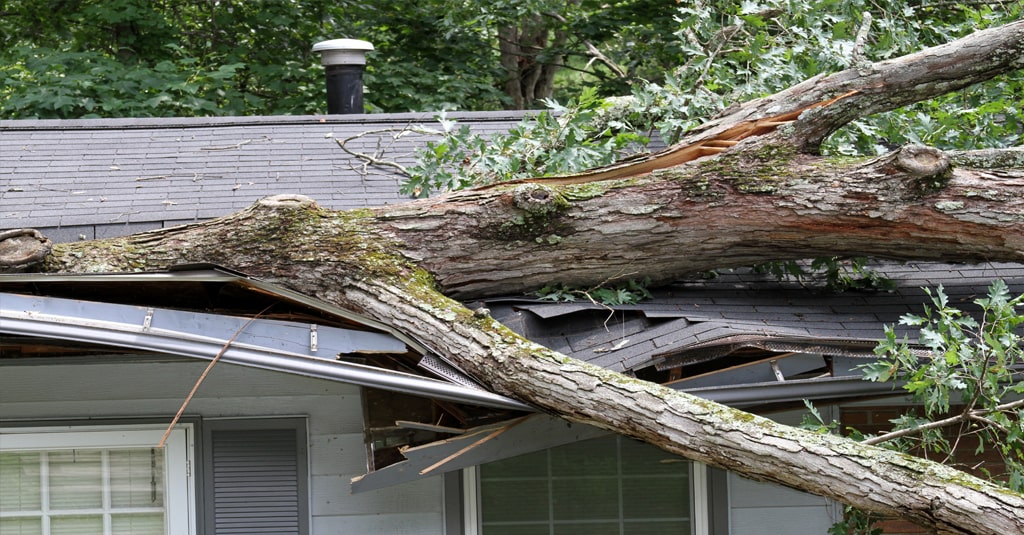
For Ruth, policy limits mean something else. On Memorial Day weekend, 2018, Ruth was sitting on her patio when lightning from a developing storm struck a tree in her yard. The tree split in half and crashed into Ruth’s roof, buckling the rafters and causing extensive roof damage. The rain made its way through the massive holes in the roof, saturating all of her belongings in the home. The tree also took out the powerlines going up to her home leaving the residence without power.

Panicked and devastated, Ruth called her insurance company only to be told she would have to wait until the Tuesday after Memorial Day. The lightning strike occurred on Saturday. This meant she would have to go three days without power in her home.

Living out in the country up in North Houston, Ruth did not see many options and hired her own contractors to remove the tree and tarp the roof. Her friends would lend a hand in moving her belongings out of her house so they could dry. Without electricity to the home, Ruth decided to stay with her mom, albeit for a short time until the property damage could be addressed.

The insurance company began their inspection which ended with them saying they would need an engineer to sufficiently assess the damages. At that time, the insurance company wrote her a check for $20,000. Her insurer did not offer to pay her ALE (Additional Living Expenses) because they were under the false impression that Ruth wanted to stay with her mother.

Ruth ended up staying with her mother for 18 months.

At Ruth’s residence, mold began to grow throughout the house because the house was never adequately dried out after the storm. As time passed the mold got worse. The insurance company hired mold experts to evaluate the mold damage. The mold experts agreed that the mold damage was severe but never followed through. A second check for another $20,000 would arrive unexpectedly and with no indication if it was for the mold damage or not.

Frustrated with the results, Ruth hired a public adjuster to help her situation, but the insurance company would not communicate with this adjuster. Determined to hold her insurer accountable, Ruth turned to us. We in turn filed a lawsuit. During negotiations, we discussed how wrong it was for the insurance company to stall and not offer to pay for Ruth’s living expenses instead of her staying with her mother.

The insurer never offered her assistance, an inventory of contents, or took the effort to address the mold damage. The mold damage may not have been a covered peril, but due to the insurance company’s actions, the mold got worse.

Ruth’s case was resolved before going to trial. Negotiating around policy limits was the main issue. Due to the severity of the mold damage, our client felt her damages exceed her policy limits. What should not have been a total loss ended up that way due to the insurer’s inactions. Through our efforts, Ruth was able to rebuild her life and her home. We are happy to have been able to assist Ruth with her home insurance claim and she is grateful to be able to leave the last year and a half of her life behind her.

If your homeowner’s insurance claim has been denied, delayed, or underpaid, call the expert property litigation attorneys at the Chad T. Wilson Law Firm at (832) 415-1432. Maximize your settlement and contact us today!

 links roof damage to hailstorm activity

Weather Service Report Links Roof Damage to Hailstorm That Insurance Company Claims Never Happened

Paying a high premium on an insurance policy can be a burden most people are familiar with. At some point in everyone’s life, you will need insurance. Whether that’s to pilot a boat, drive a car, or own a home, insurance is meant to financially compensate the policyholder if their property is lost, damaged, or stolen. Insurance companies make their bread and butter off their policyholders and in turn, those policyholders expect a reasonable investigation and fair compensation when they are required to file a claim because their property is damaged or made unusable.

On the night of April 18th, 2020, Montgomery County experienced a powerful wind and hail storm that blanketed the area in 1.2-inch size hail and wind gusts powerful enough to knock down several trees and powerlines throughout the county. Our client’s home endured the storm that evening. The hail damaged portions of our client’s roof and a storage building. The damage to the roof was severe enough that water had penetrated the roof and made its way inside through the ceiling of a utility room near the rear of the home. The hail also damaged gutters and drainage downspouts on the home.

Due to some unforeseen circumstances, some time passed before the claim was reported in March 2021. The insurance company received the claim—as it would any other—and began investigating the incident. As it would turn out, our client had canceled his policy with the insurance company in December 2020, prior to reporting the claim. The policy was canceled because our client ended up going with a different insurance company.

After its investigation, the insurance company denied our client’s claim. The alleged late reporting of the claim and the fact that the client had canceled his policy prior to reporting the claim likely factored into the insurance company’s decision.

Once the case came into our hands, we filed a lawsuit and pressed the insurance company immediately during discovery. During that process, we learned that the insurance company was using a third-party weather data source to pull aggregated data, which showed that the most recent date for sizable hail at our client’s home was 1-inch or larger hail which fell on September 19th, 2019. It seemed clear that the adjuster for the insurance company did not look at any other weather data. As a result of the tunnel vision that this report created, the insurance company then used this date as the actual date of loss.

Conveniently for the insurance company, there was a provision in the insurance policy stating that if the property damage is reported one year or 365 days after the date of loss, the insurance company can deny the claim.

In other words, with this claim the insurance company used favorable weather data from its preferred third-party vendor—apparently without checking other sources—as an excuse to move the date of loss to an earlier date. It then retroactively relied on the late reporting provision in the policy to deny the claim.

Our own investigation into the claim using other weather data sources—including the Severe Weather Data Inventory database provided by the National Oceanic and Atmospheric Association, or NOAA—uncovered severe hail in the immediate area of our client’s home on April 18, 2020. This date was within the policy period prior to cancellation and within one year of when the claim was reported, meaning that the late reporting provision did not apply.

When confronted with conflicting data, the insurance company initially stood its ground, believing its weather data as gospel. But our negotiating position had been improved and we were able to steer the case into mediation quickly. In mediation, we were able to get the insurance company to agree to a settlement that was favorable for our client and would allow him to complete the repairs to his home.

We are proud to say this case ended in a good recovery for our client and righted a wrong by the insurance company.

Many disputed wind and hail claims depend heavily on documenting and proving that severe weather impacted an insured’s property on a particular date. Insurance companies will use their own preferred third-party vendors to obtain data as part of their investigation, sometimes even consulting multiple services but only providing the insured with the data that supports the insurance company’s position. Our firm is very familiar with this tactic and frequently resolves cases where these issues are involved.

FREE CASE REVIEW

If your home or business was damaged by a wind or hailstorm and your insurance claim has been denied, delayed, or underpaid, call the expert property litigation attorneys at the Chad T. Wilson Law Firm today. Maximize your settlement and make the insurance company pay.

Federal Courts Adopt the Western District of Louisiana’s Case Management Order

Federal Courts Adopt the Western District of Louisiana’s Case Management Order

The U.S. District Court for the Western District of Louisiana and the 14th Judicial District Court for the Parish of Calcasieu have adopted a Case Management Order (CMO) that allowed for a streamlined litigation process for insurance claims that arise due to property damage resulting from Hurricanes Laura and/or Delta. The CMO helps produce a just and equitable resolution, enabling the local community to repair or rebuild their homes and businesses after the devastation of the 2020 Hurricane Season. Most Hurricane Laura or Delta property loss claims that give rise to a lawsuit would be subject to this CMO, which provides for an expedited procedural schedule.

The CMO was adopted by the Western District after the Court reviewed the Disaster Litigation Initial Discovery Disaster Protocols recommended by a study committee and adopted by the United States District Court for the Southern District of Texas following Hurricane Harvey.

The CMO allows for resolution and settlement of lawsuits outside the courthouse walls. Once the answer to your claim is received, the court sets deadlines for initial disclosures, settlement negotiations, and formal mediation, in a matter of weeks or a few months, not years.

After receiving Answer or other responsive pleading:

  • 45 days from the date the defendant files responsive pleadings or 20 days from an order denying a timely motion to remand.

Upon the exchange of Initial Disclosures:

  • Within 15 days. Counsel for both parties shall meet to confer and discuss a mutually convenient time, date, and manner for conference.
  • Within 30 days, the informal settlement conference must be conducted.
  • Counsel for both parties must have full authority to resolve the from their clients.

If the initial settlement conference fails to reach a resolution:

  • Case is set for formal mediation.
  • Both parties complete a Mediation Stipulation form.

If formal mediation fails, the case is set for trial.

Recently, the first Hurricane Laura claim went to trial, and the jury found in favor of a Lake Charles businessman after the jury found that the insurance company acted in bad faith and did not pay timely or fulfill its contractual obligations. Consequently, the insurer must now pay additional penalties, attorney fees, and court costs.

If your home or business is dealing with the fallout of a denied, delayed, or underpaid property insurance claim or your insurer has acted in bad faith, call the Chad T. Wilson Law Firm today. We have obtained millions of dollars in settlements for our Louisiana clients that have had difficulty recovering from their insurance companies for claims related to Hurricanes Laura and Delta. Our expert insurance litigation attorneys know how insurance companies operate and the best way to maximize your settlement.

Cosmetic Damage Exclusions

Cosmetic Damage Exclusions & Property Litigation

Recently proposed property exclusions have created intense debates among agents, adjusters, insurers and insureds. As chaotic weather conditions across the country continue to rise, these exclusions claim to focus on the type of roof damage in an effort to circumvent coverage.  Essentially, what the insurer deems as “cosmetic damage” is excluded from coverage when/if the insurers choose to use this type of endorsement.

That’s where our client, BCD (a family partnership) needed our help. On June 6th, 2018 an intense hailstorm produced wind gusts over 59 miles per hour with massive hail, ultimately destroying windshields, skylights, roofs and other exterior structures on numerous homes and businesses throughout the Dallas area.

The following day, roof leaks began to appear causing water to visibly enter 3 of the 6 commercial properties BCD owns. The businesses impacted by the leaks reached out to their landlord, who promptly filed an insurance claim with Covington Insurance.

After filing the insurance claim with their provider, the insurer sent out an adjuster who reviewed the claim for roof leaks and cited “no damage” to any of the properties. When our clients rebuked the adjuster’s findings, the insurer sent a second adjuster who this time claimed the damage was minimal and fell under the deductible but for only one of the properties. Now befuddled and irritated with their insurance company’s confusing findings, BCD hired their own public adjuster. The insurer responded by sending out an engineer who did recognize the roof damage however he now claimed the damage was merely “cosmetic” in nature.

BCD and their public adjuster recognized what Covington was up to and promptly filed suit. Covington Insurance moved the case to Federal court where both parties were ordered to participate in an early mediation. At mediation, the case settled for more than 200 times the original under-deductible estimate written by Covington. Not only was our client delighted, but the public adjuster who they hired attended mediation and was also relieved to see the insured be fully indemnified. Now our client’s tenants could go back to running their businesses without the constant threat of interior leaks and roof damage disrupting their business operations.

A cosmetic damage exclusion means damage to external surfaces, including walls, roofs, doors, and windows that allegedly only impact the appearance (but not the functional purpose) may not be covered under the policy. These are things insurers consider ornamental or cosmetic and are usually very vaguely defined so that the insurer can tailor the damage as one being “merely cosmetic” to deny the claim.

Just because you have a cosmetic damage exclusion does not mean you are out of luck with your insurance claim. Our expert insurance litigation attorneys know how insurance companies operate and the tactics they employ to delay, deny, or underpay your property insurance claim. Our consultations are free, and you owe us nothing until we win your case. Contact us today.

Take Your Time When Purchasing Property Insurance
Why It’s Important To Take Your Time When Purchasing Property Insurance

When you see a doctor, you expect that they will take their time to do their job and understand the need for your visit. When investing money in a business opportunity, you would want to review all available information to make the best decision for your money. The same may be said when taking your car into the shop. When purchasing a service, the reason for your visit is more important than how fast you get the service. Learn how to make your property insurance purchase a smooth transaction.

More insurance carriers are making it easier for first-time homeowners to get home insurance. Obtaining property insurance expeditiously is important. Larger insurance companies can move quickly when it comes to purchasing insurance and smaller insurance companies are following the trend. What is the best insurance and what can you do to avoid making a mistake when purchasing it?

Choosing the Right Coverage

The most important thing in any business is to provide excellent customer service. This includes ensuring that the policyholder has all necessary coverages and not just encouraging them with products they will never use or be able to afford.

When an insurance provider rushes through the purchasing process without thoroughly understanding their customer’s needs, they’re harming not only themselves but also other parties involved in this transaction. By focusing on profits instead of getting to know your clientele and what coverages are needed for them – you hurt everyone who has been relying upon these policies!

A company should never sacrifice its morals just because it wants more customers or greater profit margins; doing so will only come back around at some point anyway with negative consequences that could’ve easily been avoided by taking care beforehand.

Homeowner’s insurance or any type of insurance for that matter is a serious subject. Inadequate coverage can result in financial catastrophe. Insurance companies are in the business of making money, they cannot increase their profits if they roll over and pay every insurance claim. Viewing insurance as a simple means to make money is wrong. People need insurance. People need to be protected.

Choosing the right coverage goes hand in hand with finding the right agent for you and your needs. Insurance can be a confusing topic for the average person, but there are ways to find affordable coverage. Your agent is someone you should contact if anything happens with your policy – they’re in the know and will help make sure that nothing gets left uncovered or unpaid!

Filing a Claim

When filing a claim, customers want to know that their insurer will be able to provide tangible evidence of coverage. We need this assurance before putting any money at risk and without it, we feel uncertain about what kind or how much help is available for an event that has occurred while using their product/service.

If you do not have the right insurance, you could find yourself in a significant financial hole. A thoughtful conversation with an insurance agent can help you avoid these errors.

Take Your Time to Find the Right Agent

Good Insurance agents often face a challenging environment where they must balance the needs of their customers with those companies. Insurance leaders who put profit ahead of customer service will struggle in this competitive market, as knowledgeable and trustworthy professionals like insurance brokers can provide better quality products for clients.

Insurance agents are often expected to spend very little time with their customers, but the best ones understand that every second counts. They know it’s not just about making sales or finding new clients; they need customer input and guidance so insurance products can be tailored specifically for them – which is why we find this situation ironic!

The bottom line is you need to take this important purchase seriously and find an agent that takes the time to find YOU out what you need.

If your property insurance claim has been denied, delayed, or underpaid, contact the expert insurance attorneys with the Chad T. Wilson Law Firm at (833)942-0678 or email us at [email protected].

Screen-Shot-2021-12-29-at-8.38.09-AM-1200x672-min

Attorney Patrick McGinnis Talks Winning Claims On ‘The Legal Fix’ Radio Show

Chad T. Wilson Law Firm Attorney, Patrick McGinnis, was a special guest on The Legal Fix radio show last month where he talked about winning denied insurance claims. Has your insurance company unfairly denied your property damage claim? If so, contact us today for a free case review. You may be entitled to compensation.

Courtroom Victories Against State Farm

Chad T. Wilson recently sat down with Roofing Insights to discuss his firm’s recent legal victories against State Farm. Watch the full interview below. You can also read about the State Farm cases here and here.

Chad T. Wilson Courtroom Victories Against State Farm:

Victory: Texas Jury Awards Damages To State Farm Policyholder Over Unfair And Deceptive Practices

In March this year, the Texas Supreme Court published its landmark opinion on another Chad T. Wilson Law Firm case – again, a client insured by State Farm, Luis Hinijos.  This was a huge win for all policyholders in Texas because it stopped all insurance companies from utilizing a carrier-created loophole to circumvent Texas law.  Here’s the typical scenario. An insured has a covered loss and notifies their insurance company.  The company would accept the claim and pay pennies on the dollar of the damages. The insured would complain but the carrier would not budge far from its initial position. The insured would then sue and the carrier, State Farm being the worst culprit, would run up litigation expenses. Appraisal of the damages would be invoked to set the cost to repair; the carrier would send a check for the appraisal award less the depreciation less the deductible less prior payments if any. The carrier would run back to the court and ask for summary judgment claiming “no harm, no foul judge” – and they were getting away with it. This left insureds economically upside down on their cases. The Chad T. Wilson Law Firm took Mr. Hinojos’s case to the Texas Supreme Court to stop this trend in its tracks. The Court agreed stating that an insurer is not absolved of its statutory liability when it pays only part of a claim within the statutory deadline set forth in the statute. An insurer that fails to pay all amounts that “must be paid” under the applicable policy will be liable for interest and attorney’s fees. On the street, this means if an appraisal award comes back higher than the insurance company’s initial estimate of damages, they owe the difference plus interest plus attorney fees and they are still on the hook for damages for violations of the Texas Insurance Code and Texas Deceptive Trade Practices Act. 

Unanimous Jury Verdict in Tarrant County for CTWLF Client: Jury found State Farm knowingly violated the Texas Insurance Code Jury awarded Plaintiff damages equivalent to seven times his property damage 

After the trial concluded, jurors stated they were disappointed with how State Farm handled Aaron’s claim, how State Farm ‘covered up’ the first adjuster’s haphazard inspection, and were deeply troubled that it took three years and a trial for State Farm to admit they made a mistake; it obvious to the jury that State Farm’s admission was only for damage control, there was no remorse.  This jury was made up of Tarrant County citizens, a jurisdiction typically known as a tough venue for Plaintiffs.  Not only did this jury see Defendant State Farm’s actions were wrong, they returned a unanimous verdict that left no doubt how wrong State Farm was in this case.

Has your claim been denied?

The Chad T. Wilson Law Firm handles insurance property disputes and takes on tough, serious cases against some of the largest corporations in America. With a proven track record of getting things done, Chad T. Wilson is fighting for courtroom victories against State Farm and other major insurance carriers. If your homeowner’s insurance claim has been denied, delayed or, underpaid, call us. We have represented thousands of homeowners against insurance companies, big and small. As a contingency-based law firm, our expert insurance claims attorneys aggressively fight for the rights of the policyholder. Free consultation. No recovery equals no fee. Contact us today.

Chad-T.-Wilson-Law-Firm-Secures-Huge-Victory-For-Policyholders-in-Texas-Supreme-Court-min

Huge Victory For Policyholders in Texas Supreme Court!

On March 19, 2021 the Texas Supreme Court issued its opinion in Hinojos v. State Farm Lloyds (No. 19-0280), in favor of Louis Hinojos, a client of Chad T. Wilson Law Firm. This was a huge victory for Texas policyholders. The Hinojos opinion will substantially assist policyholders to win Texas Prompt Payment of Claims Act (“TPPCA”) damages including interest and attorney fees after appraisal.

Before the Texas Supreme Court decided the case of Barbara Technologies Corp. v. State Farm Lloyds, 589 S.W.3d 806 (Tex. 2019), insurance companies could avoid all damages, including TPPCA damages, by simply invoking appraisal and paying the resulting appraisal award. This situation was patently unfair to Texas policyholders because the typical fact pattern was that an insurer would make a low initial claim payment, the policyholder would file suit, and during litigation (months or years after the date of loss) the insurance company would invoke appraisal and then pay the resulting award…an award that was always substantially more than the initial claim payment. The insurance company would then file a motion for summary judgment and get the policyholder’s entire case dismissed, including 18% interest under the TPPCA and attorney fees. However, Barbara Technologies held that an insurer may not avoid TPPCA damages by simply paying an appraisal award. Not surprisingly, the insurance industry quickly tried to find ways around Barbara Technologies. Using a portion of a string cite in the 5th Circuit case of Mainali Corp. v. Covington Specialty Insurance Co. 872 F.3d 255, 259 (5th Cir. 2017), insurance companies argued that as long as the initial claim payment was “reasonable” then even if the appraisal award ended up being much higher than the initial claim payment, policyholders were still unable to pursue TPPCA damages against the insurance company. For example, in the case of Shin v. Allstate Texas Lloyds, No. 4:18-CV-01784, 2019 WL 4170259, at *2 (S.D. Tex. September 3, 2019) Allstate argued and the court held that an initial claim payment that was 5.6 times less than the ultimate appraisal award was still “reasonable” and the court granted summary judgment for Allstate, which eliminated the policyholder’s damages under the TPPCA.

Thanks to the Chad T. Wilson Law Firm, the Texas Supreme Court closed the door on this ridiculous “reasonable” claim payment argument. Louis Hinojos is a homeowner in El Paso, Texas who purchased an insurance policy from State Farm Lloyds. On June 3, 2013 the Hinojos home was hit by a severe wind and hailstorm. Hinojos filed a claim with State Farm. State Farm timely accepted the claim and investigated it. The outcome of its initial adjustment of the claim was State Farm agreed to $755.02 in property damage, but because Hinojos had a $1,290 deductible, State Farm paid nothing. Hinojos requested a second inspection and State Farm agreed to $3,859.22 in damages then but paid $1,995.11 after the subtracting depreciation and the $1,290 deductible. Not satisfied with this result, Hinojos hired the Chad T. Wilson Law Firm and suit was filed. Some fifteen months after suit was filed State Farm invoked appraisal. The appraisal award came in at $38,269.95 replacement cost value and $26,259.86 actual cash value in property damage. State Farm paid $22,974.75 on the award, which was the replacement cost value minus depreciation, the deductible, and the prior payment. This payment was made some two and one-half years after Hinojos submitted his claim. After payment on the award, State Farm filed a motion for summary judgment arguing that timely payment of the award precluded Hinojos’ TPPCA damages. The Chad T. Wilson Law Firm argued that State Farm was subject to liability because State Farm had not made any payments within the timelines set out in Section 542.057 or that State Farm was liable for interest on the difference between what State Farm had paid on the claim and the amount of the appraisal award. The trial court granted summary judgment against Hinojos and the court of appeals affirmed two and a half years later. The Texas Supreme Court granted review.

Reaffirming its holdings in Barbara Technologies and Alvarez v. State Farm Lloyds, 601 S.W.3d 781 (Tex. 2020) (per curium) the Hinojos Court held that State Farm paying the Hinojos appraisal award did not preclude Hinojos from pursuing TPPCA damages against State Farm. Better still, the Court went further. Recognizing that insurance companies could initially make a nominal payment toward a valid claim and avoid TPPCA damages by later paying an appraisal award, the Hinojos Court held that to be reasonable the initial claim payment must “roughly correspond to the amount owed on the claim.” Therefore, in the future when an appraisal award comes in several times higher than the initial claim payment, the Texas policyholder can sue for TPPCA damages on the difference between the initial claim payment and the amount of the award. Not only will this opinion allow policyholders to secure TPPCA damages for underpaid claims after appraisal, but it should also incentivize insurance companies to make valid claim payments at the inception of the claim.

Since 2005 I have dedicated my practice solely to representing policyholders in first-party cases and contract disputes. Over the years I have attended countless industry events where this person or that person gets on stage and pounds their chest talking about what they can do for policyholders. It is one thing to talk about what you can do for policyholders, but it is another thing altogether to actually do something for policyholders. Chad T. Wilson Law Firm actually did something for policyholders. Because the system was not fair to policyholders, we kept fighting this case, even after losing at the trial court and the court of appeals. We took the case all the way to the Texas Supreme Court and we won! This Hinojos decision marks a great day for all policyholders. Thanks to Andrew Bender for his appellate work in this case and to Sharon McCally who made the argument before the Texas Supreme Court.

Frozen-pipe-bursts-wreak-havoc-in-Texas-min

Frozen pipe bursts wreak havoc in Texas

Texas has recently experienced winter weather not seen in ages. Temperatures fell to minus 2 degrees in some of the hardest-hit areas. Power suppliers never prepared to withstand these conditions.  Power outages across the state left almost all Texans to struggle with the cold. The combination of freezing weather and power outages caused plumbing and frozen pipes to burst and damage homes, businesses, schools, and churches.

Texans are strong and will recover but it will take time.  The scale of property damage from this winter event has never been seen before and insurers are struggling to meet the volume of insurance claims coming in.  The queue is long and insureds are having to wait weeks for their insurance company’s first inspection.

If you are a property owner, home, or business, your insurance policy specifies your responsibilities when you have a claim, notify the insurance company of your claim and mitigate the damage.  TAKE PICTURES, SHOOT VIDEOS, KEEP RECEIPTS.  Try to capture the entire state of damage, you can never have too many pictures.  With a backlog of claims, many Texans have had to start moving wet carpets and sheetrock out before their insurer’s first visit.  Ask your carrier if there are any specific requests they have to document the damage during remediation.

All insureds’ policies are unique but are derived from the same general forms approved by the Texas Department of Insurance.  Each carrier has its own name for each of the forms and variations of the same.  Most of these are “all-risk” or “named peril.”  If you don’t have an “all-risk” policy, your agent would have discussed other options which may include the accidental discharge of water or the option to add accidental discharge of water to your policy.  Read this section and be familiar with the terms; make sure the adjustment of your claim complies with those terms. Make certain to document everything. Here are some good guidelines to plan for filing your insurance claim:

  • Start a journal documenting your insurance claim that includes dates, conversations, names, and contact information related to your insurance claim
  • Collect receipts showing payment for damaged property.
  • Collect evidence of loss and store it in a safe place.
  • Take pictures and videos of the property damage.
  • Get your insurance claim submitted on time.

For more tips visit: findlaw.com

SHOULD I HIRE AN INSURANCE ATTORNEY?

If you think your insurance policy covers your loss and your insurer doesn’t, or if you feel the damage you sustained is far more than what your insurance company compensates you for, or if your carrier neglected your claim altogether, then the Texas Insurance Code allows recovery of “actual damages, plus court costs and reasonable attorney’s fees” and if the insurer acted in bad faith you may pursue an award of up to “three times the number of actual damages.”

If you’re unsure of whether or not your situation warrants filing a claim against your homeowner’s insurance company, contact us. Free consultation. No recovery equals no fee.

1 6 7 8 9 10 13