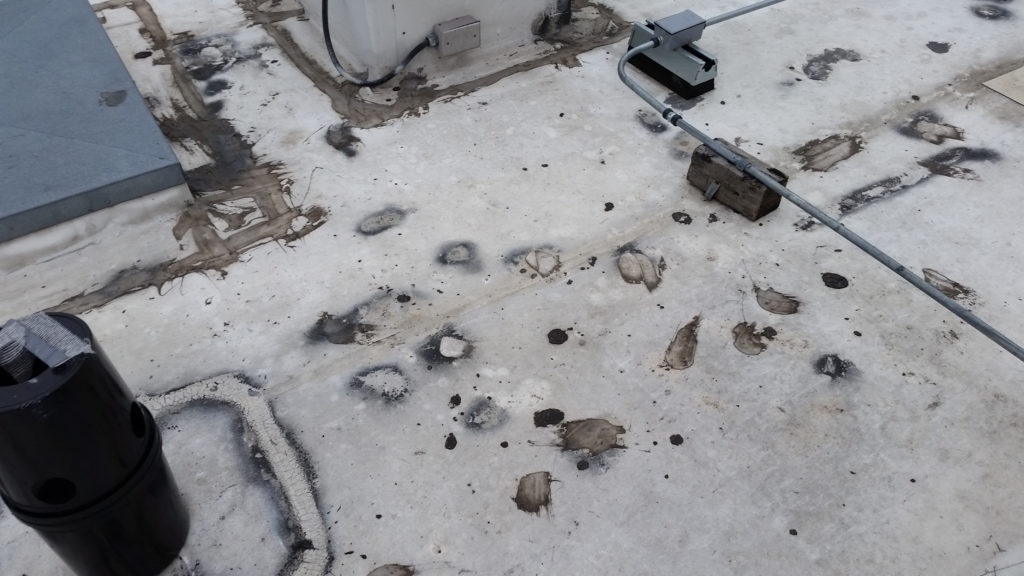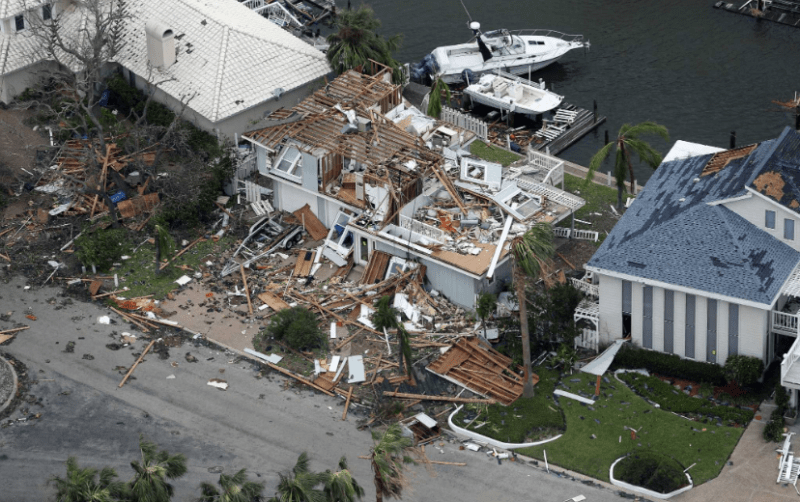
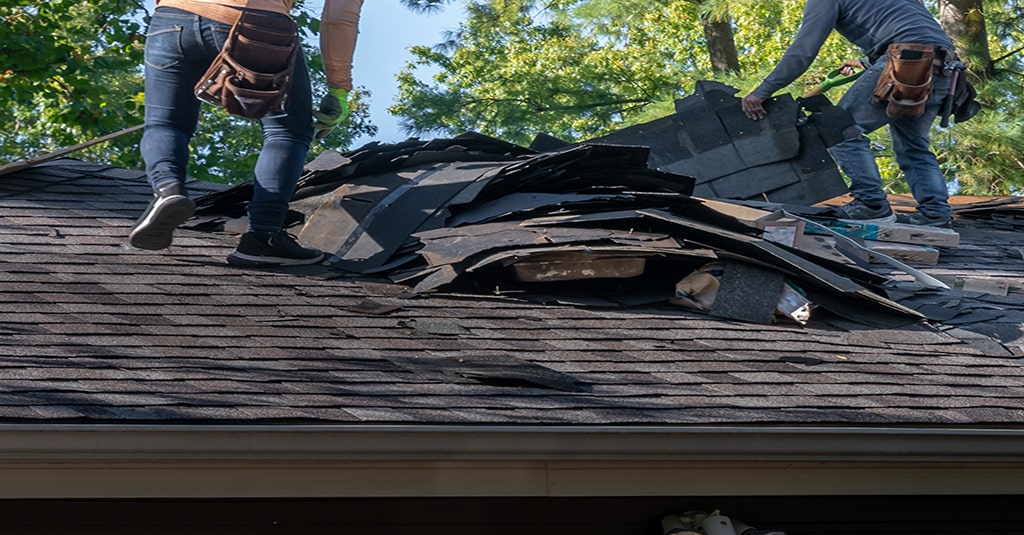
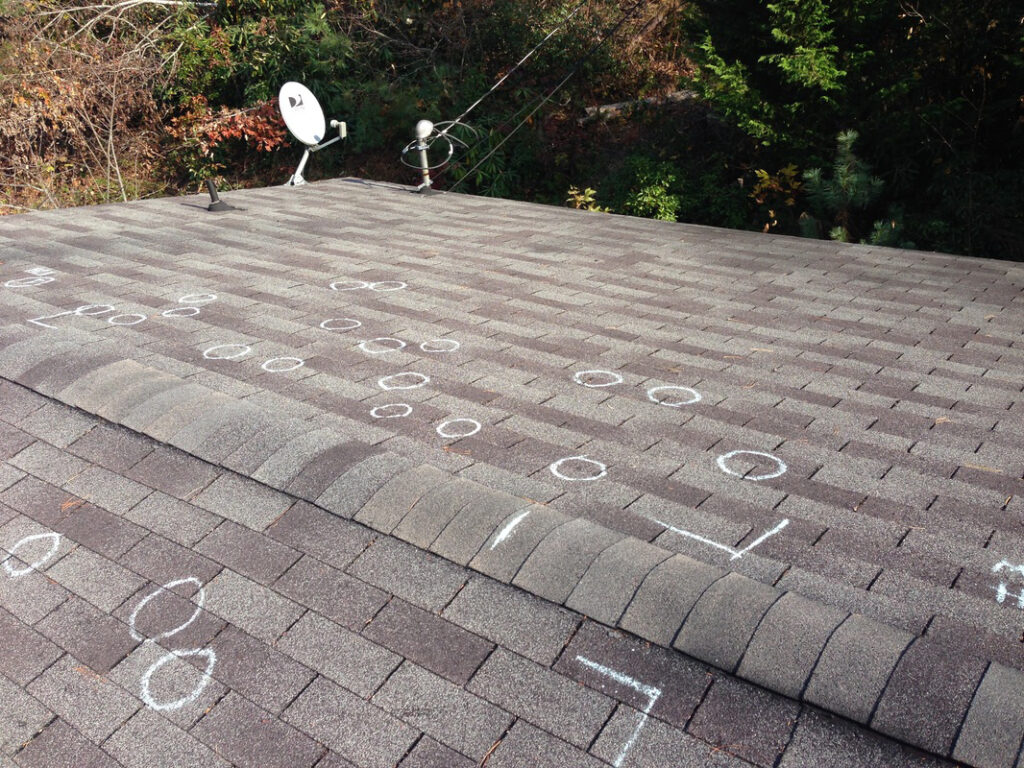
links roof damage to hailstorm activity

Weather Service Report Links Roof Damage to Hailstorm That Insurance Company Claims Never Happened

Paying a high premium on an insurance policy can be a burden most people are familiar with. At some point in everyone’s life, you will need insurance. Whether that’s to pilot a boat, drive a car, or own a home, insurance is meant to financially compensate the policyholder if their property is lost, damaged, or stolen. Insurance companies make their bread and butter off their policyholders and in turn, those policyholders expect a reasonable investigation and fair compensation when they are required to file a claim because their property is damaged or made unusable.

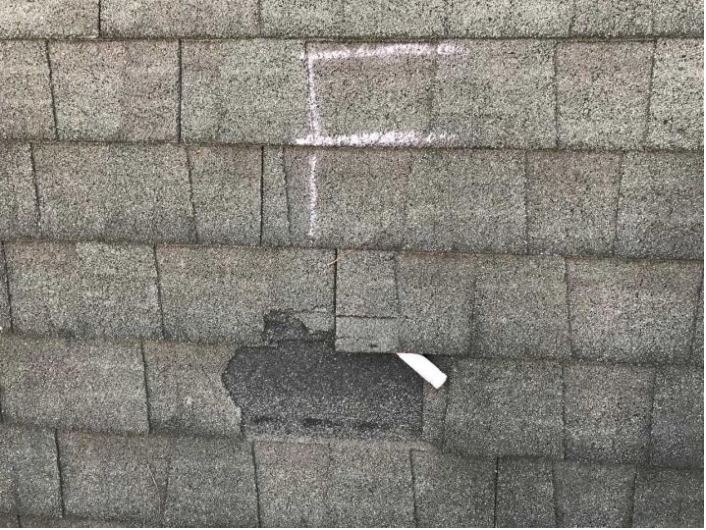
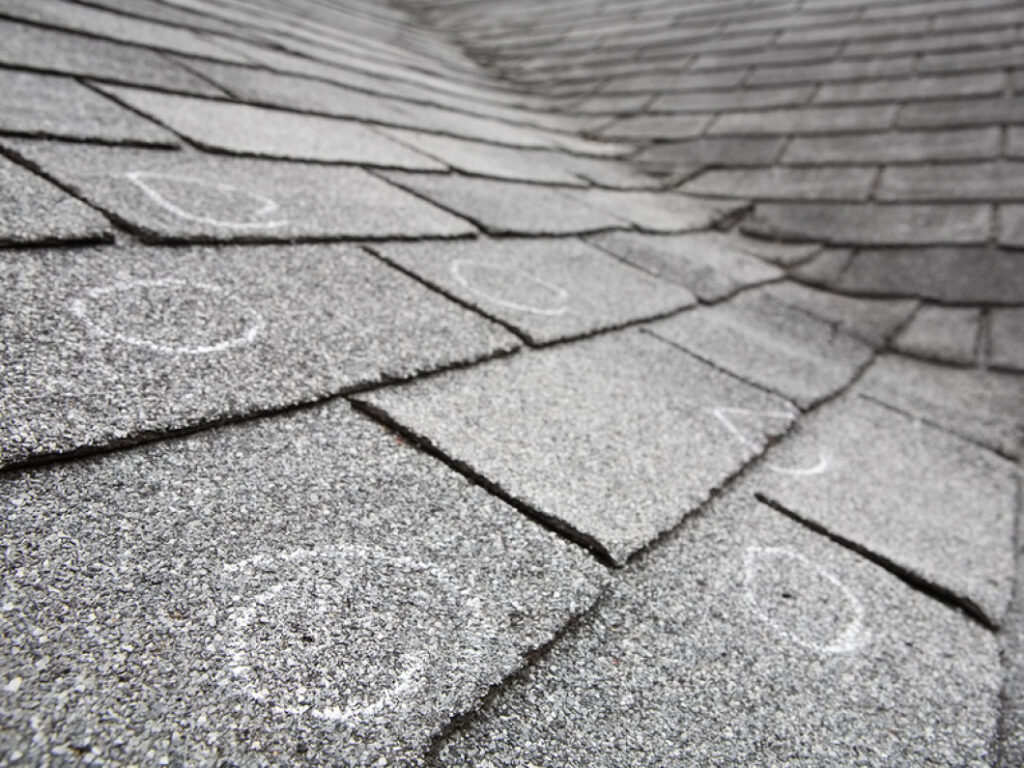
On the night of April 18th, 2020, Montgomery County experienced a powerful wind and hail storm that blanketed the area in 1.2-inch size hail and wind gusts powerful enough to knock down several trees and powerlines throughout the county. Our client’s home endured the storm that evening. The hail damaged portions of our client’s roof and a storage building. The damage to the roof was severe enough that water had penetrated the roof and made its way inside through the ceiling of a utility room near the rear of the home. The hail also damaged gutters and drainage downspouts on the home.

Due to some unforeseen circumstances, some time passed before the claim was reported in March 2021. The insurance company received the claim—as it would any other—and began investigating the incident. As it would turn out, our client had canceled his policy with the insurance company in December 2020, prior to reporting the claim. The policy was canceled because our client ended up going with a different insurance company.

After its investigation, the insurance company denied our client’s claim. The alleged late reporting of the claim and the fact that the client had canceled his policy prior to reporting the claim likely factored into the insurance company’s decision.

Once the case came into our hands, we filed a lawsuit and pressed the insurance company immediately during discovery. During that process, we learned that the insurance company was using a third-party weather data source to pull aggregated data, which showed that the most recent date for sizable hail at our client’s home was 1-inch or larger hail which fell on September 19th, 2019. It seemed clear that the adjuster for the insurance company did not look at any other weather data. As a result of the tunnel vision that this report created, the insurance company then used this date as the actual date of loss.

Conveniently for the insurance company, there was a provision in the insurance policy stating that if the property damage is reported one year or 365 days after the date of loss, the insurance company can deny the claim.

In other words, with this claim the insurance company used favorable weather data from its preferred third-party vendor—apparently without checking other sources—as an excuse to move the date of loss to an earlier date. It then retroactively relied on the late reporting provision in the policy to deny the claim.

Our own investigation into the claim using other weather data sources—including the Severe Weather Data Inventory database provided by the National Oceanic and Atmospheric Association, or NOAA—uncovered severe hail in the immediate area of our client’s home on April 18, 2020. This date was within the policy period prior to cancellation and within one year of when the claim was reported, meaning that the late reporting provision did not apply.

When confronted with conflicting data, the insurance company initially stood its ground, believing its weather data as gospel. But our negotiating position had been improved and we were able to steer the case into mediation quickly. In mediation, we were able to get the insurance company to agree to a settlement that was favorable for our client and would allow him to complete the repairs to his home.

We are proud to say this case ended in a good recovery for our client and righted a wrong by the insurance company.

Many disputed wind and hail claims depend heavily on documenting and proving that severe weather impacted an insured’s property on a particular date. Insurance companies will use their own preferred third-party vendors to obtain data as part of their investigation, sometimes even consulting multiple services but only providing the insured with the data that supports the insurance company’s position. Our firm is very familiar with this tactic and frequently resolves cases where these issues are involved.

FREE CASE REVIEW

If your home or business was damaged by a wind or hailstorm and your insurance claim has been denied, delayed, or underpaid, call the expert property litigation attorneys at the Chad T. Wilson Law Firm today. Maximize your settlement and make the insurance company pay.
Texas Jury Awards Damages To State Farm Policyholder

Victory: Texas Jury Awards Damages To State Farm Policyholder Over Unfair And Deceptive Practices

Linda Veach first called her insurance company, State Farm, the day after a big and loud storm passed through Irving, Texas on June 6 of 2018. When she called to report her concerns, she was told that nobody from State Farm was going to come out and look at her house and that they did not think any damage was done. Trusting her insurance company, she accepted what she was told. When the damage to her seven-year-old roof was later pointed out to her by a neighbor, she looked for herself. She found the “dents” that were caused by hail. Linda called State Farm again, explained what she saw, and let them know that she really wanted them to look at her hail-damaged roof.

State Farm sent their adjuster. He spent about an hour going over the roof and inside of the home only to tell Linda that there was some damage to a flat part of the roof and a few other parts of the home. He left a few handwritten notices and a check for $549.95. Days later his actual estimate and partial denial letter came in the mail. The estimate did not match what was told by the adjuster. It included coverage for some hail-damaged items on the outside of the house and a few interior repairs. Not included in the estimate was any of the hail-damaged roof, not even the flat roof that Linda was told had hail damage.

Linda tried to handle things on her own, asking State Farm to take a better look, and even unsuccessfully trying to invoke the appraisal clause in her State Farm policy. Throughout the process, State Farm and its representatives played “gotcha” with her claim, raised technicalities against her, and refused to do the right thing. So, Linda hired the Chad T. Wilson Law Firm and a suit was filed against State Farm. 

Chad Wilson and Robert House of the Chad T. Wilson Law Firm fought to get answers and to protect Linda from these games. Along the way, they tried to get State Farm to resolve the case through negotiations and mediation. State Farm actively failed to do right by its policyholder at every step along the way. State Farm hired biased experts who said that there was no hail damage done to Linda’s roof, but instead what looked like hail damage was a product defect on the shingles. State Farm even tried to keep their full expert reports and other materials from their policyholder.

Through the four-day trial in United States District Court, it became clear that State Farm had all the information they needed to take the correct action on the date of the very first inspection. On August 26, 2021 the jury returned its verdict finding that State Farm failed to comply with its insurance policy, awarding all costs required for Ms. Veach’s repairs, and that State Farm engaged in unfair or deceptive acts or practices that caused damages to the plaintiff, awarding a little more than two times the costs for the repairs for those damages. Separate from the jury’s findings, the court will be asked to assess attorney fees and other costs against State Farm.

The jury told State Farm that it could not take advantage of its policyholders and hope they will go away silently and thanks to the Chad T. Wilson Law Firm, Linda Veach will be able to get the repairs done to her home and fix all the damage caused by the hailstorm.

In March this year, the Texas Supreme Court published its landmark opinion on another Chad T. Wilson Law Firm case – again, a client insured by State Farm, Luis Hinijos.  This was a huge win for all policyholders in Texas because it stopped all insurance companies from utilizing a carrier-created loophole to circumvent Texas law.  Here’s the typical scenario. An insured has a covered loss and notifies their insurance company.  The company would accept the claim and pay pennies on the dollar of the damages. The insured would complain but the carrier would not budge far from its initial position. The insured would then sue and the carrier, State Farm being the worst culprit, would run up litigation expenses. Appraisal of the damages would be invoked to set the cost to repair; the carrier would send a check for the appraisal award less the depreciation less the deductible less prior payments if any. The carrier would run back to the court and ask for summary judgment claiming “no harm, no foul judge” – and they were getting away with it. This left insureds economically upside down on their cases. The Chad T. Wilson Law Firm took Mr. Hinojos’s case to the Texas Supreme Court to stop this trend in its tracks. The Court agreed stating that an insurer is not absolved of its statutory liability when it pays only part of a claim within the statutory deadline set forth in the statute. An insurer that fails to pay all amounts that “must be paid” under the applicable policy will be liable for interest and attorney’s fees. On the street, this means if an appraisal award comes back higher than the insurance company’s initial estimate of damages, they owe the difference plus interest plus attorney fees and they are still on the hook for damages for violations of the Texas Insurance Code and Texas Deceptive Trade Practices Act. 

The Chad T. Wilson Law Firm handles insurance property disputes and takes on tough, serious cases against some of the largest corporations in America.

Hailstorm-Damage-Puts-Faith-in-Question

Hailstorm Damage Puts Faith in Question

The 2016 storm season was the most expensive storm season on record for Texas. On March 17th, 2016 Arlington, Texas experienced no less than six recorded hailstorms, the largest of which generated hail two-and-a-half inches in diameter. The hazardous weather system began Thursday morning, dropping huge pieces of hail and grounding flights out of DFW Airport. This was a monster storm that damaged many homes in the area, our client being one of those homeowners.

The roof damage was so severe that our client submitted a homeowners insurance claim through his insurance provider, State Farm. After filing the roof damage claim, the insurer sent out their adjuster who inspected the property damage and determined there was none or below our client’s deductible. Blindsided by his insurer’s stance, our client hired us and invoked appraisal for their case. The appraisal award came back at 80,000 times the amount of damages originally assessed by State Farm.

State Farm paid most of the award. To collect the remainder of the award and interest and attorney fees, our client pursued his insurer by filing suit, declaring his insurance company had acted in breach of contract and violation of Chapter 541 of the Texas Insurance Code, the Texas Deceptive Trade Practices Act (DTPC), and the Texas Prompt Payment of Claims Act (TPPCA). To guard their profits, insurers every so often commits deceitful practices, deliberately distort their policy language to avoid paying a claim, use absurd delays to avoid resolution of a claim, or make frivolous demands about proof of loss. This is called a bad faith insurance practice.

Our client’s insurer responded with a motion for partial summary judgment on all our client’s claims as a means of staving off breach of contract and TPPCA pursuits based on the Texas Supreme Court decision in Ortiz. State Farm argued that they had paid the award and therefore there was no breach of contract or extra-contractual claims left to pursue.

Is It Bad Faith, Bad Luck, or Both?

For the statutory bad faith claim to stick, our client had to show a breach of contract by his insurer. The insurer contends that a breach of contract is a prerequisite to statutory bad faith, yet policyholders argue a breach of contract is only a prerequisite to bad faith when the claim is not covered.

Generally, there can be no claim for bad faith when an insurer has promptly denied a claim that is not covered. However, failure to show a breach of contract does not alleviate a policyholder’s bad faith claims. What this means is the insured must show coverage, not a breach of contract. It is undisputed that our client’s claim under the policy was covered. The insurer did find damage, below the deductible when the claim was initially adjusted.

The only fair and rational analysis of the law that does not offend common sense or public policy is one that preserves an insurer’s responsibility to deal with an insured in good faith when the insured’s claim is covered. Our client’s insurance providers manipulation of the law would allow them to ignore their responsibility and systematically delay, deny, or underpay insurance claims until the insured hires an attorney and sends a pre-suit notice letter suing for breach of contract and bad faith, then to simply invoke appraisal, pay the award, and weaken the insurer’s contractual liability but also its statutory liability for bad faith acts and the adjustment process.

At the hearing, our attorneys argued the above and pointed out that an appraisal award that is 80,000 times higher than the amount first assessed by State Farm, and the unilateral (line-item veto) of certain damages in the award, amounted to breach of contract and bad faith. The court agreed and denied State Farm’s summary judgment on all grounds.

Texas Property Insurance Lawyers

Has your homeowner’s or commercial business insurance claim been denied? We can help. Representing thousands of clients against big insurance companies, our insurance claims attorneys aggressively protect the rights of the policyholder. Our consultations are free, and you owe us nothing until we win your case. Contact us today.

Twice-Denied-Homeowners-Insurance-Claim-Leads-to-New-Roof

Twice Denied Homeowners Insurance Claim Leads to New Roof

Property damage may include damage to your home, your patio furniture, your fence, your mailbox, or any other belonging to your property. How much you may be able to recover for your property damage can be determined by proof of replacement value, repair costs, the inability of use until fixed or replaced.

Having a roof insurance claim denied is common. Luckily, a roof damage claim denial does not have to be the last word. Understanding the insurance claim process and how to challenge an insurance denial is a valuable skill for every homeowner. In most situations, your homeowner’s insurance covers roof damages due to a storm. You can expect a claim rejection letter if the peril is excluded by your homeowner’s insurance policy. Knowing what your homeowner’s insurance policy excludes is very important. Some standard homeowners insurance policies (HO-3) cover common disasters, but not everything. Some insurance policies have separate wind and hail damage deductibles. Make sure to read your policy carefully to understand what damage is covered.

It Was the Other Storm’s Fault

In the spring of 2016, the Spring, Texas area experienced a wind and hail storm that damaged the roof and exterior of our clients’ home. Our clients, one a 40-year plus emergency room nurse, filed a homeowners insurance claim with their insurer who sent out an adjuster who wrote the damage off as minimal and failed to cover the damage to the roof. The adjuster claimed the roof damage was less than $1000 and under the deductible, even though other houses in the neighborhood received new roofs due to the wind and hail damage. Our clients trusted the results the insurance company provided them with and did not pursue any action after the initial insurance claim denial.

Then came Hurricane Harvey a year later and the roof leaks that followed. Our clients filed another homeowners insurance claim to which their insurance company responded by sending out another adjuster, who came back telling them the roof leaks were a result of previous damage and/or wear and tear, not the storm. That meant the insurance company most likely misrepresented the scope of damages during the first claim back in 2016. Having experience with one denied homeowners insurance claim already, our clients called us to take their case. Our own third-party adjuster concluded the damage from the hailstorm in 2016 that went unrepaired was exacerbated by Hurricane Harvey and ultimately the fault of the insurance company for not fixing the repairs before the hurricane’s impact.

Bad Faith Insurance Claim Seeks Redemption

If the insurance company had fixed the repairs to the home from the initial claim, the damages inflicted during Hurricane Harvey would have been reduced or less severe. We filed suit and sent a demand letter to the insurance company, who settled at mediation with us and provided the funds for the repairs to the exterior of the home as well as a brand new roof for our clients.

Because an insurance company has an obligation of good faith and fairness with the people it insures, those who believe an insurance company has not acted fairly and in good faith also can have a claim for common law bad faith and statutory violations. The Texas Insurance Code also provides the rules for how insurers must behave towards policyholders.

Houston Property Insurance Lawyers

Has your homeowner’s or commercial business insurance claim been denied? We can help. Representing thousands of clients against big insurance companies, our insurance claims attorneys aggressively protect the rights of the policyholder. Our consultations are free, and you owe us nothing until we win your case. Contact us today.

Any-Which-Way-the-Wind-Blows-in-Georgia

Any Which Way the Wind Blows in Georgia

In the path of the storm was our client, a nursing home. Wind-blown debris brought on extensive roof damage along with exterior property damage to the siding, gutters, and HVAC units. This region has a history of property damage going back as far as 1845, so for the residents of the area getting used to property damage has become routine. What is also routine is how our client’s insurer responded to the commercial business insurance claim.

If your commercial business or homeowner insurance claim has been denied then you may be interested in how we have helped this client!

On October 11th, 2018, Hurricane Michael impacted Dougherty County, Georgia. What was the first Category 4 hurricane to hit the US mainland in over a century slowly progressed through Florida into George, where it became a Category 3 by the time it reached the city of Albany. The wind damage was more severe than the damage sustained in Hurricane Irma from a year previous, with wind gusts reaching over speeds of a hundred miles per hour. Many trees had been knocked down along with several businesses losing their facades and an abundance of road debris. The hurricane damage was so bad that residents were asked to stay inside. More than ninety percent of Albany’s Utilities Authority’s customers (24,000+ people) woke up Thursday morning with no power.

Insurance Policies Versus State Laws

Some insurance companies are allowed by the state to have shorter deadlines than the state’s law allows if the parties involved can agree. Georgia’s laws have a general two-year statute of limitations, but per our client’s insurance policy they were only allowed one year to file a lawsuit.

Thirteen days after the one-year limitations period, the insurance company sent our client a claim determination letter stating they had completed their review and determined there was no coverage. Later, we filed suit on behalf of our client. The insurance company responded with a motion to dismiss – claiming we filed suit more than a year after the date of loss. Our response to the court was that we did not have the right to sue until after the determination letter was received by our client and therefore excused from the one-year statute of limitation and the court should disregard the one-year statute of limitations.

On September 30th of this year, the court dismissed the motion to dismiss citing case law, that if the insurance company continues to adjust the claim with the insured and indicates the insurance company is continuing its investigation then the insured is excused from the one-year statute of limitations.

Professional Property Insurance Lawyers

If your commercial business or homeowner insurance claim has been denied, delayed, or underpaid your insurance claim, then we can help. The experienced attorneys at Chad T. Wilson Law Firm have represented more than a thousand clients in cases against insurance companies. Our property insurance lawyers aggressively protect the rights of insurance policyholders. Our consultations are free, and you owe us nothing until your case is won. Contact us today to see how we can help.

Homeowner's Insurance Claim Gets Back On Track

Homeowner’s Insurance Claim Gets Back On Track

Have you had storm damage and are now struggling with a homeowner’s insurance claim?

Storm damage hits Mineola, Texas, a small community in Wood County about 80 miles east of Dallas. Mineola is a railroad town and can trace its roots back as far as 1873. With a population just under five-thousand, life in this small Texas town tends to move at a slower pace. Some insurance companies prey on these areas. Such was the case for our clients, whose home was savagely beaten by the hailstorm the night of June 19, 2019 when their home was damaged. The homeowner’s insurance claim was initially denied.

We Will Not Be Railroaded

That night hail pounded Wood County, dropping hail the size of golf balls in some areas. The roof damage to our client’s home was so severe that rainwater had penetrated through the damaged portions of the roof and saturated sheetrock and carpeting throughout the home.

After completing a homeowner’s insurance claim with their insurer, our clients’ claim was denied. Refusing to accept a denial as the outcome, our clients’ pleaded with their insurer. The insurance company in turn sent out an engineer to inspect the roof damage. The engineer’s assessment was that the property damage should be covered under the homeowner’s insurance claim, but the amount of the damage was under the deductible.

Insurance Company Has One Track Mind

Knowing that they were in for a hard fight if they wanted any form of recovery, our clients hired us to represent them. The Chad T. Wilson Law Firm sent our clients’ insurer a demand letter that let the insurer know our client’s were serious about their claim. Upon receiving the demand letter, the insurer reversed course and agreed to pay for the roof and interior damage.

Homeowner’s Insurance Claim Gets Approved

From start to finish, this case was resolved in 30 days. There was no need for mediation or court.

Texas Property Insurance Lawyers

Has your homeowner’s or commercial business insurance claim been denied? We can help. Representing thousands of client’s against big insurance companies, our insurance claims attorneys aggressively protect the rights of the policyholder. Our consultations are free, and you owe us nothing until we win your case. Contact us today.

Windstorm-Rips-Through-Plano

Windstorm Rips Through Plano

June 9th, 2019 was a rough day in North Dallas. The region experienced powerful windstorms that toppled a crane, caused extensive damage to crops, and killed a young woman in Dallas. The massive amounts of ping pong ball-sized hail caused considerable roof damage to numerous properties and left thousands without power. Our client, a longtime resident of Plano, Texas was one of the many homeowners impacted by the storm.

Up, Up, And Away…

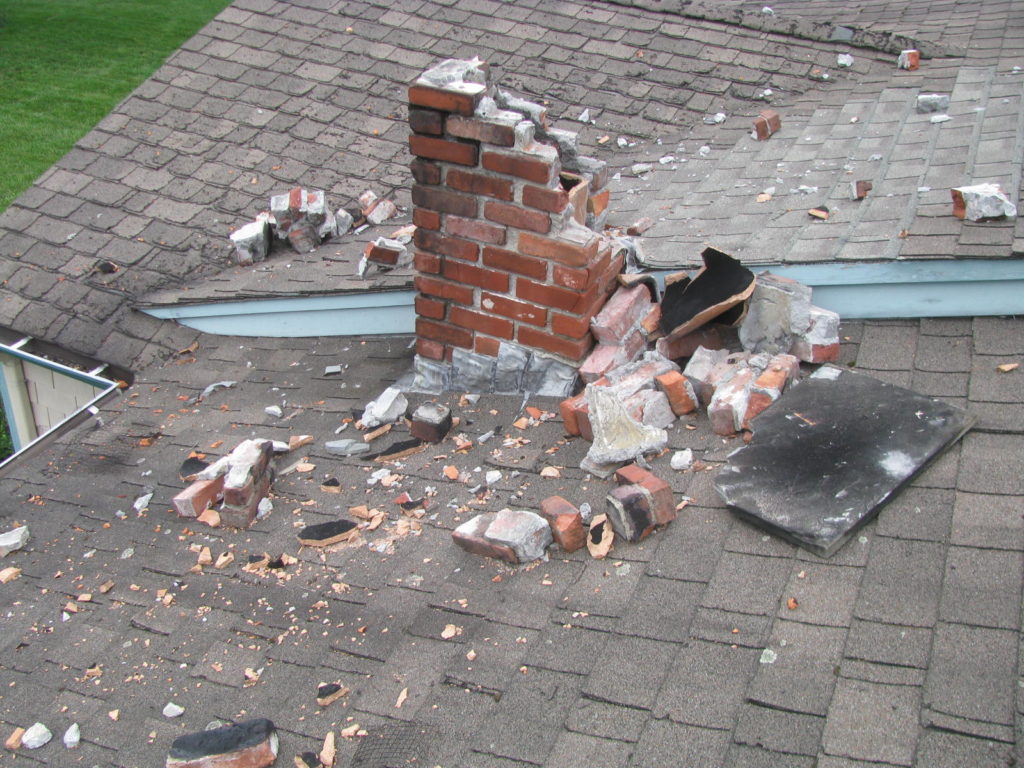
Weather reports show average wind speeds during the daylight hours at a whopping 70 miles per hour. Plano saw many of its power poles and large trees knocked down by the winds. Large tree limbs with a circumference of 6 inches are larger broke under the tremendous winds, creating considerable damage on their way down. At our client’s property, the windstorm built up enough pressure to tear the chimney off the roof, ultimately smashing down onto the cab of our client’s neighbors’ truck. Some minor water damage did occur due to the hole in the roof where the chimney used to be. The bulk of the windstorm damage happened to the outside of the home.

Experience Makes Satisfied Clients

Our client was compelled to hire us to represent them and mitigate the property damages that happened to the roof and interior of the home. We were able to hold the insurance company accountable for their role in processing our client’s claim and made them honor their contract with the insured. With a new chimney shroud and no water leaks through the roof, our satisfied client is now enjoying the closure and payout that comes from hiring one of our experienced insurance claims attorneys.

Houston Property Insurance Lawyers

We can help with your homeowner’s insurance claim denial. Our experienced property insurance attorneys have represented more than 1,000 clients in cases against insurance companies and aggressively protect the rights of insurance policyholders. Consultations are free. Contact us today.

Houston-Women-Blamed-For-Damage-From-Storm-Damage

A Houston client was forced to sue her insurance company, Allstate, because of the mismanagement of her claim and the actions of Allstate’s engineer and two of their adjusters. Allstate underpaid the claim after our client was initially told that all storm damages would be covered. Allstate then had a second inspection and hired an engineer to try to underpay our client and blame her for the interior damage to the property.

Thunderstorm Brings Violent Storm Damage

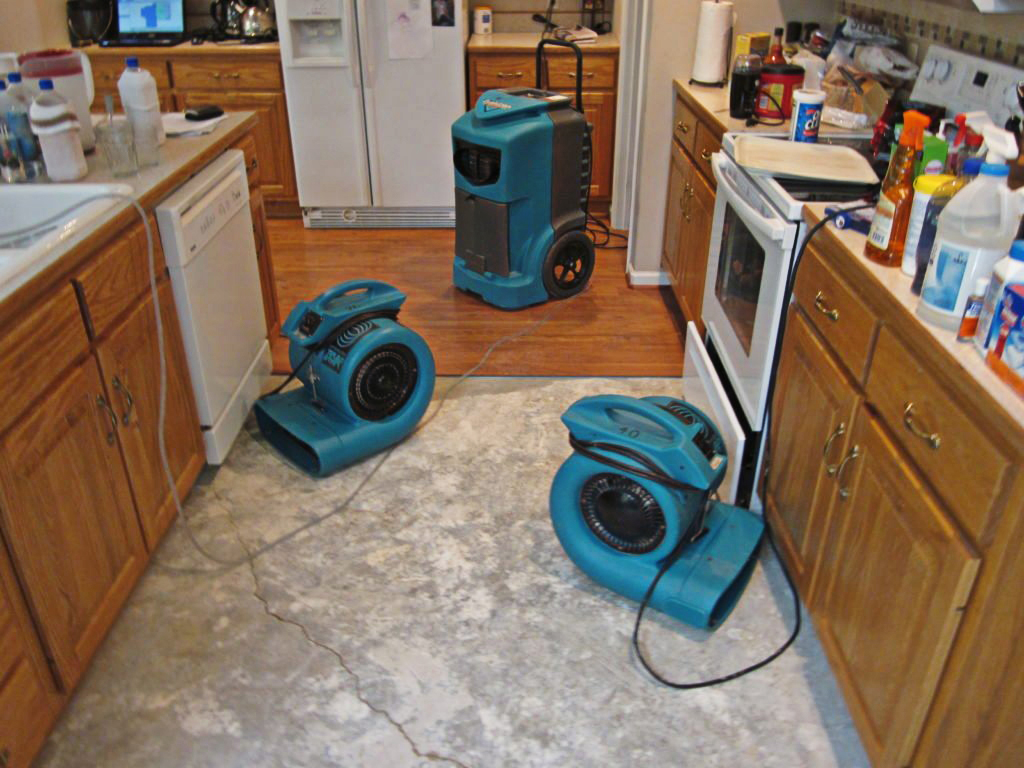
On February 25, 2018, a swath of thunderstorms pummeled the Houston area, filling the sky with lightning and torrential rains. Many residents experience power loss for several hours as a result of the high winds. The windstorm tore shingles from our client’s roof, which resulted in a leak that developed into pools of water on the kitchen floor. The water damaged the walls and flooring of her home.

Double Talk And The Run Around

At the initial inspection, Allstate’s representative told the insured that the damages were storm-related and would be covered under the policy. Instead of issuing payment, Allstate sent out a second adjuster who reviewed the damage and pinned the interior damage completely on our client. This second adjuster stated that there was damage to the roof,  but none of the interior damage was a result of the storm.  After months of no response from Allstate, they hired an engineer to justify the findings of the second adjuster.

Our third-party adjuster reviewed the damage just as Allstate had and determined there were some $12,000 in damages that Allstate had missed. Through our efforts, our client was able to replace the roof and repair all of the interior storm damage.

Houston Property Insurance Lawyers

Has your homeowner’s insurance claim been denied? We can help. Representing thousands of clients against big insurance companies, our home insurance claims attorneys aggressively protect the rights of the policyholder. Our consultations are free, and you owe us nothing until we win your case. Contact us today.

30
Apr
A-Business-is-Battered-But-Not-Broken

Wind and Hailstorm Damage in Houston

Our client’s office building was severely damaged in the wind and hailstorm that occurred in Houston on January 8th, 2016. The lawsuit against the Hanover Insurance Group was unavoidable due to their practices and the handling of our client’s insurance claim. Without anywhere else to turn, our client chose to hire us to make sure Hanover Insurance honored their commitment and paid for roof and damaged air conditioning units.

Huge Hail Causes Havoc in Houston

The wind and hailstorm dropped golfball-sized hail in Houston and the surrounding areas. The local news stations were inundated with images of people holding huge balls of hail. Our client’s property was a large commercial office building built in 1974, which featured five individual modified bitumen-style roofs. All of the facility’s air conditioning units were destroyed by the hailstorm. The roof-mounted units did not stand a chance against the sheer destructive force of the storm. Some exterior damage to the roof itself also occurred.

The Wind and Hailstorm Claim

Hanover Insurance outright denied our client’s insurance claim, stating after sending four of their adjusters, that no damage had occurred. Seeing that negotiating with their insurance company was a dead end, our client chose to sue Hanover Insurance. Our third-party adjusters evaluated the damage to the office building and determined the real property damage was far greater than nothing.

After mediation, our client was able to secure the finances to repair the roof damage and have all of the damaged air conditioning units replaced. Our client’s business would resume operations and their lives could get back to normal.

Houston Property Insurance Lawyers

We can help with your commercial property insurance claim denial. Our experienced property insurance attorneys have represented more than 1,000 clients in cases against insurance companies and aggressively protect the rights of insurance policyholders. Consultations are free. Contact us today.


Hurricane Harvey Damage in Texas

Port Aransas Flattened, But Not Forgotten

Hurricane Harvey Damage in Texas

At least 150,000 Texas properties were affected by Hurricane Harvey damage. Damage to the island community of Port Aransas was described as “100 percent damaged”. Our client’s home was one of those properties. Some properties are still trying to recover, even 3 years later.

Hurricane Harvey Pounds Port Aransas
On August 25, 2017, Hurricane Harvey barreled through Port Aransas, inflicting tremendous damage as it passed. Our clients’ home sustained extensive damage from the metal roofing panels being blown off of the home’s structure caused by the Category 4 winds. After the hurricane, our clients promptly submitted a homeowners insurance claim to TWIA, hoping the insurance giant would help them repair their home.

TWIA Gets It Twisted
As with most insurance policies, the client had a duty to mitigate his damages. Not wanting to leave his home exposed to the elements, the client paid out of pocket for a new roof. Even with receipts in hand, TWIA refused to reimburse for the new roof. TWIA had sent their adjusters out three times to inspect the property, but continued to deny coverage on the roof – all while the windows of the home had been shattered, the sheetrock had been ripped from the walls and trim boards were missing throughout the home. TWIA refused to reimburse for the roof, although the client had photos and invoices showing the roof had to be replaced due solely to Hurricane Harvey. 

TWIA agreed to pay for miscellaneous exterior and interior damage, but not the costly metal roof.  After applying the $35,000 deductible, our client was left without the funds necessary to continue on other necessary repairs.

Our third-party adjuster estimated the real damage to our client’s home at over $100k.

TWIA’s actions forced our client to retain an attorney so he could receive compensation for the new roof for his home. Late in 2019, the Chad T. Wilson Law Firm filed suit, on behalf of our client, against TWIA. The case was later settled during mediation netting an additional $40,000 for our client.

Houston Property Insurance Lawyers
We can help with your homeowner’s insurance claim denial. Our experienced property insurance attorneys have represented more than 1,000 clients in cases against insurance companies and aggressively protect the rights of insurance policyholders. Consultations are free. Contact us today.

1 2 3 4 5