Minnesota Homeowners Face Shrinking Insurance Coverage

As severe weather season approaches in Minnesota, many homeowners are taking a closer look at their property insurance—only to find that coverage isn’t what it used to be. According to a recent report by CBS Minnesota, insurance companies in the state are quietly rolling back protections, increasing deductibles, and limiting how storm-related damage—particularly roof claims—is handled.

Unfortunately, this trend isn’t unique to Minnesota. At Chad T. Wilson Law Firm, we’ve seen these tactics play out in Texas, Colorado, Florida, and California, where insurers have responded to rising climate-related losses by cutting corners—often at the expense of the very policyholders they promised to protect.

With extreme weather events becoming more frequent and insurance companies pulling out of Texas, residents are facing tough decisions. Some are forced into the Texas FAIR Plan, a last-resort insurance option for those denied coverage, while others are considering going without insurance entirely—a risky gamble in a state prone to hurricanes, tornadoes, and hailstorms.

The Shifting Landscape of Roof Coverage

One of the biggest changes Minnesota homeowners are now facing? A dramatic shift in how insurers handle hail damage and roof claims.

“Hail losses, specifically as it relates to roofs, are some of the biggest cost drivers right now,” said Aaron Cocking, an insurance industry lobbyist. To recoup losses, insurance companies are increasingly prorating roof claims—meaning the amount they’ll pay depends on the age of your roof—and applying separate deductibles based on damage type, rather than using a single, standard deductible.

This practice mirrors what we reported in Texas, where we covered how increasingly complex policy language and selective coverage limitations are leading to widespread confusion—and in some cases, outright denial of valid claims.

Homeowners Are Often Unaware Until It’s Too Late

“Many homeowners think, ‘I’ve got home insurance—I’m covered,'” said Cocking, “but they don’t actually read into it.”

This is a dangerous assumption, and one that’s exploited all too often. As noted in our recent coverage of the Texas insurance crisis, more and more policyholders are learning—after damage occurs—that their policies exclude or drastically underpay storm-related repairs.

Dan Walrach, a Minnesota-based contractor, echoed this concern. “Read your policy,” he advised. “If you don’t know how to read your policy, find someone to help you read it.”

What Homeowners Should Do Now

This is sound advice for anyone living in a storm-prone region. Here are key steps every homeowner should take to protect themselves:

  • Review Your Policy Now – Don’t wait for damage to happen. Know your deductibles, exclusions, and whether your roof is covered at replacement cost or actual cash value.
  • Ask Questions – Contact your agent and ask specific questions about hail, wind, and water damage.
  • Document Everything – Take photos of your roof and exterior now, before storm season, as a baseline for future claims.
  • Know Your Rights – If you feel a claim has been unfairly denied, underpaid, or delayed, contact a qualified insurance attorney.

How Chad T. Wilson Law Firm Can Help

At Chad T. Wilson Law Firm, we specialize in helping policyholders fight back when insurance companies fail to honor their contracts. Whether you’re in Minnesota, Texas, or any other storm-prone state, we understand how to navigate complex insurance disputes and hold carriers accountable.

If your claim has been denied, delayed, or underpaid, contact us for a free case evaluation. We don’t get paid unless you do.

Insurance Companies Denied The Most Claims

The challenges facing homeowners in disaster-prone areas have grown exponentially, particularly in California. In 2023, three major home insurance companies in the state denied claims at rates significantly higher than the national average, according to a report from Weiss Ratings (source). This trend raises concerns about the state of home insurance amid a climate crisis that continues to increase the frequency and severity of natural disasters. Here are the insurance companies that denied the most claims.

The Numbers Behind the Insurance Denials

Weiss Ratings found that affiliates of Farmers Insurance, based in Los Angeles, denied approximately 50% of claims in California in 2023. USAA affiliates followed closely, declining 48% of claims, while Allstate Insurance, headquartered in Illinois, denied 46% of claims. These figures are starkly higher than the nationwide claim denial rate of 37% and represent a sharp increase from 25% two decades ago.

It’s important to note that these numbers reflect claims denied before California’s devastating wildfires in Los Angeles, which have destroyed more than 12,000 structures. The surge in climate-related disasters has sent insurance costs soaring and, in some cases, prompted insurers to drop coverage in high-risk areas altogether (sourc

Understanding Why Insurance Claims Are Denied

While the Weiss report paints a concerning picture, insurance companies argue that the numbers are more nuanced than they appear. Many of the denied claims cited in the report were closed without payouts because:

  • Damages Did Not Exceed the Deductible: Claims were below the policy’s threshold for coverage.

  • Policy Exclusions: The reported damage was not covered under the specific policy.

Despite these explanations, the end result for policyholders remains the same—no financial assistance to repair or rebuild after damage.

The Climate Crisis and Its Impact on Insurance

Martin Weiss, CEO of Weiss Ratings, attributes the rise in denied claims to the increasing number of climate-related disasters that inflict severe damage or total destruction on homes. The human-driven climate crisis has made extreme weather events more frequent, leaving insurers grappling with soaring costs.

In response to the Los Angeles wildfires, California Insurance Commissioner Ricardo Lara took action to protect affected policyholders. Lara prohibited insurance companies from dropping or refusing to renew policies for up to a year for those impacted by the fires, ensuring homeowners have a safety net as they recover (source).

“Losing your insurance should be the last thing on someone’s mind after surviving a devastating fire,” Lara stated.

What This Means for Homeowners

The Weiss report highlights a critical issue for policyholders: even with protections against non-renewals, insurers are not obligated to approve all claims. This underscores the importance of understanding your policy’s terms, including coverage limits, exclusions, and deductibles.

For homeowners facing denied or underpaid claims, working with an experienced insurance attorney can make all the difference. Legal representation can help policyholders navigate the complex claims process, challenge unfair denials, and secure the compensation they deserve.

How Chad T. Wilson Law Firm Can Help

At Chad T. Wilson Law Firm, we specialize in holding insurance companies accountable for their obligations to policyholders. If your claim has been denied or underpaid, our dedicated team is here to fight for your rights and ensure you receive a fair resolution.

Don’t let your insurance company shortchange you in your time of need.

Contact us today for a free consultation and let us help you rebuild with confidence.

Tips for 2024 Derecho and Hurricane Beryl Storm Claims


Texas residents and property owners continue to be absorbed in the post-derecho of 2024, and Hurricane Beryl. Navigating the storm of insurance claims can be maddening and confusing. But that’s not surprising when your house or business is damaged or destroyed and you are dealing with property damage and loss. Here’s a brief blog to address the concerns that most Texas citizens will have after going through a tumultuous time and dealing with an insurer or insurers on a claim.

Reviewing Policy for Derecho and Beryl Claims

Whether you have suffered a home covered by your insurance or not, the first thing you want to do with your insurance company is to read – or better yet, have an attorney read – your policy. This is the document that spells out what is and is not covered in the event of windstorms, hail damage, flood damage and other natural disasters that are often a part of a derecho and a hurricane.

  • Make sure there’s no exclusion on the policy for the things you care about – for example, water damage from certain types of plumbing problems or mold.
  • You Live in the Family Home: Did you know that, for a fire-related claim, you must stay in the home and ensure it is habitable? Know Your Deductibles: Did you know that you have to pay deductibles out of pocket before insurance starts paying your claims?

Common Reasons for Claim Delays and Denials

There why an insurance claim might be delayed or denied – none of them absolute nightmare scenarios, but all of them worth knowing about so you can avoid the common traps.

  • Incomplete Documentation:

    One of the most significant causes for delays is incomplete documentation.
    • Submit all required forms and evidence promptly.
    • Keep detailed records, including photos and receipts.
  • Policy Exclusions:

    Policies often contain specific exclusions that can complicate claims.
    • Carefully read the exclusions section to understand what is not covered.
    • Consult with an attorney if you have concerns about the language of your policy.

Handling Disputes with Your Insurance Company

Unfortunately, disagreements over benefits are not uncommon between policyholders and insurers, especially after a widespread disaster has occurred. Here are some things you can do if you find yourself in a dispute.

  • Always request detailed explanations for any denials or reductions of your claim.
  • Ask for an Unbiased Review: Hire an independent appraiser to come in and review what was broken and objectively describe what was damaged.
  • Keep a Timeline: Keep a meticulous timeline of all your interactions and communications with your insurance company.
  • Document Everything: Writing is better than talking, if you get the message in writing.

Legal Recourse

And if everything else fails, filing a lawsuit may be your last resort. The Chad T. Wilson Law Firm represents policyholders in this regard.

When to Contact an Attorney

It’s not easy to know when to contact an attorney, but typically if your claim is significantly delayed, if you are wrongly denied, or if settlements are extremely low, you should consider hiring an attorney.

  • Prolonged Delays:

    If your claim is delayed without reasonable cause.
  • Unfair Denials:

    If you believe your claim has been unjustly denied.

How We Can Help

Our firm, the Chad T Wilson Law Firm, helps policyholders recover the full measure of their recoverable benefits. We are skilled insurance policy specialists and work to make sure you receive the benefits you are owed.

  • Free Consultation:

    We offer a free consultation to evaluate your case.
  • Contingency Basis:

    based on contingency fees – you don’t pay unless we recover a settlement on your behalf.

Steps to Strengthen Your Claim

Here are some things you can do to prepare yourself well in advance to make a stronger case:

  • Photograph Everything:

    Take multiple photographs of the damage from various angles.
  • Secure Temporary Repairs:

    If possible, secure temporary repairs to prevent further damage.
  • Collect Receipts:

    Obtain receipts for temporary repairs and lodging if you need to leave your home.
  • Keep All Communications:

    Save every email, letter, and note related to your claim.
  • Create a Claim Diary:

    A diary keeping track of every step you take and every person you contact can be useful.

Conclusion

Despite the trauma of surviving the 2024 derecho and Hurricane Beryl (and the aftermath of the record-breaking insurance claims), you don’t have to feel that you’re back in the deep end. You can educate yourself about your policy; know what kinds of claims are most commonly denied; and, when needed, work with an attorney.

The Chad T Wilson Law Firm is dedicated to helping Texans rebuild and recover through these trying times. If you find yourself in a fight with your insurance company over a claim, call us today for a free consultation and let us help you get the compensation you deserve.

Learn more about us at cwilsonlaw.com or call 833-942-0678 to schedule a consultation.

Homeowners Insurance Claim Victory Exceeds Policy Limits

Homeowners Insurance Claim Victory Exceeds Policy Limits

Policy limits put a cap on how much an insurer has to pay for an insurance claim. Policy limits determine the maximum amount an insurer has to pay and are set at the time the insurance policy is written. Some circumstances invalidate policy limits, such as the insurance company’s actions when handling the claim.

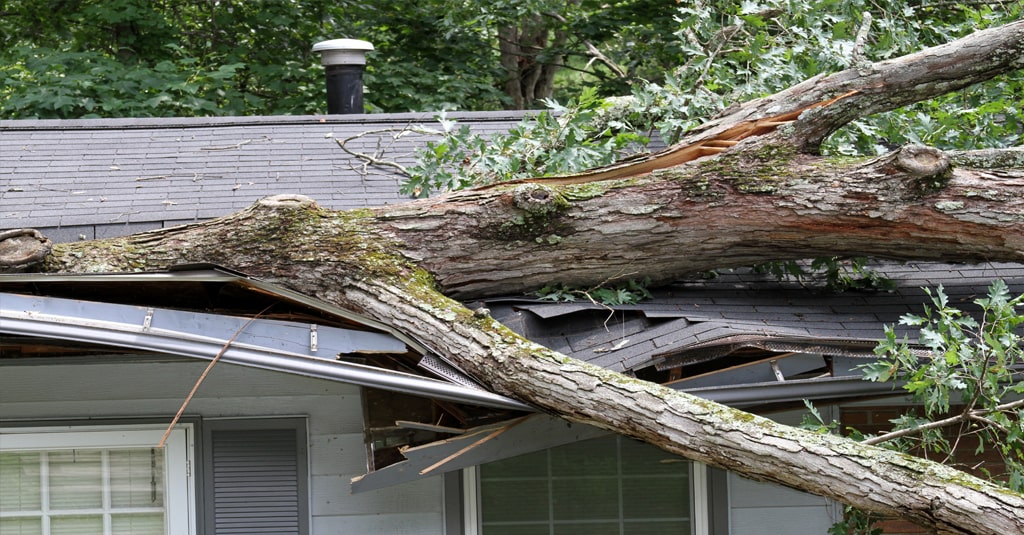
For Ruth, policy limits mean something else. On Memorial Day weekend, 2018, Ruth was sitting on her patio when lightning from a developing storm struck a tree in her yard. The tree split in half and crashed into Ruth’s roof, buckling the rafters and causing extensive roof damage. The rain made its way through the massive holes in the roof, saturating all of her belongings in the home. The tree also took out the powerlines going up to her home leaving the residence without power.

Panicked and devastated, Ruth called her insurance company only to be told she would have to wait until the Tuesday after Memorial Day. The lightning strike occurred on Saturday. This meant she would have to go three days without power in her home.

Living out in the country up in North Houston, Ruth did not see many options and hired her own contractors to remove the tree and tarp the roof. Her friends would lend a hand in moving her belongings out of her house so they could dry. Without electricity to the home, Ruth decided to stay with her mom, albeit for a short time until the property damage could be addressed.

The insurance company began their inspection which ended with them saying they would need an engineer to sufficiently assess the damages. At that time, the insurance company wrote her a check for $20,000. Her insurer did not offer to pay her ALE (Additional Living Expenses) because they were under the false impression that Ruth wanted to stay with her mother.

Ruth ended up staying with her mother for 18 months.

At Ruth’s residence, mold began to grow throughout the house because the house was never adequately dried out after the storm. As time passed the mold got worse. The insurance company hired mold experts to evaluate the mold damage. The mold experts agreed that the mold damage was severe but never followed through. A second check for another $20,000 would arrive unexpectedly and with no indication if it was for the mold damage or not.

Frustrated with the results, Ruth hired a public adjuster to help her situation, but the insurance company would not communicate with this adjuster. Determined to hold her insurer accountable, Ruth turned to us. We in turn filed a lawsuit. During negotiations, we discussed how wrong it was for the insurance company to stall and not offer to pay for Ruth’s living expenses instead of her staying with her mother.

The insurer never offered her assistance, an inventory of contents, or took the effort to address the mold damage. The mold damage may not have been a covered peril, but due to the insurance company’s actions, the mold got worse.

Ruth’s case was resolved before going to trial. Negotiating around policy limits was the main issue. Due to the severity of the mold damage, our client felt her damages exceed her policy limits. What should not have been a total loss ended up that way due to the insurer’s inactions. Through our efforts, Ruth was able to rebuild her life and her home. We are happy to have been able to assist Ruth with her home insurance claim and she is grateful to be able to leave the last year and a half of her life behind her.

If your homeowner’s insurance claim has been denied, delayed, or underpaid, call the expert property litigation attorneys at the Chad T. Wilson Law Firm at (832) 415-1432. Maximize your settlement and contact us today!

 links roof damage to hailstorm activity

Weather Service Report Links Roof Damage to Hailstorm That Insurance Company Claims Never Happened

Paying a high premium on an insurance policy can be a burden most people are familiar with. At some point in everyone’s life, you will need insurance. Whether that’s to pilot a boat, drive a car, or own a home, insurance is meant to financially compensate the policyholder if their property is lost, damaged, or stolen. Insurance companies make their bread and butter off their policyholders and in turn, those policyholders expect a reasonable investigation and fair compensation when they are required to file a claim because their property is damaged or made unusable.

On the night of April 18th, 2020, Montgomery County experienced a powerful wind and hail storm that blanketed the area in 1.2-inch size hail and wind gusts powerful enough to knock down several trees and powerlines throughout the county. Our client’s home endured the storm that evening. The hail damaged portions of our client’s roof and a storage building. The damage to the roof was severe enough that water had penetrated the roof and made its way inside through the ceiling of a utility room near the rear of the home. The hail also damaged gutters and drainage downspouts on the home.

Due to some unforeseen circumstances, some time passed before the claim was reported in March 2021. The insurance company received the claim—as it would any other—and began investigating the incident. As it would turn out, our client had canceled his policy with the insurance company in December 2020, prior to reporting the claim. The policy was canceled because our client ended up going with a different insurance company.

After its investigation, the insurance company denied our client’s claim. The alleged late reporting of the claim and the fact that the client had canceled his policy prior to reporting the claim likely factored into the insurance company’s decision.

Once the case came into our hands, we filed a lawsuit and pressed the insurance company immediately during discovery. During that process, we learned that the insurance company was using a third-party weather data source to pull aggregated data, which showed that the most recent date for sizable hail at our client’s home was 1-inch or larger hail which fell on September 19th, 2019. It seemed clear that the adjuster for the insurance company did not look at any other weather data. As a result of the tunnel vision that this report created, the insurance company then used this date as the actual date of loss.

Conveniently for the insurance company, there was a provision in the insurance policy stating that if the property damage is reported one year or 365 days after the date of loss, the insurance company can deny the claim.

In other words, with this claim the insurance company used favorable weather data from its preferred third-party vendor—apparently without checking other sources—as an excuse to move the date of loss to an earlier date. It then retroactively relied on the late reporting provision in the policy to deny the claim.

Our own investigation into the claim using other weather data sources—including the Severe Weather Data Inventory database provided by the National Oceanic and Atmospheric Association, or NOAA—uncovered severe hail in the immediate area of our client’s home on April 18, 2020. This date was within the policy period prior to cancellation and within one year of when the claim was reported, meaning that the late reporting provision did not apply.

When confronted with conflicting data, the insurance company initially stood its ground, believing its weather data as gospel. But our negotiating position had been improved and we were able to steer the case into mediation quickly. In mediation, we were able to get the insurance company to agree to a settlement that was favorable for our client and would allow him to complete the repairs to his home.

We are proud to say this case ended in a good recovery for our client and righted a wrong by the insurance company.

Many disputed wind and hail claims depend heavily on documenting and proving that severe weather impacted an insured’s property on a particular date. Insurance companies will use their own preferred third-party vendors to obtain data as part of their investigation, sometimes even consulting multiple services but only providing the insured with the data that supports the insurance company’s position. Our firm is very familiar with this tactic and frequently resolves cases where these issues are involved.

FREE CASE REVIEW

If your home or business was damaged by a wind or hailstorm and your insurance claim has been denied, delayed, or underpaid, call the expert property litigation attorneys at the Chad T. Wilson Law Firm today. Maximize your settlement and make the insurance company pay.

Texas Jury Awards Damages To State Farm Policyholder

Victory: Texas Jury Awards Damages To State Farm Policyholder Over Unfair And Deceptive Practices

Linda Veach first called her insurance company, State Farm, the day after a big and loud storm passed through Irving, Texas on June 6 of 2018. When she called to report her concerns, she was told that nobody from State Farm was going to come out and look at her house and that they did not think any damage was done. Trusting her insurance company, she accepted what she was told. When the damage to her seven-year-old roof was later pointed out to her by a neighbor, she looked for herself. She found the “dents” that were caused by hail. Linda called State Farm again, explained what she saw, and let them know that she really wanted them to look at her hail-damaged roof.

State Farm sent their adjuster. He spent about an hour going over the roof and inside of the home only to tell Linda that there was some damage to a flat part of the roof and a few other parts of the home. He left a few handwritten notices and a check for $549.95. Days later his actual estimate and partial denial letter came in the mail. The estimate did not match what was told by the adjuster. It included coverage for some hail-damaged items on the outside of the house and a few interior repairs. Not included in the estimate was any of the hail-damaged roof, not even the flat roof that Linda was told had hail damage.

Linda tried to handle things on her own, asking State Farm to take a better look, and even unsuccessfully trying to invoke the appraisal clause in her State Farm policy. Throughout the process, State Farm and its representatives played “gotcha” with her claim, raised technicalities against her, and refused to do the right thing. So, Linda hired the Chad T. Wilson Law Firm and a suit was filed against State Farm. 

Chad Wilson and Robert House of the Chad T. Wilson Law Firm fought to get answers and to protect Linda from these games. Along the way, they tried to get State Farm to resolve the case through negotiations and mediation. State Farm actively failed to do right by its policyholder at every step along the way. State Farm hired biased experts who said that there was no hail damage done to Linda’s roof, but instead what looked like hail damage was a product defect on the shingles. State Farm even tried to keep their full expert reports and other materials from their policyholder.

Through the four-day trial in United States District Court, it became clear that State Farm had all the information they needed to take the correct action on the date of the very first inspection. On August 26, 2021 the jury returned its verdict finding that State Farm failed to comply with its insurance policy, awarding all costs required for Ms. Veach’s repairs, and that State Farm engaged in unfair or deceptive acts or practices that caused damages to the plaintiff, awarding a little more than two times the costs for the repairs for those damages. Separate from the jury’s findings, the court will be asked to assess attorney fees and other costs against State Farm.

The jury told State Farm that it could not take advantage of its policyholders and hope they will go away silently and thanks to the Chad T. Wilson Law Firm, Linda Veach will be able to get the repairs done to her home and fix all the damage caused by the hailstorm.

In March this year, the Texas Supreme Court published its landmark opinion on another Chad T. Wilson Law Firm case – again, a client insured by State Farm, Luis Hinijos.  This was a huge win for all policyholders in Texas because it stopped all insurance companies from utilizing a carrier-created loophole to circumvent Texas law.  Here’s the typical scenario. An insured has a covered loss and notifies their insurance company.  The company would accept the claim and pay pennies on the dollar of the damages. The insured would complain but the carrier would not budge far from its initial position. The insured would then sue and the carrier, State Farm being the worst culprit, would run up litigation expenses. Appraisal of the damages would be invoked to set the cost to repair; the carrier would send a check for the appraisal award less the depreciation less the deductible less prior payments if any. The carrier would run back to the court and ask for summary judgment claiming “no harm, no foul judge” – and they were getting away with it. This left insureds economically upside down on their cases. The Chad T. Wilson Law Firm took Mr. Hinojos’s case to the Texas Supreme Court to stop this trend in its tracks. The Court agreed stating that an insurer is not absolved of its statutory liability when it pays only part of a claim within the statutory deadline set forth in the statute. An insurer that fails to pay all amounts that “must be paid” under the applicable policy will be liable for interest and attorney’s fees. On the street, this means if an appraisal award comes back higher than the insurance company’s initial estimate of damages, they owe the difference plus interest plus attorney fees and they are still on the hook for damages for violations of the Texas Insurance Code and Texas Deceptive Trade Practices Act. 

The Chad T. Wilson Law Firm handles insurance property disputes and takes on tough, serious cases against some of the largest corporations in America.

Hailstorm-Damage-Puts-Faith-in-Question

Hailstorm Damage Puts Faith in Question

The 2016 storm season was the most expensive storm season on record for Texas. On March 17th, 2016 Arlington, Texas experienced no less than six recorded hailstorms, the largest of which generated hail two-and-a-half inches in diameter. The hazardous weather system began Thursday morning, dropping huge pieces of hail and grounding flights out of DFW Airport. This was a monster storm that damaged many homes in the area, our client being one of those homeowners.

The roof damage was so severe that our client submitted a homeowners insurance claim through his insurance provider, State Farm. After filing the roof damage claim, the insurer sent out their adjuster who inspected the property damage and determined there was none or below our client’s deductible. Blindsided by his insurer’s stance, our client hired us and invoked appraisal for their case. The appraisal award came back at 80,000 times the amount of damages originally assessed by State Farm.

State Farm paid most of the award. To collect the remainder of the award and interest and attorney fees, our client pursued his insurer by filing suit, declaring his insurance company had acted in breach of contract and violation of Chapter 541 of the Texas Insurance Code, the Texas Deceptive Trade Practices Act (DTPC), and the Texas Prompt Payment of Claims Act (TPPCA). To guard their profits, insurers every so often commits deceitful practices, deliberately distort their policy language to avoid paying a claim, use absurd delays to avoid resolution of a claim, or make frivolous demands about proof of loss. This is called a bad faith insurance practice.

Our client’s insurer responded with a motion for partial summary judgment on all our client’s claims as a means of staving off breach of contract and TPPCA pursuits based on the Texas Supreme Court decision in Ortiz. State Farm argued that they had paid the award and therefore there was no breach of contract or extra-contractual claims left to pursue.

Is It Bad Faith, Bad Luck, or Both?

For the statutory bad faith claim to stick, our client had to show a breach of contract by his insurer. The insurer contends that a breach of contract is a prerequisite to statutory bad faith, yet policyholders argue a breach of contract is only a prerequisite to bad faith when the claim is not covered.

Generally, there can be no claim for bad faith when an insurer has promptly denied a claim that is not covered. However, failure to show a breach of contract does not alleviate a policyholder’s bad faith claims. What this means is the insured must show coverage, not a breach of contract. It is undisputed that our client’s claim under the policy was covered. The insurer did find damage, below the deductible when the claim was initially adjusted.

The only fair and rational analysis of the law that does not offend common sense or public policy is one that preserves an insurer’s responsibility to deal with an insured in good faith when the insured’s claim is covered. Our client’s insurance providers manipulation of the law would allow them to ignore their responsibility and systematically delay, deny, or underpay insurance claims until the insured hires an attorney and sends a pre-suit notice letter suing for breach of contract and bad faith, then to simply invoke appraisal, pay the award, and weaken the insurer’s contractual liability but also its statutory liability for bad faith acts and the adjustment process.

At the hearing, our attorneys argued the above and pointed out that an appraisal award that is 80,000 times higher than the amount first assessed by State Farm, and the unilateral (line-item veto) of certain damages in the award, amounted to breach of contract and bad faith. The court agreed and denied State Farm’s summary judgment on all grounds.

Texas Property Insurance Lawyers

Has your homeowner’s or commercial business insurance claim been denied? We can help. Representing thousands of clients against big insurance companies, our insurance claims attorneys aggressively protect the rights of the policyholder. Our consultations are free, and you owe us nothing until we win your case. Contact us today.

Twice-Denied-Homeowners-Insurance-Claim-Leads-to-New-Roof

Twice Denied Homeowners Insurance Claim Leads to New Roof

Property damage may include damage to your home, your patio furniture, your fence, your mailbox, or any other belonging to your property. How much you may be able to recover for your property damage can be determined by proof of replacement value, repair costs, the inability of use until fixed or replaced.

Having a roof insurance claim denied is common. Luckily, a roof damage claim denial does not have to be the last word. Understanding the insurance claim process and how to challenge an insurance denial is a valuable skill for every homeowner. In most situations, your homeowner’s insurance covers roof damages due to a storm. You can expect a claim rejection letter if the peril is excluded by your homeowner’s insurance policy. Knowing what your homeowner’s insurance policy excludes is very important. Some standard homeowners insurance policies (HO-3) cover common disasters, but not everything. Some insurance policies have separate wind and hail damage deductibles. Make sure to read your policy carefully to understand what damage is covered.

It Was the Other Storm’s Fault

In the spring of 2016, the Spring, Texas area experienced a wind and hail storm that damaged the roof and exterior of our clients’ home. Our clients, one a 40-year plus emergency room nurse, filed a homeowners insurance claim with their insurer who sent out an adjuster who wrote the damage off as minimal and failed to cover the damage to the roof. The adjuster claimed the roof damage was less than $1000 and under the deductible, even though other houses in the neighborhood received new roofs due to the wind and hail damage. Our clients trusted the results the insurance company provided them with and did not pursue any action after the initial insurance claim denial.

Then came Hurricane Harvey a year later and the roof leaks that followed. Our clients filed another homeowners insurance claim to which their insurance company responded by sending out another adjuster, who came back telling them the roof leaks were a result of previous damage and/or wear and tear, not the storm. That meant the insurance company most likely misrepresented the scope of damages during the first claim back in 2016. Having experience with one denied homeowners insurance claim already, our clients called us to take their case. Our own third-party adjuster concluded the damage from the hailstorm in 2016 that went unrepaired was exacerbated by Hurricane Harvey and ultimately the fault of the insurance company for not fixing the repairs before the hurricane’s impact.

Bad Faith Insurance Claim Seeks Redemption

If the insurance company had fixed the repairs to the home from the initial claim, the damages inflicted during Hurricane Harvey would have been reduced or less severe. We filed suit and sent a demand letter to the insurance company, who settled at mediation with us and provided the funds for the repairs to the exterior of the home as well as a brand new roof for our clients.

Because an insurance company has an obligation of good faith and fairness with the people it insures, those who believe an insurance company has not acted fairly and in good faith also can have a claim for common law bad faith and statutory violations. The Texas Insurance Code also provides the rules for how insurers must behave towards policyholders.

Houston Property Insurance Lawyers

Has your homeowner’s or commercial business insurance claim been denied? We can help. Representing thousands of clients against big insurance companies, our insurance claims attorneys aggressively protect the rights of the policyholder. Our consultations are free, and you owe us nothing until we win your case. Contact us today.

Any-Which-Way-the-Wind-Blows-in-Georgia

Any Which Way the Wind Blows in Georgia

In the path of the storm was our client, a nursing home. Wind-blown debris brought on extensive roof damage along with exterior property damage to the siding, gutters, and HVAC units. This region has a history of property damage going back as far as 1845, so for the residents of the area getting used to property damage has become routine. What is also routine is how our client’s insurer responded to the commercial business insurance claim.

If your commercial business or homeowner insurance claim has been denied then you may be interested in how we have helped this client!

On October 11th, 2018, Hurricane Michael impacted Dougherty County, Georgia. What was the first Category 4 hurricane to hit the US mainland in over a century slowly progressed through Florida into George, where it became a Category 3 by the time it reached the city of Albany. The wind damage was more severe than the damage sustained in Hurricane Irma from a year previous, with wind gusts reaching over speeds of a hundred miles per hour. Many trees had been knocked down along with several businesses losing their facades and an abundance of road debris. The hurricane damage was so bad that residents were asked to stay inside. More than ninety percent of Albany’s Utilities Authority’s customers (24,000+ people) woke up Thursday morning with no power.

Insurance Policies Versus State Laws

Some insurance companies are allowed by the state to have shorter deadlines than the state’s law allows if the parties involved can agree. Georgia’s laws have a general two-year statute of limitations, but per our client’s insurance policy they were only allowed one year to file a lawsuit.

Thirteen days after the one-year limitations period, the insurance company sent our client a claim determination letter stating they had completed their review and determined there was no coverage. Later, we filed suit on behalf of our client. The insurance company responded with a motion to dismiss – claiming we filed suit more than a year after the date of loss. Our response to the court was that we did not have the right to sue until after the determination letter was received by our client and therefore excused from the one-year statute of limitation and the court should disregard the one-year statute of limitations.

On September 30th of this year, the court dismissed the motion to dismiss citing case law, that if the insurance company continues to adjust the claim with the insured and indicates the insurance company is continuing its investigation then the insured is excused from the one-year statute of limitations.

Professional Property Insurance Lawyers

If your commercial business or homeowner insurance claim has been denied, delayed, or underpaid your insurance claim, then we can help. The experienced attorneys at Chad T. Wilson Law Firm have represented more than a thousand clients in cases against insurance companies. Our property insurance lawyers aggressively protect the rights of insurance policyholders. Our consultations are free, and you owe us nothing until your case is won. Contact us today to see how we can help.

Homeowner's Insurance Claim Gets Back On Track

Homeowner’s Insurance Claim Gets Back On Track

Have you had storm damage and are now struggling with a homeowner’s insurance claim?

Storm damage hits Mineola, Texas, a small community in Wood County about 80 miles east of Dallas. Mineola is a railroad town and can trace its roots back as far as 1873. With a population just under five-thousand, life in this small Texas town tends to move at a slower pace. Some insurance companies prey on these areas. Such was the case for our clients, whose home was savagely beaten by the hailstorm the night of June 19, 2019 when their home was damaged. The homeowner’s insurance claim was initially denied.

We Will Not Be Railroaded

That night hail pounded Wood County, dropping hail the size of golf balls in some areas. The roof damage to our client’s home was so severe that rainwater had penetrated through the damaged portions of the roof and saturated sheetrock and carpeting throughout the home.

After completing a homeowner’s insurance claim with their insurer, our clients’ claim was denied. Refusing to accept a denial as the outcome, our clients’ pleaded with their insurer. The insurance company in turn sent out an engineer to inspect the roof damage. The engineer’s assessment was that the property damage should be covered under the homeowner’s insurance claim, but the amount of the damage was under the deductible.

Insurance Company Has One Track Mind

Knowing that they were in for a hard fight if they wanted any form of recovery, our clients hired us to represent them. The Chad T. Wilson Law Firm sent our clients’ insurer a demand letter that let the insurer know our client’s were serious about their claim. Upon receiving the demand letter, the insurer reversed course and agreed to pay for the roof and interior damage.

Homeowner’s Insurance Claim Gets Approved

From start to finish, this case was resolved in 30 days. There was no need for mediation or court.

Texas Property Insurance Lawyers

Has your homeowner’s or commercial business insurance claim been denied? We can help. Representing thousands of client’s against big insurance companies, our insurance claims attorneys aggressively protect the rights of the policyholder. Our consultations are free, and you owe us nothing until we win your case. Contact us today.

1 2 3 4