Outer Banks Overwash Property Damage: What the N.C. 12 Closure Means
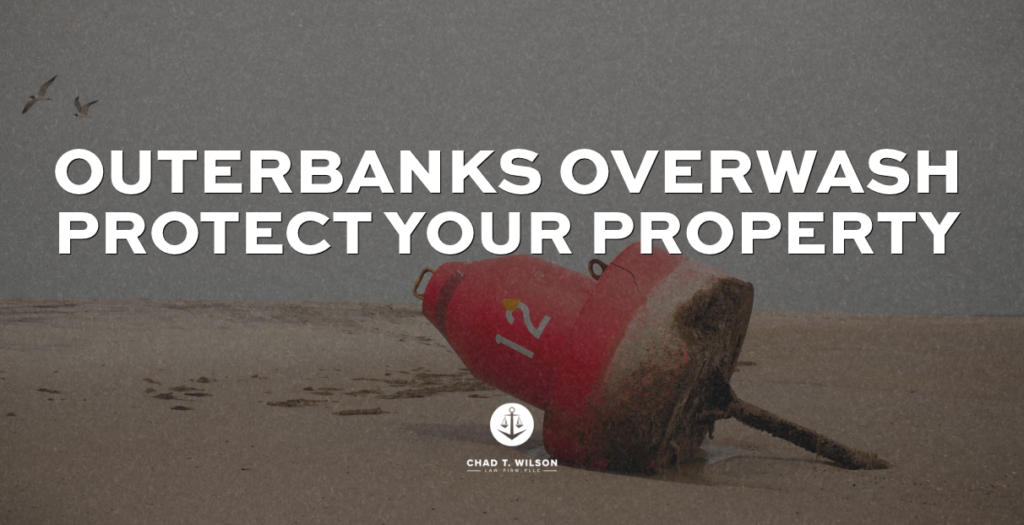
Outer Banks overwash property damage

By Chad T. Wilson Law Firm Staff, based on reporting by Island Free Press, October 22, 2026. Read the original reporting here.

If you own a home, a rental, or a business on Hatteras Island, the last few days have been stressful. Outer Banks overwash property damage from Subtropical Storm Josephine has closed N.C. Highway 12 and left part of the island reachable only by boat. Here is what has happened, why the cause of your damage matters, and what to document while access is still limited.

Key Takeaways

  • Ocean overwash tied to Subtropical Storm Josephine has closed N.C. 12 between the Marc Basnight Bridge and Rodanthe, and emergency ferry service now runs between Stumpy Point and Rodanthe.
  • The closure can delay inspections, repairs, material delivery, and business reopening, and those delays can affect a claim.
  • Flood and ocean overwash damage is generally covered only by flood insurance, while wind and wind-driven rain damage may fall under a homeowners policy, so the cause of each loss matters.
  • Photographs of water lines, every point of water entry, and dune or erosion loss help prove what happened and when.
  • A highway closure by itself does not prove covered damage at your property. Coverage depends on the cause of the loss and your policy language.

What happened on Hatteras Island?

An offshore nor’easter was designated Subtropical Storm Josephine on October 21. The National Hurricane Center reported no coastal watches or warnings, and the system has been moving northeast, away from the United States. The storm’s name is not the story. The local impact is.

Ocean overwash continued near the Pea Island Visitor Center during Thursday morning’s high tide. N.C. 12 remains closed between the Marc Basnight Bridge and Rodanthe, and the North Carolina Department of Transportation activated emergency ferry service between Stumpy Point and Rodanthe. Dare County reported that an earlier breach flooded the highway and destroyed roughly 1,000 feet of protective dunes. The National Weather Service has warned of lingering dangerous seas and swell even as the winds ease.

Why does the cause of your damage matter?

With a coastal event like this one, one property can take damage from several different sources at once, and your policy may treat each one differently. That is why separating the causes early is so important.

Ocean overwash and floodwater are generally covered only under a flood policy, such as one through the National Flood Insurance Program or a private flood insurer, not a standard homeowners policy. Wind damage and wind-driven rain that enters through a wind-created opening may be covered under a homeowners policy instead. Erosion and dune loss, access restrictions from a civil-authority closure, and lost rental income or business interruption each follow their own policy rules. None of this is decided by the headlines. It is decided by what actually happened at your property and by the words in your policy.

Who’s affected?

The people feeling this most are homeowners in Rodanthe and the northern Hatteras communities, owners of second homes and vacation rentals, and coastal businesses that depend on steady road access. When the only route in is a ferry, contractors cannot always get to the property, materials show up late, and a business may stay closed longer than the damage alone would require. Those delays carry real costs, and some policies address them through provisions for additional living expenses, loss of rental income, or business interruption. Whether yours does depends on your coverage.

What to do if you have Outer Banks overwash property damage?

If it is safe to do so, start building your own record while the event is fresh:

  • Photograph water lines on walls and foundations, every point where water entered, and any damaged dunes or access routes.
  • Save evacuation notices, road and ferry updates, closure bulletins, and anything that shows when you could and could not reach the property.
  • Keep receipts for lodging, mitigation, and emergency repairs, along with rental cancellations and records of lost income.
  • Write down every call with your insurer, including the date, the name, and what you were told.
  • Report your loss promptly and take reasonable steps to prevent further damage, which most policies require.

If your claim was denied, delayed, or underpaid

Sometimes the trouble starts after you file. A carrier may blame flood for damage that wind actually caused, stall while access is limited, or offer less than the repairs will cost. If your claim was denied, delayed, or underpaid, you do not have to accept that answer as final. Ask for the decision in writing, request the full policy and the adjuster’s estimate, and compare that estimate against your own documentation and a contractor’s bid. The gap between the two is often where the real conversation begins.

How Chad T. Wilson Law Firm Can Help

We can’t stop a storm, but we can stop your insurance company from unjustly denying what you are owed. Chad T. Wilson Law Firm represents policyholders, not insurers, and our team has resolved more than 6,000 claims. We help owners sort out which cause of damage belongs to which coverage, press for a fair inspection, and hold carriers to the policy you already paid for. If overwash or storm damage has left you fighting over a water damage claims dispute or broader storm damage claims questions, we can review your policy and your denial at no cost to you. We work on contingency, so there is no recovery, no fee. Call (833) 942-0678 to talk with our team. Denied, delayed, or underpaid? That is exactly the water we were built to navigate.

Practice Areas

  • Water and flood damage claims
  • Storm and wind damage claims
  • Denied, delayed, and underpaid claims
  • Bad faith insurance disputes
  • Business interruption and loss of rental income

This article is for general information only and is not legal advice. Any descriptions of storm conditions reflect reporting available at the time of writing, and coverage for any loss depends on the facts and your specific policy. No outcome is guaranteed.

Sources: Island Free Press, Dare County Bulletin, Public Radio East.
Filing a Screven County Tornado Claim After the October 10 Storms

Screven County tornado claim

By Chad T. Wilson Law Firm Staff — based on reporting by the National Weather Service in Charleston, October 2026. Read the original reporting here.

If a tornado crossed your property near Statesboro or Sylvania this month, you may already be weighing how to file a Screven County tornado claim. The National Weather Service has confirmed that two tornadoes touched down in Screven County, Georgia, on October 10 as the remnants of Hurricane Isaias moved through — including an EF-1 with estimated peak winds of 105 mph that carved a path nearly seven and a half miles long. When trees come down on homes and vehicles, the insurance questions follow quickly, and how you answer them in the first days matters.

Key Takeaways

  • The NWS confirmed two tornadoes in Screven County on October 10: an EF-1 in eastern Screven County and an EF-0 near Captolo.
  • The EF-1 traveled 7.49 miles with 105-mph winds, causing major damage to a mobile home and crushing several vehicles under fallen trees.
  • A Screven County tornado claim often involves several distinct losses — wind, tree impact, later water entry, and vehicle damage — that insurers may evaluate separately.
  • Photograph the damage and the fallen trees before cleanup, and keep records of the loss time, estimates, and insurer communications.
  • An official tornado path confirms the storm, but documentation is what ties the damage to your specific property.

What the National Weather Service Confirmed in Screven County

The completed survey from NWS Charleston identifies two tornadoes in Screven County from the October 10 event. The stronger one tracked across eastern Screven County and was rated EF-1, with estimated peak winds of 105 mph, a 7.49-mile path, and a maximum width of 200 yards. Surveyors documented numerous hardwood and softwood trees snapped or uprooted, major damage to a mobile home after a large tree fell on it, and several cars crushed beneath downed trees.

A second, weaker tornado touched down near Captolo and was rated EF-0, with estimated peak winds of 80 mph, a 1.45-mile path, and a maximum width of 25 yards. It snapped large tree branches and peeled back the tin roof of a standalone garage. The NWS reported no injuries or fatalities from the tornadoes it surveyed and does not plan additional field surveys, though paths may be refined later using satellite data.

Why Tree and Wind Damage Can Complicate a Screven County Tornado Claim

When a tornado’s main calling card is fallen trees, the resulting claim is often more layered than it first appears. A single large hardwood dropping onto a home can produce structural damage to the roof and walls, a crushed vehicle in the driveway, rainwater that enters through the new opening in the hours that follow, and the cost of removing the tree and tarping the roof. Insurers frequently assess each of those elements under different parts of a policy, and a mobile or manufactured home may carry its own coverage terms worth reading closely.

That is why a confirmed tornado track, while important, is only the starting point for a Screven County tornado claim. The official path establishes that a tornado moved through the area; it does not by itself prove that your property was struck or that every loss you are looking at is covered. Building that connection — clearly, with evidence — is what keeps a legitimate claim from being treated as something smaller than it is.

If Your Claim Was Denied, Delayed, or Underpaid

If you are facing a denied, delayed, or underpaid claim after the Screven County tornadoes, a few steady steps protect your position:

  • Document before cleanup. Photograph every elevation of the home, roof and opening damage, each fallen tree and the direction it fell, crushed vehicles, and any water that entered afterward.
  • Record your exact address and the loss time, and note when rain entered through any new openings.
  • Keep receipts for tree removal, tarping, temporary repairs, and debris hauling — these costs are often reimbursable.
  • Save every repair estimate and all written communication with your insurer, and request any claim decision in writing.
  • Before accepting a payment that seems low, make sure it reflects the full scope of the damage, not just the most visible part.

How Chad T. Wilson Law Firm Can Help

Chad T. Wilson Law Firm represents policyholders — not insurance companies — and our team has resolved more than 6,000 property insurance claims. Headquartered in Webster, Texas, we represent homeowners and businesses nationwide, including Georgia communities like those across Screven County. If your Screven County tornado claim has been denied, delayed, or underpaid, we can review your policy, help document the complete scope of the loss, and push for the coverage you are owed. Much of our work is handled on a contingency basis — no recovery, no fee — so getting a clear read on your claim does not add to the burden. You can read more about how we approach tornado damage claims or talk with a property damage lawyer about what you are facing. Denied, delayed, or underpaid? Call (833) 942-0678.

Practice Areas

  • Tornado damage claims
  • Storm and wind damage claims
  • Denied, delayed, and underpaid property insurance claims
  • Residential and commercial property damage

This article is for informational purposes only and is not legal advice. Every claim depends on its own facts and policy language, and no outcome is guaranteed. Tornado ratings and paths reflect preliminary National Weather Service findings and may be revised.

Sources: National Weather Service Charleston — October 2026 Tornadoes; WRDW — Tornadoes strike Screven, Allendale, Burke counties; WTOC — Tornadoes spotted across multiple counties as severe weather from Isaias remains

Allendale County Tornado Damage From the October 10 EF-1 Storms

Allendale County tornado damage

By Chad T. Wilson Law Firm Staff — based on reporting by the National Weather Service in Charleston, October 2026. Read the original reporting here.

The National Weather Service has confirmed two EF-1 tornadoes in Allendale County, South Carolina, on October 10, and for several families, the Allendale County tornado damage was anything but minor. Spun up by the remnants of Hurricane Isaias, the stronger of the two carried estimated peak winds of 110 mph and damaged four homes along a 3.2-mile path. The days immediately after a storm like this are when the most consequential decisions about an insurance claim tend to get made — often before a homeowner has had time to catch their breath.

Key Takeaways

  • The NWS confirmed two EF-1 tornadoes in Allendale County on October 10, with estimated peak winds of 105 and 110 mph.
  • The western Allendale County tornado damaged four homes and destroyed an outbuilding and two carports along a 3.2-mile path.
  • An official tornado track does not automatically prove that a specific property was damaged or that a claim is covered — careful documentation does.
  • Photograph every elevation of the home, roof and opening damage, fallen trees, and any water that entered afterward.
  • Preserve weather alerts, receipts, repair estimates, and every written communication with your insurer.

What the National Weather Service Confirmed in Allendale County

According to the completed survey from NWS Charleston, two separate tornadoes crossed Allendale County on October 10. The western Allendale County tornado was rated EF-1 with estimated peak winds of 110 mph. It traveled roughly 3.2 miles and reached a maximum width of 350 yards. Surveyors documented damage to four homes: one lost aluminum roofing material and its front porch, another experienced roof and exterior-wall failure on a rear addition, and two more sustained minor roof damage. The same tornado destroyed an outbuilding and two carports and knocked down trees across Highway 301.

A second EF-1 tornado tracked across northern Allendale County with estimated peak winds of 105 mph, a 1.75-mile path, and a maximum width of 200 yards. Its damage was concentrated in forested areas near Camp Jackson, where clusters of trees were snapped and uprooted before the tornado dissipated short of the Barnwell County line. The NWS reported no injuries or fatalities from any of the tornadoes it surveyed, and it does not plan additional field surveys, though paths may still be refined using satellite data.

Why an Official Tornado Track Is Only the Starting Point

It is tempting to assume that once the National Weather Service puts a tornado on the map, the insurance side takes care of itself. In practice, the official track is just the beginning. A confirmed path establishes that a tornado passed through the area; it does not, on its own, prove that your particular home was struck or that every item of damage you are seeing is covered under your policy. That connection has to be built property by property.

Tornado losses also rarely arrive in a single, tidy category. A home near the western Allendale County tornado might show direct wind damage to the roof, a tree that fell through an addition, rainwater that entered through the opening afterward, a crushed vehicle in the driveway, and the cost of debris removal and emergency tarping. Insurers often evaluate — and sometimes dispute — each of those pieces separately. Keeping them organized from the start makes it far harder for a carrier to treat a serious loss as a minor one.

If Your Claim Was Denied, Delayed, or Underpaid

Most homeowners do everything right and still run into friction. If you are dealing with Allendale County tornado damage and your claim has stalled, a few steady habits protect your position:

  • Document before you clean up. Photograph every elevation of the home from the ground, roof and opening damage, fallen trees and the direction they fell, crushed vehicles, and any water intrusion.
  • Write down the loss time and your exact address, and note when any rain entered after the initial damage.
  • Keep receipts for tarping, temporary repairs, debris removal, and anything you buy to prevent further loss — these are frequently reimbursable.
  • Save every estimate and all written communication with your insurer, and ask for any claim decision in writing.
  • Read the decision carefully before accepting a payment that feels low. A quick first offer is not always the full measure of what a policy owes.

How Chad T. Wilson Law Firm Can Help

Chad T. Wilson Law Firm represents policyholders — never insurance companies — and our team has resolved more than 6,000 property insurance claims. Headquartered in Webster, Texas, we represent homeowners and businesses nationwide, including communities across South Carolina. If your Allendale County tornado damage has led to a denied, delayed, or underpaid claim, we can review your policy, help document the full scope of the loss, and press for the coverage you are owed. Much of what we do is handled under a contingency arrangement — no recovery, no fee — so getting a straight answer about where your claim stands does not add to the pressure you are already under. You can learn more about how we handle tornado damage claims or speak with a property damage lawyer about your situation. Denied, delayed, or underpaid? Call (833) 942-0678.

Practice Areas

  • Tornado damage claims
  • Storm and wind damage claims
  • Denied, delayed, and underpaid property insurance claims
  • Residential and commercial property damage

This article is for informational purposes only and is not legal advice. Every claim turns on its own facts and policy language, and no outcome is guaranteed. Tornado ratings and paths reflect preliminary National Weather Service findings and may be revised.

Sources: National Weather Service Charleston — October 2026 Tornadoes; WRDW — Tornadoes strike Screven, Allendale, Burke counties; WTOC — Tornadoes spotted across multiple counties as severe weather from Isaias remains

Hurricane Isaias Insured Losses: Reading an Early Industry Estimate

Hurricane Isaias insured losses

By Chad T. Wilson Law Firm Staff — based on reporting by Reuters, October 13, 2026. Read the original reporting here.

Early estimates of Hurricane Isaias insured losses are beginning to come in, and the first figure from a named catastrophe-modeling firm gives Florida Panhandle property owners a sense of the storm’s scale. Verisk estimates insured onshore property losses from Isaias at roughly $1 billion to $2 billion, with wind expected to account for the vast majority of the total. It’s a useful marker for understanding the event — but, as we explain below, an industry estimate measures the storm, not your individual claim.

Key Takeaways

  • Verisk estimates Hurricane Isaias insured losses at approximately $1 billion to $2 billion for onshore property.
  • Wind is expected to drive almost all of the insured loss total, with storm surge a smaller, mostly flood-covered component.
  • Verisk identified Santa Rosa County and northeastern Escambia County as the areas with the most severe wind damage.
  • An industry-wide estimate does not establish the value of any single claim or confirm that a particular loss is covered.
  • Coverage depends on your specific policy language and the property-specific facts of your loss.

What the Verisk Estimate Says

According to reporting on the firm’s October 13 estimate, Verisk put insured onshore property losses from Hurricane Isaias in the range of $1 billion to $2 billion. The estimate covers residential, commercial, and industrial property as well as automobiles, across building, contents, and time-element (business-interruption) coverages, and it includes both wind and privately insured storm surge. Verisk characterized the event as “primarily wind-related” damage, with precipitation-driven flooding not expected to be a significant factor.

For context, Verisk’s number sits toward the lower end of the early estimates. Other modelers have published wider or higher ranges in the days since landfall. That spread is normal this soon after a storm: modeled estimates are built from exposure data, claims assumptions, and field observations that continue to be refined for weeks.

Where the Damage Was Worst

Verisk pointed to the western Florida Panhandle — specifically Santa Rosa County and northeastern Escambia County — as the hardest-hit areas for wind. That tracks with on-the-ground reporting after Isaias came ashore near Destin as a Category 2 hurricane: torn-off roofs on an apartment complex and a school gymnasium, a Pensacola hotel that lost its roof, and widespread downed trees and power outages across the Panhandle. In neighboring Okaloosa County, the most common damage was trees falling onto homes.

Why an Industry Estimate Is Not Your Claim

This is the part that matters most for homeowners and business owners. A catastrophe-model estimate is a market-level figure. It tells you how large the event was across thousands of policies; it says nothing about whether your roof, your contents, or your lost business income will be paid, or for how much. Those questions are answered by your policy and by the facts you can document at your address.

So treat the headline number as background, and put your energy where it counts: document the exact damage, the cause and chronology, the source of any water intrusion, the repairs, and your out-of-pocket expenses. Photograph everything before you throw it out, keep receipts, and write down dates. Careful documentation is the anchor that holds a claim steady when an adjuster’s early valuation comes in light.

If Your Claim Was Denied, Delayed, or Underpaid

Most policyholders deal with their insurer in good faith and expect the same in return. When that doesn’t happen, a few steps help:

  • Get your policy’s full declarations page and coverage forms, and read what is actually covered — don’t rely on a phone summary.
  • Keep a written log of every call, adjuster visit, and payment, with dates.
  • Ask for any denial or reduced payment in writing, with the specific policy language the insurer is relying on.
  • Get your own repair estimates so you can compare them against the insurer’s figure.
  • Watch your deadlines — notice requirements and proof-of-loss timelines matter.

How Chad T. Wilson Law Firm Can Help

Chad T. Wilson Law Firm represents policyholders — never insurance companies — and has resolved more than 6,000 property insurance claims. If your hurricane damage claims or broader storm damage claims from Isaias have been denied, delayed, or underpaid, we can review your policy, press your insurer on the specifics, and pursue what you are owed. Headquartered in Webster, Texas, and representing policyholders nationwide, we work on contingency — no recovery, no fee. Denied, delayed, or underpaid? Call (833) 942-0678 for a free policy review.

Practice Areas

  • Hurricane damage claims
  • Storm and wind damage claims
  • Denied, delayed, and underpaid claims
  • Commercial property and business-interruption claims
  • Bad faith insurance disputes

This article is for informational purposes only and is not legal advice. Industry loss estimates are not a measure of any individual claim, and no outcome is guaranteed. Coverage depends on your policy and the specific facts of your loss.

Sources: Reuters — Insured losses from Hurricane Isaias could reach $2 billion, Verisk says; Artemis.bm — Verisk estimates Isaias insured onshore property losses in $1bn–$2bn range; Insurance Business — Verisk puts Isaias insured losses at $1 billion to $2 billion

Florida Requests a Hurricane Isaias Major Disaster Declaration

By Chad T. Wilson Law Firm Staff — based on reporting by the Florida Governor’s Office and Florida Phoenix, October 16, 2026. Read the original reporting here.

On October 16, 2026, Florida formally asked the federal government for a Hurricane Isaias major disaster declaration, seeking broader federal support for communities across the Northwest Florida Panhandle. For homeowners and business owners still sorting through storm damage, the headline is encouraging — but the details matter. A request is not an approval, and federal aid works alongside your insurance, not in place of it. Here is a calm, plain-language look at what was requested and what it means for your claim.

Key Takeaways

  • On October 16, 2026, Florida formally requested a federal major disaster declaration for Hurricane Isaias.
  • The request seeks Public Assistance for 15 Northwest Florida counties and Individual Assistance for eight counties.
  • The declaration has not been approved, and FEMA registration for this request is not yet open.
  • Federal assistance does not replace an insurance claim and generally cannot duplicate benefits already paid by your insurer.
  • Policyholders should keep documenting losses and pursuing their insurance claims now, rather than waiting for federal action.

What Florida’s Major Disaster Request Actually Covers

The state’s filing asks for two kinds of help. The first is Public Assistance, requested for 15 counties: Bay, Calhoun, Escambia, Franklin, Gadsden, Gulf, Holmes, Jackson, Jefferson, Liberty, Okaloosa, Santa Rosa, Wakulla, Walton and Washington. If approved, Public Assistance can reimburse eligible state and local governments and certain nonprofits for debris removal, emergency protective measures, and the repair or replacement of damaged roads, bridges, public buildings and utilities.

The second is Individual Assistance, requested for eight counties: Bay, Escambia, Gulf, Holmes, Okaloosa, Santa Rosa, Walton and Washington. If approved, Individual Assistance can help eligible households with temporary housing, basic home repairs, essential personal property and other necessary disaster expenses — with particular focus on uninsured or underinsured losses.

Requested Is Not the Same as Approved

This is the part worth slowing down on. As of now, the federal government has not approved the Hurricane Isaias major disaster declaration. Individual Assistance eligibility has not been established, and FEMA registration for this request is not yet open. Earlier in the month a separate federal emergency declaration was approved, but that is a narrower form of help and is not the same as the major disaster declaration now under review.

If the request is granted and registration opens, residents would apply through the official channels — DisasterAssistance.gov or 800-621-3362. Until then, be wary of anyone claiming that aid is already “available” or urging you to “apply now.” The honest answer today is that the request is pending.

How Federal Assistance and Your Insurance Claim Fit Together

Think of it as two separate currents that should not be crossed. Federal assistance is designed to help close the gap left by uninsured or underinsured losses — it generally cannot duplicate benefits your insurer has already paid or should pay. Your hurricane damage claim remains the primary path to recovering what your policy covers, and the two do not cancel each other out.

That is why the single most useful thing you can do right now is keep your insurance claim moving. Do not pause it to wait for a federal decision. Document the cause and chronology of the damage — wind, rain, surge or flooding — note whether your home is habitable, and keep every receipt for emergency repairs, temporary housing and additional living expenses. If you later receive public assistance, report it to both your insurer and your legal team so the records stay clean.

If Your Claim Was Denied, Delayed, or Underpaid

Storms like Isaias generate a flood of claims, and that volume is often where policyholders run into trouble. A few steady habits protect your position:

  • Keep a written log of every call, adjuster visit and payment, with dates.
  • Save all correspondence from your insurer, including denial or partial-payment letters.
  • Photograph and inventory damaged property before making permanent repairs.
  • Do not accept a low estimate as final simply because it arrives first.
  • Ask for the specific policy language behind any denial or reduction.

If your insurer has accepted, limited, delayed or denied payment in a way that does not match your storm damage and your coverage, that is worth a second look.

How Chad T. Wilson Law Firm Can Help

Chad T. Wilson Law Firm represents policyholders — never insurance companies — and has resolved more than 6,000 property insurance claims for homeowners and businesses nationwide. Headquartered in Webster, Texas, our team helps families read the fine print, document their losses, and hold carriers to the policies they sold. We work on contingency: no recovery, no fee. If you are facing a hurricane or storm claim and the numbers do not add up, our insurance claim attorneys can review your situation at no cost. Denied, delayed, or underpaid? Call (833) 942-0678.

Practice Areas

  • Hurricane and windstorm damage claims
  • Storm and hail damage claims
  • Denied, delayed and underpaid claims
  • Water and flood damage claims
  • Bad faith insurance disputes

This article is for informational purposes only and is not legal advice. Any descriptions of federal programs reflect a request that has not been approved; eligibility is not established and FEMA registration is not yet open. No outcome is guaranteed.

Sources: Florida Governor’s Office, Florida Phoenix, Florida Division of Emergency Management

What the American Mobile Insurance Exchange Exit Means for You

American Mobile Insurance Exchange

By Chad T. Wilson Law Firm Staff, based on reporting by the Florida Office of Insurance Regulation, October 19, 2026. Read the original announcement here.

If your mobile or manufactured home was covered by American Mobile Insurance Exchange, you probably saw the headline and felt your stomach drop. Here is the plain version. On October 19, 2026, Florida regulators announced that American Mobile Insurance Exchange must give up its license to do business in the state. That is a significant step, but it is not the same thing as the company vanishing or your claims disappearing. This post walks through what actually happened, what it does and does not mean, and the records you should gather now.

Key Takeaways

  • On October 19, 2026, the Florida Office of Insurance Regulation announced that American Mobile Insurance Exchange must surrender its Certificate of Authority after a supervised wind-down.
  • Surrendering authority is not a liquidation or a receivership. OIR says any remaining liabilities will be handled under Florida law.
  • The company wrote only manufactured and mobile home coverage in Florida. Back in 2024 it moved about 8,000 policies to another insurer and canceled more than 1,100.
  • Former policyholders should keep every transfer, cancellation, refund, renewal, and claim document in one place.
  • If a claim tied to your old policy was denied, delayed, or underpaid, you still have rights, and there are deadlines worth watching.

What did Florida regulators actually decide?

Insurance Commissioner Mike Yaworsky said American Mobile Insurance Exchange has to surrender its Certificate of Authority, which is the state license a company needs to sell and service insurance in Florida. The regulator found the company was in unsound financial condition. Its policyholder surplus, the cushion an insurer keeps to pay claims, had fallen to $15.09 million from $20.98 million the year before. Florida requires at least $15 million in surplus for companies licensed to write residential property, so the company was sitting right at the line.

The company had received its license in 2020 and wrote only mobile home business, and only in Florida. Regulators also pointed to an earlier threat by the company to move its operation to another state, a move other state regulators declined to approve.

Surrender, supervision, or liquidation: what’s the difference?

These words get used loosely, and the difference matters for you. Administrative supervision is when the state steps in and watches a struggling company closely, approving its decisions and protecting customers while it stabilizes or winds down. OIR placed American Mobile under supervision in March 2024. Surrendering authority is the company handing back its license to operate. Liquidation is a court-supervised process that happens when an insurer cannot pay what it owes, and it can trigger the state guaranty association to step in on covered claims.

The October 19 action is a surrender of authority at the end of a supervised process. The announcement does not describe a new liquidation, a receivership, or a finding that claims will go unpaid. OIR said it worked toward an orderly wind-down, required refunds of unearned premium to canceled policyholders, and stated that “any additional liabilities that might arise from this company’s departure will be handled promptly” and under Florida law. Treat anyone who tells you the company has been liquidated with caution, because that status has not been announced.

Who is affected?

This is a manufactured and mobile home story. If you held an American Mobile policy, your coverage may already have been transferred to a different carrier or canceled during the 2024 wind-down. In March 2024, the company filed a plan to transfer roughly 8,000 policies to another insurer and cancel more than 1,100 policies effective May 31, just ahead of hurricane season. That timing is exactly why your paperwork matters. You need to know, in writing, who insures you today and what happened to any claim you had open.

What former policyholders should do now

Do not assume anything about your current coverage or about who is responsible for an old claim until you have read the actual documents. Pull these together:

  • Your policy and any renewal or non-renewal notices.
  • Any cancellation or transfer notice, and the name of the replacement carrier.
  • Premium payment history and any refund of unearned premium.
  • Claim correspondence, adjuster estimates, and payment explanations.
  • Dates, names, and notes from every phone call about your policy or claim.

If you are not sure who covers you right now, confirm it before you file anything. A quick call to verify your active carrier can save weeks of confusion later.

If your claim was denied, delayed, or underpaid

A carrier changing course does not erase a valid claim. If you had an American Mobile claim that was denied, dragged out, or paid for less than the damage, keep going. Write down what the company told you and when. Ask for any denial or underpayment in writing, with the policy language behind it. Watch your deadlines, because the clock on a claim does not stop just because a company is leaving the market. And remember the money at stake is yours. You paid premiums so that coverage would be there when you needed it.

How Chad T. Wilson Law Firm Can Help

When a carrier winds down, policyholders are the ones left reading fine print and wondering who to call. We help you keep your footing when an insurer changes course. Our team has resolved more than 6,000 property insurance claims, and we represent policyholders, never insurance companies. We can review your transfer and cancellation paperwork, figure out who is actually on the hook for an open claim, and press a denied claim that deserves to be paid. Insurance companies have an army of lawyers, adjusters, and agents. You should not have to face that alone. If you want a second set of eyes, our insurance claim lawyers work on contingency, which means no recovery, no fee. Call (833) 942-0678. Denied, delayed, or underpaid? That is where we start.

Practice Areas

  • Denied insurance claims
  • Delayed insurance claims
  • Underpaid insurance claims
  • Bad faith insurance claims
  • Storm and hurricane damage claims

This article is for general information only and is not legal advice. Regulatory descriptions reflect the Florida Office of Insurance Regulation’s public announcement and are not a statement about any individual policy or claim. No outcome is guaranteed.

Sources: Florida OIR announcement (Oct. 19, 2026); Florida OIR orders and memoranda

What Hurricane Isaias Additional Living Expenses Actually Cover

Hurricane Isaias additional living expenses

By Chad T. Wilson Law Firm Staff, based on reporting by the Florida Division of Emergency Management, October 19, 2026. Read the original announcement here.

If you were pushed out of your home by the storm, help with a place to stay is welcome news. On October 19, 2026, Florida began placing the first temporary shelter trailers with families displaced by Hurricane Isaias. That help is real, and it matters. It is also a different thing from the Hurricane Isaias additional living expenses coverage built into most homeowners policies. Knowing the difference now can keep you from leaving money on the table later.

Key Takeaways

  • Florida awarded the first two temporary shelter trailers to displaced Hurricane Isaias families on October 19, 2026, through a program run with the nonprofit Emergency RV and the state emergency division.
  • Temporary shelter assistance is separate from the additional living expenses coverage in your homeowners policy. One does not cancel out the other.
  • Additional living expenses, often called ALE or loss of use, can reimburse the extra costs of living elsewhere when your home is not safe to occupy.
  • FEMA Individual Assistance is not open. It would become available only if the federal government approves Florida’s disaster declaration request.
  • Keep every receipt, application, eligibility notice, and insurer message, and write down the date your home became unlivable.

What did Florida announce?

Speaking in Pensacola, Governor DeSantis said the state awarded its first two temporary shelter trailers to families hit hard by Hurricane Isaias. The program is a partnership between Emergency RV, a nonprofit, and the Florida Division of Emergency Management, and it has already received nearly 300 applications. The state also announced one-time $5,000 grants for eight first responders in Escambia and Santa Rosa Counties who kept working while dealing with their own storm damage. The first trailers going out more than a week after landfall tell you something plain: a lot of families still cannot go home.

What are additional living expenses?

Additional living expenses coverage, sometimes listed as loss of use or Coverage D, is the part of a homeowners policy that helps pay the extra costs of living somewhere else while your home is repaired or rebuilt. It usually applies when a covered loss makes your home unsafe or impossible to live in. Covered costs can include a hotel or rental, meals above what you normally spend, pet boarding, storage, and extra mileage. Every policy sets its own limits and time frames, so the details depend on your paperwork.

Is disaster help the same as my coverage?

No, and this is the part worth slowing down for. Hurricane Isaias additional living expenses come from your insurance policy, which you paid premiums for. A shelter trailer, a charitable grant, or future FEMA aid comes from a different source with its own rules. Accepting shelter help does not waive your right to claim ALE, and filing an ALE claim does not disqualify you from disaster programs. What you do need to track is where each dollar came from, because insurers may ask about other assistance when they calculate what they owe. Keep the lanes separate in your records so no one can blur them later.

Where things stand with FEMA

Florida has requested a Major Disaster Declaration that would include Public Assistance for 15 counties and Individual Assistance for eligible residents in eight counties. As of the state’s announcement, Florida is awaiting a federal decision. FEMA Individual Assistance is not open yet. It would only become available if the declaration is approved, so be careful with anyone who tells you to apply for federal individual aid today. Watch the official state and FEMA channels for the actual decision.

What displaced homeowners should do now

Whether or not you qualify for a shelter trailer, protect your insurance claim at the same time. A short checklist:

  • Write down the date you could no longer live in your home, and why.
  • Save every lodging, meal, storage, and travel receipt, even the small ones.
  • Keep your shelter application and any eligibility or denial notices.
  • Tell your insurer in writing that your home is not habitable and that you are incurring additional living expenses.
  • Note which help was a grant, a charity benefit, a loan, or an insurance payment.

If your claim was denied, delayed, or underpaid

ALE claims are a common place for disputes. An insurer may call your home livable when it is not, cap your reimbursement early, or stall on paying while the receipts pile up. If that happens, do not just accept it. Ask for the decision in writing with the policy language behind it, and keep submitting your costs as you incur them. Your hurricane damage claim includes the cost of having to live elsewhere, and that coverage is yours.

How Chad T. Wilson Law Firm Can Help

After a storm, you are trying to find a bed for your family and read a policy at the same time. That is not a fair fight, and it is exactly where we come in. Our team has resolved more than 6,000 property insurance claims, and we represent policyholders across the country, never the carriers. We can read your policy, document your loss of use, and push back when a storm damage claim is paid short. We can’t stop a storm, but we can stop your insurance company from unjustly denying what you are owed. Call (833) 942-0678 for a free consultation. We work on contingency: no recovery, no fee. Denied, delayed, or underpaid? Let’s talk.

Practice Areas

  • Hurricane damage claims
  • Storm damage claims
  • Denied insurance claims
  • Delayed insurance claims
  • Underpaid insurance claims

This article is for general information only and is not legal advice. Coverage depends on the terms of your individual policy, and no coverage or outcome is guaranteed. Disaster program details reflect public announcements and may change.

Sources: Florida Division of Emergency Management announcement (Oct. 19, 2026); Florida Hurricane Isaias recovery resources; Fox 13: DeSantis requests FEMA disaster declaration

Hatteras Island Property Claim: N.C. 12 Closure

Hatteras Island Property Claim

By Chad T. Wilson Law Firm Staff, based on reporting by NCDOT, September 26, 2026. Read the original reporting here.

If you own property or run a business on Hatteras Island, a Hatteras Island property claim right now may involve more than the wind and water. On September 26, NCDOT confirmed that N.C. 12 is closed between the Marc Basnight Bridge and Rodanthe after this week’s nor’easter damaged the road. The department is starting emergency ferry service between Stumpy Point and Rodanthe to keep residents moving while crews plan a temporary road. We know a closed road on top of storm damage is a hard place to be. Here is what it can mean for your claim, and why the records you keep over the next few weeks matter.

Key Takeaways

  • N.C. 12 is closed between the Basnight Bridge and Rodanthe because of road damage from the nor’easter, and NCDOT is running an emergency ferry between Stumpy Point and Rodanthe.
  • Restricted access can delay inspections, drying, mitigation, and repairs, and those delays can affect a property claim.
  • Extra costs like lodging, travel, and shipping may fall under additional living expenses, but coverage depends on your policy.
  • Lost business income from a road closure may involve business interruption or civil authority coverage, which usually have specific requirements.
  • Save every access notice, ferry schedule, receipt, and repair timeline now. Documentation is what turns a delay into a supported claim.

What NCDOT confirmed on September 26

NCDOT announced the plan at 8 p.m. on September 26. N.C. 12 stays closed between the Marc Basnight Bridge and Rodanthe while crews assess the road and prepare to build a temporary route as soon as conditions allow. In the meantime, an emergency ferry will run between Stumpy Point and Rodanthe. Only residents covered by Dare County’s reentry declaration can board ferries headed to Rodanthe, and visitors are not permitted on those runs for now. A one way trip takes about two hours. This is the first time the route has been activated since December 2013. NCDOT said it would post departure times on Sunday, so wait for the official schedule before heading to a terminal.

How does restricted access affect a claim?

A closed road does not damage your roof, but it can change the timeline of your Hatteras Island property claim. When adjusters, contractors, and material deliveries cannot reach the island on a normal schedule, inspections slip, drying and mitigation start late, and temporary repairs take longer. That gap can let existing damage get worse, and it can stretch the time you are out of your home or business.

When you file, it helps to separate two things: the direct physical damage to your property, and the losses or costs that came from restricted access, a civil authority order, or utility problems. They are treated differently under most policies. Coverage for access related losses is not automatic. It depends on your policy language, any waiting period, geographic limits, and whether your policy requires covered physical damage before those benefits apply.

What about extra living costs and lost business income?

If you cannot stay in your home because of covered damage, many homeowners policies include additional living expenses, which can help with costs like temporary lodging, meals above your normal spending, and added travel. The details vary, so read your policy or ask before you assume a cost is covered.

For businesses that depend on N.C. 12, a road closure can cut off customers, deliveries, and staff. Business interruption coverage and civil authority coverage may apply, but they usually come with conditions. Many policies tie business interruption to covered physical damage at the property, and civil authority coverage often requires a government order that limits access, within set time and distance limits. Whether any of this applies to you comes down to your specific policy and the facts of your loss.

If your claim was denied, delayed, or underpaid

Documentation carries the day here. A few practical steps while the event is fresh:

  • Save official closure and reentry notices, ferry schedules, and reopening dates.
  • Keep receipts for lodging, meals, travel, shipping, storage, and any extra labor.
  • Log canceled appointments, contractor and adjuster messages, and any inspection you could not complete because of access.
  • For a business, keep records of lost reservations, canceled orders, payroll, and the days you could not operate.
  • Photograph and date the direct property damage separately from access related costs.

If your carrier denies, delays, or shortchanges what your policy owes, you do not have to accept that answer as final. You can ask for the specific policy language behind a decision and request a written explanation.

How Chad T. Wilson Law Firm Can Help

Insurance companies have an army of lawyers, adjusters, and agents. Policyholders deserve someone in their corner who reads the same policy just as closely. Our team has resolved more than 6,000 claims for property owners, and we represent policyholders nationwide from our headquarters in Webster, Texas. We can review your policy, help you document access delays and physical damage the right way, and press for what you are actually owed. We can’t stop a storm or reopen a road, but we can keep your insurance company from unfairly denying or underpaying your claim. If you have questions about a storm damage claims issue or need a property damage lawyer, we work on contingency, which means no recovery, no fee. Denied, delayed, or underpaid? Call (833) 942-0678 for a free consultation.

Practice Areas

  • Storm damage claims
  • Property damage claims
  • Denied, delayed, and underpaid claims
  • Business interruption and additional living expense disputes

This article is for general information only and is not legal advice. Coverage depends on your specific policy and facts, and no outcome is guaranteed.

Sources: NCDOT press release, Sept. 26, 2026; Dare County emergency bulletin; WAVY.com

Santa Rosa County Hurricane Damage After Isaias

Santa Rosa County hurricane damage

By Chad T. Wilson Law Firm Staff — based on reporting by Artemis.bm, October 13, 2026. Read the original reporting here.

Santa Rosa County hurricane damage was among the most severe anywhere in the path of Hurricane Isaias. When catastrophe-modeling firm Verisk released its early loss estimate, it singled out Santa Rosa County — along with northeastern Escambia County — as the areas that took the worst of the storm’s wind. For homeowners and business owners along the Gulf Breeze, Navarre, Milton, and Pace corridors, that means the weeks ahead will be about turning damage into a documented, properly paid claim.

Key Takeaways

  • Verisk identified Santa Rosa County as one of the hardest-hit areas for wind damage from Hurricane Isaias.
  • Isaias came ashore near Destin as a Category 2 hurricane, with gusts reported above 100 mph in the western Panhandle.
  • Wind is expected to drive the vast majority of insured losses from the storm.
  • Thorough, dated documentation of damage is the single most important thing a policyholder can do.
  • If a Santa Rosa County claim is denied, delayed, or underpaid, a policyholder has options.

What Happened in Santa Rosa County

Isaias made landfall near Destin as a Category 2 hurricane after briefly peaking as a Category 3. The strongest winds raked the western Panhandle, with gusts reported above 100 mph near Santa Rosa Sound and Pensacola. Across the region, reporting described torn-off roofs, downed trees, and sustained power outages affecting hundreds of thousands of customers. Verisk’s post-storm assessment placed Santa Rosa County among the most severely wind-damaged areas in the entire event.

That matters for coverage. Wind damage to a home or commercial building is typically handled under a property policy’s windstorm coverage, while storm-surge flooding generally falls to the National Flood Insurance Program or a private flood policy. Knowing which peril caused which damage — and documenting it — is often the difference between a smooth claim and a disputed one.

What Santa Rosa County Policyholders Should Do Now

If your property was damaged, a steady, methodical approach protects you better than speed alone:

  • Photograph and video every area of damage before making repairs or discarding anything.
  • Make reasonable temporary repairs to prevent further damage — tarp the roof, board broken windows — and keep the receipts.
  • Write down the cause and timing of each loss: wind, wind-driven rain, fallen tree, or surge.
  • Report the claim to your insurer promptly and get your claim number in writing.
  • Keep a log of every adjuster visit, phone call, and payment.
  • Get your own independent repair estimates so you can compare them to the insurer’s figure.

If Your Claim Was Denied, Delayed, or Underpaid

Catastrophes stretch insurers thin, and that pressure can show up as lowball estimates, slow responses, or denials that lean on fine print. If that happens, ask for the insurer’s decision in writing with the specific policy language it relies on, keep your documentation organized, and don’t assume the first number is the final number. An early valuation is a starting point, not a verdict.

How Chad T. Wilson Law Firm Can Help

Chad T. Wilson Law Firm represents policyholders across the Florida Panhandle and nationwide, and has resolved more than 6,000 property insurance claims. If your Santa Rosa County hurricane damage claims or related storm damage claims have been denied, delayed, or underpaid, we can review your policy, challenge an undervalued estimate, and pursue what you are owed. Headquartered in Webster, Texas, we work on contingency — no recovery, no fee. Denied, delayed, or underpaid? Call (833) 942-0678 for a free policy review.

Practice Areas

  • Hurricane damage claims
  • Storm and wind damage claims
  • Denied, delayed, and underpaid claims
  • Commercial property and business-interruption claims
  • Bad faith insurance disputes

This article is for informational purposes only and is not legal advice. Coverage depends on your policy and the specific facts of your loss, and no outcome is guaranteed.

Sources: Artemis.bm — Verisk estimates Isaias insured onshore property losses in $1bn–$2bn range; Insurance Business — Isaias claims begin as Panhandle counts damage; Reuters — Insured losses from Hurricane Isaias could reach $2 billion, Verisk says

Hurricane Isaias Insurance Claim Data: How Florida's Catastrophe Reporting Works

Hurricane Isaias insurance claim data

By Chad T. Wilson Law Firm Staff — based on a Florida Office of Insurance Regulation data call notice, October 12, 2026. Read the original notice here.

In the weeks after a major storm, Hurricane Isaias insurance claim data starts to surface through Florida’s catastrophe-reporting process. The Florida Office of Insurance Regulation (OIR) has directed insurers to file catastrophe reports on Isaias, with submissions due at noon Eastern on set dates — including Thursday, October 15. It’s worth understanding what this reporting is, because it’s easy to misread. The short version: these deadlines belong to insurers, not to you.

Key Takeaways

  • Florida’s OIR has issued a data call requiring insurers to report Hurricane Isaias claim information.
  • The reporting obligation applies to insurance companies, not to policyholders — October 15 is not a consumer filing deadline.
  • Insurers file cumulative catastrophe reports showing claims received, open and closed claims, and amounts paid.
  • Aggregate figures measure the market, not any individual claim’s value or coverage.
  • Policyholders should focus on documenting their own loss and meeting their own policy deadlines.

What the OIR Data Call Requires

Under the data call notice, insurers authorized to write property and related lines in Florida must file a 2026 Catastrophe Reporting Form through the state’s filing system. The reports are cumulative — each one covers all claims as of the reporting date — and companies with policies in force but no claims yet file a “No Data” report. Submissions are due by 12 p.m. Eastern on each listed date, with the next deadline on October 15. The notice is addressed to insurers; it does not create any reporting duty for individual policyholders.

What the Data Can — and Cannot — Tell You

Once the OIR publishes aggregate results, the figures can be genuinely useful: total claims reported, how many are open versus closed, how much has been paid, and the split between residential and commercial coverage. They paint a picture of how the market as a whole is responding to Isaias.

What they cannot tell you is how your claim will be handled. An aggregate count does not establish the value of any single loss, and it is not a measure of whether a particular claim is covered. It’s also worth a note of caution: the existence of a data call does not, by itself, reveal official claim volumes — those come only when the OIR actually releases the numbers. Read the data as weather, not as a forecast for your own roof.

Why October 15 Is Not Your Deadline

This is the point most likely to cause confusion. The October 15 noon deadline is a regulatory reporting date for insurance companies. It is not a date by which you must file your claim, and missing it costs you nothing. Your deadlines are the ones in your own policy and under Florida law — things like prompt notice of loss and proof-of-loss requirements. Those are the dates to put on your calendar.

If Your Claim Was Denied, Delayed, or Underpaid

While the state collects its numbers, your job is simpler and more concrete: build a clean record of your loss. A few steps go a long way:

  • Document damage thoroughly with dated photos and video before repairs.
  • Report your claim promptly and keep the claim number and all correspondence in writing.
  • Track your own policy’s notice and proof-of-loss deadlines.
  • Get independent repair estimates to measure against the insurer’s offer.
  • Ask for any denial or reduced payment in writing, citing the specific policy language.

How Chad T. Wilson Law Firm Can Help

Chad T. Wilson Law Firm represents policyholders — not insurers — and has resolved more than 6,000 property insurance claims. If your Hurricane Isaias hurricane damage claims have been denied, delayed, or underpaid, our team can review your policy and, as your insurance claim lawyer, press your insurer on the specifics of your loss. Headquartered in Webster, Texas, and representing policyholders nationwide, we work on contingency — no recovery, no fee. Denied, delayed, or underpaid? Call (833) 942-0678 for a free policy review.

Practice Areas

  • Hurricane damage claims
  • Denied, delayed, and underpaid claims
  • Storm and wind damage claims
  • Commercial property and business-interruption claims
  • Bad faith insurance disputes

This article is for informational purposes only and is not legal advice. Industry and regulatory data are not a measure of any individual claim, and no outcome is guaranteed. Coverage depends on your policy and the specific facts of your loss.

Sources: Florida OIR — Data Call Notice: Hurricane Isaias Catastrophe Reporting; Florida Office of Insurance Regulation

1 2 3 4