Chad T. Wilson – Blogs and Resources
February, 27th 2024
Updated: February, 27th 2024 12:30 p.m.
Source: https://cwilsonlaw.com/
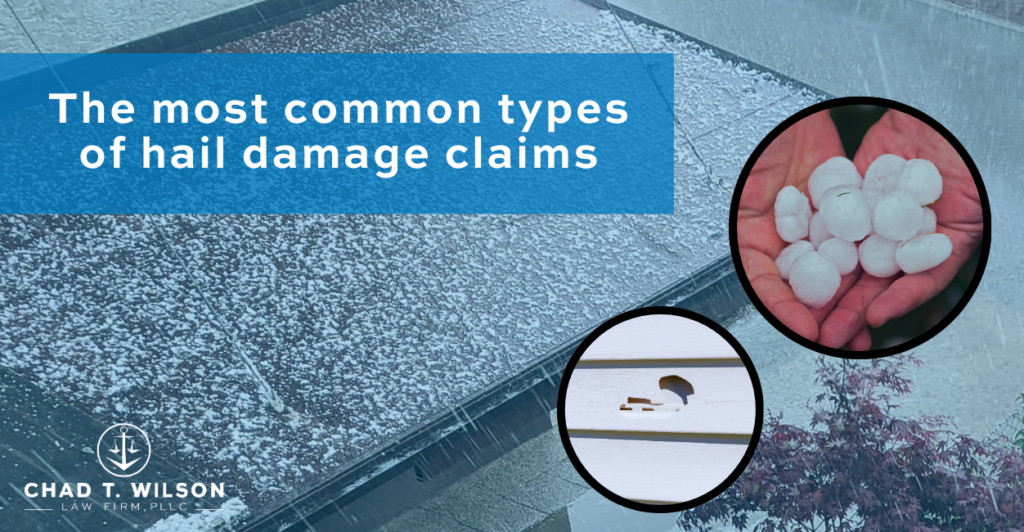
What are the most common types of hail damage claims?
Hailstorms can cause various types of property damage, leading to property insurance claims. The most common types of hail damage claims include:
It’s crucial to file a property hail insurance claim for a number of reasons:
To guarantee a seamless and effective claims procedure, it’s critical to fully record the damage, give your insurance company precise information, and submit the claim as soon as possible. See your Property Insurance Attorney for advice if you have any questions concerning the coverage or the claims procedure.
Is your claim being denied or underpaid? Call Chad T. Wilson Law Firm, PLLC.
Speak with one of our attorney if you’re having trouble getting your claim processed or if the insurance company is attempting to pay less for the claim than is reasonable.
Contact us: https://cwilsonlaw.com/contact-us/
Learn more about our attorneys:
https://cwilsonlaw.com/meet-the-team-chad-t-wilson-law-firm-pllc-insurance-attorney/
Follow us on Social media:
https://beacons.ai/chadtwilsonlaw
Contact our Chad T. Wilson Law Firm Office Locations to Schedule a free Consultation.
Chad T. Wilson is an attorney whose firm specializes in property insurance disputes.
Written By:
Alejandro Caro
Chad T. Wilson – Blogs and Resources
February, 5th 2024
Updated: February, 13th 2024 11:22 a.m.
Source: https://cwilsonlaw.com/
Water damage claims can arise from various sources, and the types of water damage can be categorized based on the cause and the affected property. The most common types of water damage insurance claims often result from common household issues, accidents, or environmental factors.
Insurance Coverage
Different types of water damage may be covered or excluded under your insurance policy. Insurance policies often have specific provisions for certain types of water damage, such as sudden and accidental leaks versus gradual or long-term damage. Understanding the nature of the damage will help you determine whether it falls within the scope of your coverage.
Knowing the specific cause and type of water damage enables you to provide accurate and detailed information when filing a claim. Insurance companies require thorough documentation, and providing precise details helps in the approval process. Misidentifying the cause may lead to claim denial or delays.
The cost of repairs can vary depending on the type of water damage. Identifying the source and extent of the damage allows you to obtain accurate estimates for repairs. This information is crucial for both you and the insurance company to assess the financial impact of the claim.
Different types of water damage may require different mitigation strategies. Knowing the cause allows you to take immediate steps to prevent further damage and minimize the impact on your property. Prompt action can also demonstrate to the insurance company that you are taking responsible measures to mitigate the loss.
Identifying the type of water damage often requires the expertise of professionals, such as water damage restoration specialists or plumbers. Their assessment can provide valuable documentation for your insurance claim and help ensure that all relevant information is considered.
Understanding the type of water damage in your home is crucial for a smooth and successful insurance claims process. It helps you navigate your policy coverage, provides accurate information for the claim, ensures appropriate actions are taken to prevent further damage, and allows for accurate cost estimation for repairs.
Speak with one of our attorney if you’re having trouble getting your claim processed or if the insurance company is attempting to pay less for the claim than is reasonable.
Contact us: https://cwilsonlaw.com/contact-us/
Learn more about our attorneys:
https://cwilsonlaw.com/meet-the-team-chad-t-wilson-law-firm-pllc-insurance-attorney/
Follow us on Social media:
https://beacons.ai/chadtwilsonlaw
Chad T. Wilson – Blogs and Resources
February, 5th 2024
Updated: February, 5th 2024 01:55 p.m.
Source: https://cwilsonlaw.com/
Detecting damage on your roof is essential for timely repairs and insurance claims after any storm. If your home was hit by a hailstorm, windstorm, hurricane, tornado, fire, or other natural disaster, you should follow the following inspection steps.
Note: Before inspecting your roof, ensure your safety. Use a sturdy ladder and take necessary precautions to prevent accidents.
Remember that roof damage may not always be immediately apparent. It’s advisable to inspect your roof after a severe weather event, especially if there has been hail. Early detection and prompt repairs can prevent further damage and ensure the longevity of your roof.
Is your claim being denied or underpaid? Call Chad T. Wilson Law Firm, PLLC.
Speak with one of our attorney if you’re having trouble getting your claim processed or if the insurance company is attempting to pay less for the claim than is reasonable.
Contact us: https://cwilsonlaw.com/contact-us/
Learn more about our attorneys:
https://cwilsonlaw.com/meet-the-team-chad-t-wilson-law-firm-pllc-insurance-attorney/
Follow us on Social media:
https://beacons.ai/chadtwilsonlaw
Chad T. Wilson – Blogs and Resources
February, 5th 2024
Updated: February, 5th 2024 01:55 p.m.
Source: https://cwilsonlaw.com/
Detecting damage on your roof is essential for timely repairs and insurance claims after any storm. If your home was hit by a hailstorm, windstorm, hurricane, tornado, fire, or other natural disaster, you should follow the following inspection steps.
Note: Before inspecting your roof, ensure your safety. Use a sturdy ladder and take necessary precautions to prevent accidents.
Remember that roof damage may not always be immediately apparent. It’s advisable to inspect your roof after a severe weather event, especially if there has been hail. Early detection and prompt repairs can prevent further damage and ensure the longevity of your roof.
Is your claim being denied or underpaid? Call Chad T. Wilson Law Firm, PLLC.
Speak with one of our attorney if you’re having trouble getting your claim processed or if the insurance company is attempting to pay less for the claim than is reasonable.
Contact us: https://cwilsonlaw.com/contact-us/
Learn more about our attorneys:
https://cwilsonlaw.com/meet-the-team-chad-t-wilson-law-firm-pllc-insurance-attorney/
Follow us on Social media:
https://beacons.ai/chadtwilsonlaw
If a hurricane causes prolific damage to an area insurers suddenly have to deal with thousands or even hundreds of thousands of insurance claims. The financial burden these insurance companies have to face is staggering, and mitigating those damages is often their only hope. That drives claims adjusters to search for any means possible to deny the claim or pay much less than they would.
This is typical behavior from an insurance company after a storm. As seen in August 2021, Hurricane Ida flattened Louisiana as a Category 4 storm when it made landfall, causing $65 billion in damages and killing dozens of residents. The resulting property insurance rates increased by 50% soon after. As of August 2022, nearly 45% of the 400 thousand plus Hurricane Ida claims have yet to be settled.
The property was damaged before the storm or the property was not properly maintained. This is a typical out insurance adjusters use. Weathering is fairly standard for homes and businesses, but a handful of insurance adjusters use this as justification to deny a claim declaring the damage was already present before the storm.
The second strategy involves changing the property owner from victim to the source of the damage itself, by claiming the property was not adequately prepared for the storm. In truth, residents forced to evacuate seldom have the time to secure their buildings and belongings.
If either of those approaches doesn’t work for the insurance adjuster, they may resort to claiming the damages are excluded from the insurance policy. People who live in flood zones can be required to purchase flood insurance, but what happens when a hurricane goes through an area where flood insurance is not required? Flood insurance is a separate policy from homeowners insurance.
When a storm damages a home or business, an insurance adjuster may claim the damage was caused by flooding instead of wind. Although it is understandable to claim there is water damage to a property after a storm, when the wind tears the roof off or blows the windows out, the damage is from wind not flooding. These are all examples of bad-faith insurance practices.
There is no excuse to abuse a policyholder’s trust, regardless of the insurance adjuster’s situation. The Chad T. Wilson law firm understands the destruction home and business owners have to deal with because of storms like Hurricane Ian. If your home or business was damaged by a storm and your insurance company is not acting in good faith, contact the Chad T. Wilson law firm. For a free consultation with an expert property insurance attorney, call (832) 415-1432 today.
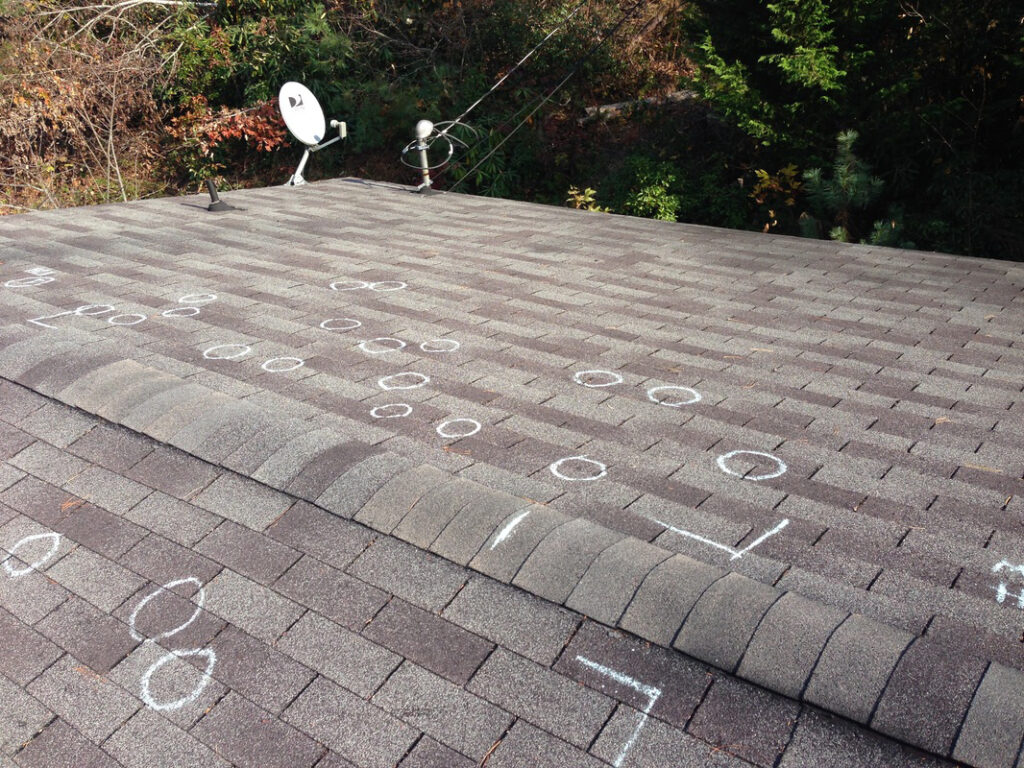
The 2016 storm season was the most expensive storm season on record for Texas. On March 17th, 2016 Arlington, Texas experienced no less than six recorded hailstorms, the largest of which generated hail two-and-a-half inches in diameter. The hazardous weather system began Thursday morning, dropping huge pieces of hail and grounding flights out of DFW Airport. This was a monster storm that damaged many homes in the area, our client being one of those homeowners.
The roof damage was so severe that our client submitted a homeowners insurance claim through his insurance provider, State Farm. After filing the roof damage claim, the insurer sent out their adjuster who inspected the property damage and determined there was none or below our client’s deductible. Blindsided by his insurer’s stance, our client hired us and invoked appraisal for their case. The appraisal award came back at 80,000 times the amount of damages originally assessed by State Farm.
State Farm paid most of the award. To collect the remainder of the award and interest and attorney fees, our client pursued his insurer by filing suit, declaring his insurance company had acted in breach of contract and violation of Chapter 541 of the Texas Insurance Code, the Texas Deceptive Trade Practices Act (DTPC), and the Texas Prompt Payment of Claims Act (TPPCA). To guard their profits, insurers every so often commits deceitful practices, deliberately distort their policy language to avoid paying a claim, use absurd delays to avoid resolution of a claim, or make frivolous demands about proof of loss. This is called a bad faith insurance practice.
Our client’s insurer responded with a motion for partial summary judgment on all our client’s claims as a means of staving off breach of contract and TPPCA pursuits based on the Texas Supreme Court decision in Ortiz. State Farm argued that they had paid the award and therefore there was no breach of contract or extra-contractual claims left to pursue.
For the statutory bad faith claim to stick, our client had to show a breach of contract by his insurer. The insurer contends that a breach of contract is a prerequisite to statutory bad faith, yet policyholders argue a breach of contract is only a prerequisite to bad faith when the claim is not covered.
Generally, there can be no claim for bad faith when an insurer has promptly denied a claim that is not covered. However, failure to show a breach of contract does not alleviate a policyholder’s bad faith claims. What this means is the insured must show coverage, not a breach of contract. It is undisputed that our client’s claim under the policy was covered. The insurer did find damage, below the deductible when the claim was initially adjusted.
The only fair and rational analysis of the law that does not offend common sense or public policy is one that preserves an insurer’s responsibility to deal with an insured in good faith when the insured’s claim is covered. Our client’s insurance providers manipulation of the law would allow them to ignore their responsibility and systematically delay, deny, or underpay insurance claims until the insured hires an attorney and sends a pre-suit notice letter suing for breach of contract and bad faith, then to simply invoke appraisal, pay the award, and weaken the insurer’s contractual liability but also its statutory liability for bad faith acts and the adjustment process.
At the hearing, our attorneys argued the above and pointed out that an appraisal award that is 80,000 times higher than the amount first assessed by State Farm, and the unilateral (line-item veto) of certain damages in the award, amounted to breach of contract and bad faith. The court agreed and denied State Farm’s summary judgment on all grounds.
Has your homeowner’s or commercial business insurance claim been denied? We can help. Representing thousands of clients against big insurance companies, our insurance claims attorneys aggressively protect the rights of the policyholder. Our consultations are free, and you owe us nothing until we win your case. Contact us today.

In the path of the storm was our client, a nursing home. Wind-blown debris brought on extensive roof damage along with exterior property damage to the siding, gutters, and HVAC units. This region has a history of property damage going back as far as 1845, so for the residents of the area getting used to property damage has become routine. What is also routine is how our client’s insurer responded to the commercial business insurance claim.
Some insurance companies are allowed by the state to have shorter deadlines than the state’s law allows if the parties involved can agree. Georgia’s laws have a general two-year statute of limitations, but per our client’s insurance policy they were only allowed one year to file a lawsuit.
Thirteen days after the one-year limitations period, the insurance company sent our client a claim determination letter stating they had completed their review and determined there was no coverage. Later, we filed suit on behalf of our client. The insurance company responded with a motion to dismiss – claiming we filed suit more than a year after the date of loss. Our response to the court was that we did not have the right to sue until after the determination letter was received by our client and therefore excused from the one-year statute of limitation and the court should disregard the one-year statute of limitations.
On September 30th of this year, the court dismissed the motion to dismiss citing case law, that if the insurance company continues to adjust the claim with the insured and indicates the insurance company is continuing its investigation then the insured is excused from the one-year statute of limitations.
If your commercial business or homeowner insurance claim has been denied, delayed, or underpaid your insurance claim, then we can help. The experienced attorneys at Chad T. Wilson Law Firm have represented more than a thousand clients in cases against insurance companies. Our property insurance lawyers aggressively protect the rights of insurance policyholders. Our consultations are free, and you owe us nothing until your case is won. Contact us today to see how we can help.

Our clients, a couple whose home was damaged during a severe storm, were forced to file a lawsuit against Liberty Insurance Corporation and its agent after they conducted a substandard and improper inspection of the clients’ property, grossly undervaluing the cost of repairs and deliberately yielding an unrealistic amount to underpay coverage.
On March 16, 2016, a severe hail- and windstorm swept across Harris County, Texas, destroying homes and lives as it went. Our clients were no exception. Their home suffered significant damage, including damage to the entire roof, master bedroom, bathroom, living room, kitchen, and foyer, among other damages. After the storm, the couple hastily submitted a claim to Liberty, hoping to get their lives back in order quickly.
Liberty assigned one of its agents to inspect the property and adjust the claim. The agent knowingly conducted a subpar investigation, employing the “pay and pray” approach — an insurance company favorite. With this type of inspection, an agent will deny any and all damage the storm caused to the roof, while covering the less expensive interior damage. The damages the agent found totaled only $500, leaving our clients without the recovery needed to mend their home.
The third-party expert hired after the insurance company’s negligent inspection found a plethora of damages that were conveniently absent from the previous inspection, totaling more than $30,000.
Liberty’s agent intentionally undervalued our clients claims in order to maintain her job, misrepresenting the amount of damage in the hopes that our clients would simply rely on her expertise and fraudulent estimate as a true representation of the property’s damages.
Because of Liberty Insurance Corporation’s gross negligence and fraud, our clients were forced to retain an attorney to prosecute their claim for insurance benefits. On August 3, 2016, the Chad T. Wilson Law Firm filed suit, on behalf of this couple, against Liberty Insurance Corporation for fraud, breach of contract negligence, gross negligence, negligent hiring, and violations of the Texas Insurance Code and the Texas DTPA.
If your homeowner insurance carrier has denied your insurance claim, we can help. The experienced property insurance attorneys at Chad T. Wilson Law Firm have represented more than 1,000 clients in cases against insurance companies and aggressively protect the rights of insurance policyholders. Our consultations are free, and you owe us nothing until your case is won. Contact us today to see how we can help.