Chad T. Wilson – News
June 16, 2023
Updated: June 13, 2023 10:15 a.m.
Source: 
www.abc13.com/

Texans are being stung by double-digit increases in flood insurance rates as hurricane season begins.

Texans are being stung by double-digit increases in flood insurance rates as hurricane season begins.

You may have recently received a notification outlining the additional costs associated with your flood insurance. According to insurance experts, the bulk of policyholders would be impacted by this rise. The Federal Emergency Management Agency declared a modification to have charges reassessed a few years ago. Since then, the cost of almost everything has increased.

That has worsened the problem. According to projections, 80% of Texans would pay upwards of $10 more per month or roughly $100 more annually when FEMA made revisions.

As opposed to what FEMA predicted, the Insurance Council of Texas claims that the majority of Texans are paying an additional $15 per month. Leaders claim that inflation is to blame. It has become necessary to raise insurance premiums in tandem with rising home prices.

The price you pay is affected by three factors, according to FEMA. Your proximity to a source of flooding, the frequency of your floods, and the expense of rebuilding your house all factor into this decision. Insurance industry representatives claimed that FEMA made the modifications because the previous method of calculating premiums was ineffective.

According to Rich Johnson, a spokesman for the Insurance Council of Texas, “In the past, they were actually paying out more in claims than they were getting in premiums, and that’s just not a way to do business.” 

Maybe you don’t have flood insurance if you didn’t receive a notice in the mail. The homeowner’s insurance you have is not included in this. Although it is hurricane season, you won’t immediately get a response if you call your provider. 30 days are needed. This is why it’s critical to make that decision right away.


Chad T. Wilson – Education
June 13, 2023
Updated: June 13, 2023 9:27 a.m.

How Long Does a Texas Home Insurance Claim Take?

How Long Does a Texas Home Insurance Claim Take?

You need money to pay for repairs as soon as possible if a calamity like a fire, hail, storm, or water damages your home. Insurance companies have strict guidelines for when you should pay your premiums, but they don’t use the same standards in cases where they are required to pay you instead of the other way around. The insurance claim procedure is governed by the Texas Department of Insurance; however, insurers don’t always abide by the regulations. When this occurs, you should always get advice from a knowledgeable Houston insurance claim attorney since you can be entitled to interest if your claim is not processed promptly..

What are the deadlines an insurance company must follow in Texas?

The business has 15 days from the time you notify them of the loss under the law before it must confirm receipt of your claim and begin an investigation. The firm will then dispatch an adjuster to assess the damage to your home. The insurance provider will be inundated with claims if a natural disaster strikes the area, and it can take them longer to send an adjuster to your home. You will also need to provide evidence of loss, an estimation of the cost of repairs, and a list of the things that were harmed by the covered incident.  The corporation may be employing delay strategies if it continually requests additional documentation or switches the adjuster in charge of your case. The only thing you can do is request that they call your Houston homeowners insurance attorney. The business has 15 days from the time you submit the necessary paperwork to accept or reject your claim. If the insurance provider provides a plausible justification for the delay, they are permitted to extend the response window to 45 days. For instance, the insurer has 30 days to accept or deny liability if they suspect arson.

When will I receive my insurance funds?

How long does it take to process a house insurance claim? Your claim must be paid by the insurance company within five days. If they don’t, there might be a valid reason for the holdup; however, if they’re just stalling, your attorneys will remind them that they’ll also be required to pay interest on that money. That might hasten the process a little. However, if the business denies your claim, wait for the denial letter and take it right away to your attorneys. You have the ability to appeal the judgment if your counsel determines that the denial was unfair.

Important Deadlines for Home Insurance Claims

The text of your insurance policy, which is essentially a contract between you and the insurance company, often governs time frames for filing claims more so than state regulations. Texas home insurance rules, however, offer assistance to insureds in the state of Texas. The time frame for insurance companies to reply to a claimant once they submit a claim is particularly governed by Texas Code 542.056.

So, how long do claims for home insurance take? And how long may a claim for house insurance be open?

Check your policy for the dates for how long you have to file a claim if you sustain damage or a sizable loss. Keep in mind that there may be other smaller deadlines, such as those for submitting specific papers, in addition to this major date. Learn more about the deadlines for insurance claims.

Providing your insurance company with loss information

The majority of insurance plans require prompt or predetermined notification. In any case, it is advised to inform the insurer as soon as possible after learning of a loss. If a wait lasts too long, insurance firms frequently try to prevent homeowners from receiving money from an insurance claim. They can claim that the homeowner’s tardiness has “prejudiced” them and that forcing the insurance provider to deal with the claim now that so much time has gone by would be unjust.

Chad T. Wilson - Hurricane Season is here

Hurricane season is here. Here are tips to keep you and your family safe!

Hurricane Season has officially begun and will finish on November 30th. Make sure you and your family are safe by having a strategy.

Plan beforehand

– In your home, write down the emergency phone numbers and post them on the refrigerator or close to each phone. Also, program them into your mobile device.

– Prepare a supply kit for emergencies.

– Find the closest shelter and the many routes you can use to travel there from your house. 

– Learn how to locate shelters in your area if they haven’t been established before a disaster.

– Pet Owners Determine in advance where you can take your pets in the event of an evacuation, such as pet-friendly hotels, out-of-town friends or relatives, or shelters. If you are asked to leave your house, local animal shelters might be able to advise you on what to do with your pets.

Collect supplies for emergencies

Gather everything you could possibly require. Be sure to prepare the following:

– A store of food and water for emergencies.

– An emergency supply of medication.

– Emergency power sources like flashlights (and additional batteries, of course).
both personal items and safety.

– Important papers, such as wills, passports, and personal identification documents.

– Extinguisher for fires. Make certain that your family is aware of where it is and how to use it.

– Read the recommendations for utilizing fire extinguishers from the National Fire Protection Association.

Understand the distinction between a hurricane “watch” and “warning.”

Check online, on TV, or the radio for National Weather Service advisories. Alerts come in two varieties:

– A hurricane watch indicates that hurricane conditions, defined as sustained winds of 74 mph or more, are possible in the designated area. 48 hours before they anticipate tropical cyclone-force winds (persistent winds of 39 to 73 mph) to begin, meteorologists issue hurricane watches.

– An advisory for a hurricane is more serious. It signifies that a specific area is likely to see hurricane-force winds. To give residents ample time to make preparations for the storm, experts issue these warnings 36 hours before tropical-storm-force winds are anticipated in the area.

– Visit the Hurricane Center of the National Weather Service for further details on hurricane watches and warnings. Upon learning that there is.

Prepare your Vehicle

Before the storm arrives, make sure your car is prepared.

– Fill the gas tank of your car.

– Transport vehicles under cover or into your garage.

– Keep an emergency kit in your car at all times.

– For details on how to get your automobile ready and what to put in your kit, go to Ready.gov.

– If you don’t have a car, think about arranging transportation with friends or family or contacting the authorities if you need to escape.

Prepare your family and pets

– Talk to your family members about your emergency plan.

– Keep monitoring for storm-related developments. Check the internet, watch TV, or listen to the radio.

– Concerning specific needs, contact the hospital, the public health agency, or the police.

– Get guidance on what to do if you or a loved one is elderly or incapacitated and won’t be able to go right away.

– Put agricultural and domestic animals in a secure location. Learn more about keeping pets safe in emergencies.

Prepare your house

– Organize your yard. Check your home for anything that can blow around during the storm and cause damage. Bikes, outdoor furniture, grills, propane tanks, and construction supplies should be moved inside or underneath the cover.

– Lock the doors and windows. To protect your windows, use storm shutters or staple pieces of plywood to the exterior window frames. This can protect you from shards of broken glass.

– Prepare to shut off your electricity. Turn off your power if you notice water, or downed power lines, or if you have to leave your home.

– Drinking water should be placed in clean water containers. This is something you should do in case the storm causes you to lose access to water. You can also restock your bathtub and sinks.

Prepare to evacuate or stay at home

– When officials say to evacuate or stay put, always heed their advice.

– Authorities may issue an order to evacuate (leave your home) if a hurricane is imminent. Never disobey a warning to evacuate. Even strong, well-constructed homes might not withstand a hurricane. Staying at home to preserve your possessions is not worth putting your health and well-being in danger.

– A request to stay at home can be heard. It could be safer to stay home if driving conditions are hazardous.


Chad T. Wilson, For the Express-News
April 26, 2023
Updated: May 1, 2023 4:05 p.m.


Financial turmoil puts property insurance claims at risk.
It’s that time of year when severe weather can lead to insurance claims. Property owners should do their due diligence to ensure their policies will provide full coverage.

PUBLISHED by JERRY LARA, Staff/ San Antonio Express-News – April 26, 2023

Chad Wilson Commentary: Financial turmoil puts property insurance claims at risk

How did we get here?
We are all feeling the effects of high inflation and the stock market decline. If your home or business is damaged by a storm, those financial forces may result in a low settlement offer, or your claim being denied.

As an attorney representing businesses and homeowners who must fight large insurance companies, I can attest this is an all-too-common occurrence. With financial pressures increasing, I foresee a corresponding increase in denied property damage claims.

Property owners should review their policies every year and be ready for the storms ahead and potential battles with their insurance companies to get valid claims paid. If you are uncertain what effect endorsements have, write your agent and have them explain it.

Why is claim underpayment and claim denial likely to get worse?

The recent news of large bank failures has been a crash course for many on how banks make money. They take deposits, make loans and invest money in stocks and bonds. U.S. Treasury bonds are considered one of the safest investments in the world, but when interest rates rise, the value of those bonds decreases. With the value of stocks and bonds down, banks have a weaker balance sheet.

Your insurance company works largely the same way. Premiums are collected, that money is invested and the returns on that investment pay out claims. With stocks and bonds down, the only thing insurance companies can control is the amount they pay in claims. Claim denials are profitable and happen even when the economy is strong.

After a storm, many homeowners are faced with damage to their homes and file an insurance claim to make repairs. What should be a simple and straightforward process is often frustrating and confusing. Claims are denied, delayed or settled for a fraction of the insured damages.

It’s hard for the average business owner or homeowner to fight back against companies with seemingly infinite time, money and experience.

What can you do to protect yourself?

• Review your policy: Does it reflect increased property values? Does it pay the price to repair or replace your damaged property without deducting for depreciation, or does it only pay the depreciated price to repair or replace your damaged property? Are you covered for all perils or only a select few?

• Update your policy: Make changes if necessary and get quotes from other insurance companies. Your current provider has no incentive to compete for your business. Insurers have also learned it does not benefit their bottom line to keep their insureds for years and years like they did decades ago.

• Prepare for storms and prepare to fight if you make a claim. One way to do both is with documentation. Photograph your property before storm season starts and after any improvements or modifications, and document damage immediately after a storm. Keep detailed notes of your communications with your insurance company and all expenses incurred associated with the storm.

The current financial storm is likely to result in more valid claims being denied. People insure their property so they can recover from damages and move forward. Getting a fair and timely settlement for proper claims is essential, especially in difficult economic times.Chad Wilson Commentary: Financial turmoil puts property insurance claims at risk.

Contact our Chad T. Wilson Law Firm Office Locations to Schedule a free Consultation.


Chad T. Wilson is an attorney whose firm specializes in property insurance disputes.
Written By:
Chad T. Wilson

Recently, the Texas Commissioner of Insurance issued general remarks and official action outlining state law requiring a clear, conspicuous notice at least 30 days in advance when an insurance company offers a renewal policy that reduces coverage. Insurers who do not place these notices conspicuously are subject to administrative penalty fees.

We know that a Replacement Cost Value (RCV) policy is considered to be better than an Actual Cash Value (ACV) policy because, even though the premiums may be higher, 100% of the roof is covered. What you may not know is that your RCV policy could one day change into an ACV policy. When this change occurs, it is your insurer’s responsibility to notify you promptly. If they don’t, they could face administrative penalties.

It is good practice to routinely check your insurance policy once it is annually renewed. The Chad T. Wilson Law Firm recommends this because there is a chance your RCV policy changed to an ACV without your knowledge or consent. Although it is the insurer’s responsibility to notify you when the policy changes to an ACV, sometimes they forget to notify you.

Keep in mind that there may be endorsements on your ACV policy. A twenty-year-old roof has more wear and tear than a new one. The granules have diminished over time. You wouldn’t insure an old car the same way you would a brand-new Maserati. Simply stated, RCVs aren’t typically written for old roofs.

The Texas Commissioner of Insurance has been straightforward with the requirements. For your insurance company to be compliant with modifying your RCV policy to an ACV, your insurer must:

  • Provide you a notice in writing 30 days before the policy changes.
  • Language must be in bold and clearly, conspicuously placed in the notice.
  • Your signature must be on the notice.

Texas Insurance Code 551.1055

Section 551.1055 of the Texas Insurance Code prohibits an insurer from using an endorsement or policy provision that makes a material change to a covered policy, unless the insurer provides the insured timely written notice with an explanation of the change that is conspicuously placed and clearly indicates every material change in the policy, written in plain language.

For example, changing a deductible by $50 is not a material change. Adding an appliance coverage to your overall homeowners insurance policy is not a material change.

Examples of a material change are:

  • Reduction in coverage.
  • Changes in coverage conditions (RCV to an ACV).
  • Changes in the duties of the insured.

Insurance companies don’t want to pay for old roofs because paying for old roofs cuts into an insurance company’s profits, and losing profits is why they deny insurance claims in the first place. If your property insurance claim has been denied, delayed, or underpaid, call the Chad T. Wilson law firm today at (832) 415-1432 and get your case reviewed for free by an expert property litigation attorney.

Not only is roof damage stressful to manage, but you will need to file an insurance claim to get it repaired or replaced. Before going to your insurance company, you will want to know what perils are covered and what limits you have on your homeowners insurance policy. When purchasing an insurance policy and filing claims, you should be aware of the distinction between replacement cost and actual cash value.

What is replacement cost value and actual cash value? 

Replacement Cost Value (RCV) policies will pay the price to repair or replace your damaged property without deducting for depreciation. An Actual Cash Value (ACV) policy will pay the depreciated price to repair or replace your damaged property. Insurance companies typically determine depreciation based on the condition of the property when it was damaged, what a new roof or damaged item would cost, and how long it would endure the elements.  For example, imagine we have two families, the Millers, and the Jones. Each household has the same amount of damage to their roof. Both families have a $1500 deductible. The deductible is what you have to pay out of pocket.

The Millers’ policy is an RCV, which means when the roof is replaced, they will be reimbursed the full cost of the roof repair, subtracting their deductible. The Jones’ policy is an ACV, which translates to them only getting paid for the current value of the roof repairs, subtracting depreciation and the deductible. Which family would you rather be?

Each policy type covers your roof damage, but an RCV policy delivers more financial protection than an ACV policy.

How Does the Type of Insurance Affect My Claim?

Homeowners insurance can cover damages from windstorms and hail, but some policies exclude these types of coverage. This is fairly typical in coastal or high-risk areas. Purchasing a separate wind and hail policy might be in your best interest in these potentially hazardous areas.

Another good bit of advice is to ask your insurance company if your wind and hail policies have separate deductibles. Some policies have unique deductibles that apply to specific parts of your dwelling, like your roof.

Now that you know the differences between insurance policies and why your insurance policy needs additional protections. It’s important to review your homeowners insurance policy before filing a claim. That way you know what to expect when speaking with your insurance company.

Keep in mind, insurance companies deny insurance claims frequently.

Sometimes insurance claims get denied for legitimate reasons, while other times the denial is a mistake or worse. It could be a filing error, a misunderstanding of your policy terms, or a novice claims adjuster that didn’t understand your policy.

If you feel your insurance claim was unjustly denied, file an appeal with your insurer. If this appeal fails and you believe your case has been grossly mishandled, your next step should be to contact the Chad T. Wilson law firm.

Expert Property Insurance Attorneys

We understand living with roof damage and a denied or underpaid property insurance claim can be a difficult, stressful time. Our attorneys will aggressively pursue your insurance company for every dollar you are due. Get your case review for free and call (832) 415-1432 and speak with an expert property insurance attorney today!

Why fire insurance claims are denied by insurers

You purchase fire insurance to protect yourself from fires and smoke damage.  Sadly, insurance companies do deny fire insurance claims. If your fire claim is denied, you will ask yourself, “Why would my insurance company deny my fire insurance claim?”.  Insurance companies use several excuses to try to get out of paying fire claims.

Fraudulently Alleging Fraud

One technique used by insurance companies to deny claims (including fire claims) is to accuse you of insurance fraud.  Your insurance company may use obscure phrasing when describing the details of your property damage, such as not being able to determine the origin of the fire, suggesting accomplices and scenarios you staged to defraud the insurance company, and suggesting you are lying or concealing the truth.

Asinine Allegations of Arson

Insurance companies love to accuse their insureds of arson, even if the local fire department rules out arson.  Obviously, if you set the fire, then your claim will be rightfully denied, but the general public would be shocked at the number of times an insurance company accuses its insured of arson with zero proof.  Even if the insurance company eventually pays the claim, they love to use the “arson card” to substantially delay payment of the claims (repeatedly telling you that the fire is “still under investigation).

The burden of proof lies with the insurance company when it comes to proving arson.  They cannot deny your insurance claim based on speculation alone. Without proof, when an insurance company denies an insurance claim, they do so in bad faith.  The bad faith is obvious when the local fire marshal does not find arson, and the insurance company still accuses you of arson.

Poor Documentation Practices

The problem with a fire is that what the fire doesn’t destroy, the water from the fire department does.  If you cannot document your personal property (that has been burned to ashes or is so wet it is beyond repair) then you will have a hard time recovering from your insurance company.  With the advent of cameras on cell phones, the following advice is pretty easy for any insured to follow and if you do it, you will be very well prepared to prove your claim after a fire.  Go around your house doing a video inventory of all of your personal property (or at least your most expensive or prized possessions).  Take photos of any receipts or appraisals you have that show the value of the item.  If you store your photos on a cloud then you will always have proof of your lost items.  You should also spend a few hundred dollars on a very good fireproof and waterproof safe.  In the safe, you should store all valuable papers, receipts, appraisals, and anything that will help you prove the value of your personal property.

Unlicensed Electrical

Another way insurance companies try to deny fire claims is by alleging contractor error.  Your insurance company will blame your electrician for faulty wiring.  For these reasons, we cannot stress enough the importance of hiring a licensed, bonded, and insured electrician to do quality work. As a responsible homeowner, you have a duty to maintain and keep your home in good condition.

By having an unlicensed contractor or handyman perform unlicensed or shoddy work on your home’s electrical system, you allow your insurance company the option to deny your insurance claim.

Paying Your Premiums

If you did not make your premium payments on time, then your insurance company can deny your insurance damage claim. Pay premiums on time to prevent your insurer from using your history to get out from paying your insurance claim.

Illegal Activities

Your property insurance claim can be denied if your fire damage is the result of illegal activities. For instance, if you were stealing electricity from your neighbor’s house and your house burns down because of the theft, then the insurance company can deny your insurance claim.

Any number of illegal activities might cause your insurer to deny your claim.

Underpaying & Stalling Claims

Stalling is a tactic insurance companies use you goad policyholders into accepting a lower insurance payout. An insurer can require unreasonable proof, question every facet of your insurance claim, and utilize every conceivable justification to lower or delay a claim settlement.

Conclusion

Through all these possibilities, the insurer might not be operating in good faith. If an insurer doesn’t respond to their policyholders in a timely fashion, that insurer is acting in bad faith. When your insurance company acts in bad faith, call the expert property insurance lawyers at the Chad T. Wilson Law Firm at (833) 942-0678.

Our attorneys work on a contingency basis, meaning if we don’t win your case, we don’t get paid. Maximize your insurance claim settlement with the Chad T. Wilson law firm. No recovery equals no fee.

sweepingout-garage-1024x768-1-min

Texas Underpaid Homeowners Insurance Claim Victory

Do you have an underpaid homeowners insurance claim?

Many insurance companies regard plumbing to be part of routine homeowner maintenance. Maintenance is entirely the property owner’s responsibility. Damage to pipes that develops over time because of lack of maintenance is typically not covered. Pipes in this state could potentially flood an entire house, causing catastrophic damage! Many Insurance agencies will deny or send you away with an underpaid homeowners insurance claim. For an insurance company to cover a broken pipe, the burst must have occurred suddenly and by accident, and should not have been easily preventable. If an ignored leaking pipe suddenly burst, the insurance company’s agents will look for evidence of a long-term leak and will likely deny your claim. Some insurance policies look at the differences in what is referred to as “resulting damage” versus “initial damage”. If water damage resulting from a broken pipe or appliance is addressed in your insurance policy, then you could be compensated for all or some of the damages…even if those damages did not occur instantly. 

When a pipe does burst, homeowners insurance typically covers carpets or rugs, flooring, drywall, and paint in most cases. Any clean-up service may also be included in your coverage. Sadly, the cost of the problem, repairing the busted pipe or replacing the broken appliance is generally not covered.

What Came First? The Foundation Damage Or The Pipe Burst?

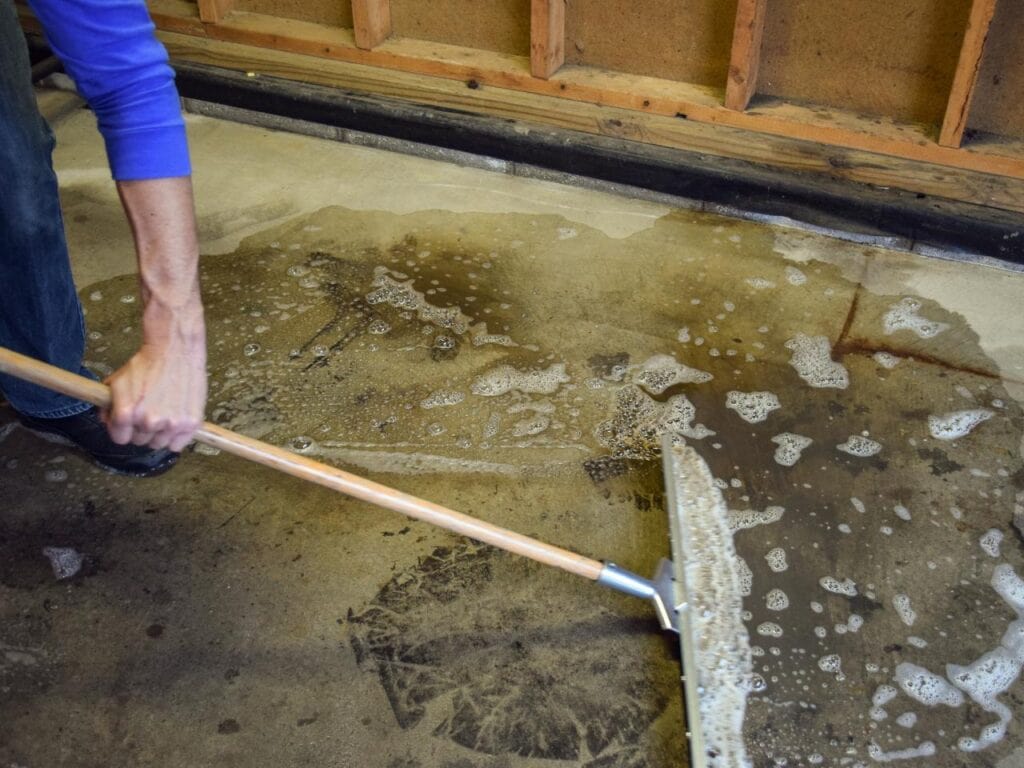
In the case of a client of ours out of Montgomery, Texas, the family of three experienced a pipe burst the wall of their garage. The pipe burst leaked sewage onto the garage floor and the resulting odors penetrated the house for a year before the case was resolved. Because the insurance claim was underpaid, the homeowner had little choice but to clean up the mess himself which ultimately lead to him getting E.coli and requiring urgent medical attention. 

Along with the damage to the garage and living with the sewage smell inside their home for a year, our client lost all personal possessions in the garage when it flooded. Their insurance company sent out an adjuster and an engineer to handle the carrier’s side of the insurance claim and both remarked the damage could be from the foundation moving, citing cosmetic repairs which had been made to the foundation’s corners. Our adjuster determined that the damage was indeed sudden and accidental and covered under the homeowner’s insurance policy. This slight on the insurance company’s end made it possible for us to pursue 8 times the initial payout to our client from the insurance company, allowing our client to make the appropriate repairs and get on with life without the smell of sewage in their home.

What Can You Do To Prevent Your Water Damage Claim From Being Denied?

Make sure you have any repairs to your home well documented. Keep any receipts from any professional services that may have worked on your pipes or home. These records can make or break a denied, delayed, or underpaid homeowners insurance claim. Replace pipes that have outlived their structural integrity. Inspectors can find tell-tale evidence of a slow leak and can deny your insurance claim accordingly. Know where the shutoff valve for your home is at in case you need to turn off the water quickly. Make your best effort to prevent your pipes from freezing. Wrap pipes, leave them to drip when appropriate, heat the home, and so on.

Filing A Claim Tips

  • Keep proof that you paid the deductible for your claim. State law allows insurance companies to ask for verification, like a receipt or check stub, that you paid for repairs in the amount of your deductible.
  • Keep your receipts for temporary repairs, but don’t make any permanent repairs until the insurance adjuster authorizes you to do so. Failure to do so may complicate the payment of your claim.
  • Look over your policy. Determine what is covered and what is not and any deductibles there may be. Contact your insurance agent if you are uncertain about your coverage.
  • Document your communication with the insurance company. Record the date, name, and role of each person you speak with and the content of the conversation.
  • Get a second opinion. Get repair bids from other contractors and compare them with the insurance adjuster’s report before resolving your claim.
  • Assert your right to the protection you paid for and be prepared to negotiate for a fair settlement of your claim.
  • Be present during the claim adjusters’ visit so you can point out all of the damage.
  • Document the damage. Photos and videos can strengthen your claim.
  • Be patient. Every insurance company handles claims differently.

Should I Hire An Attorney?

If you have an underpaid homeowners insurance claim and you think your insurance policy covers your loss and your insurer doesn’t, or if you feel the damage you sustained is far more than what your insurance company compensates you for, or if your carrier neglected your claim altogether, then the Texas Insurance Code allows recovery of “actual damages, plus court costs and reasonable attorney’s fees” and if the insurer acted in bad faith you may pursue an award of up to “three times the number of actual damages.”

If you’re unsure of whether or not your situation warrants filing a claim against your homeowner’s insurance company, contact us. Free consultation. No recovery equals no fee.

C-Wilson-COVID-19-shutdown-min

Here’s How to Get Compensation

If your business was harmed by the COVID-19 shutdown, you may be wondering how to get compensated. Unfortunately, there is no one-size-fits-all answer to this question. Every business will have a different experience and will need to approach things differently. In this blog post, we will discuss some of the options that are available to business owners who have been impacted by the pandemic.

Check your Insurance Policy

First and foremost, it is important to check your insurance policy. Many business owners have paid their premiums for years, thinking that they are protected in the case of a pandemic or other disaster. However, insurers are now stalling or denying coverage to many businesses that need it. If you think you may be covered by your insurance policy, it is important to contact your insurer as soon as possible and find out what your options are.

Another option that may be available to you is government assistance. The Small Business Administration (SBA) has created a number of programs to help businesses that have been impacted by the pandemic. If you think you may be eligible for any of these programs, you can find out more information on the SBA website.

Finally, you may also be able to get compensation from your state or local government. Many states and municipalities have set up programs to help businesses that have been impacted by the shutdown. You can find out more information about these programs by contacting your state or local government.

C-Wilson-COVID-19-shutdown-insurance-min

Business Interruption Insurance

If you have business interruption or business income insurance, you may be covered for the COVID-19 shutdown. Even if your policy has an exclusion, coverage may still be possible. The insurance company must demonstrate that an exception is real and applies.

A qualified insurance claims attorney can help you determine if coverage is possible. They will review your policy and help you understand the coverage debate.

If you have business interruption insurance, don’t wait to file a claim. The sooner you file, the sooner you can get the compensation you deserve. Contact a qualified insurance claims attorney today. They will help you navigate the process and get the best possible outcome for your claim.

C Wilson COVID-19 shutdown business interruption insurance policy

Consult with one of our experienced insurance claims attorneys

The first step is to take a look at your policy and see if you have business interruption insurance. This type of insurance is designed to protect businesses from lost income in the event that they are forced to close due to an unforeseen event. If you do have this type of coverage, there will likely be some restrictions and exclusions that apply. However, it is still worth looking into to see if you can make a claim.

The next step is to consult with an experienced insurance claims attorney. They will be able to review your policy and help you determine if you have a valid claim. If you do have a case, they can also assist you in filing the necessary paperwork and representing you in court, if necessary.

There is no guarantee that you will be successful in making a claim for business interruption compensation. However, it is worth exploring all of your options and seeking professional help to give yourself the best chance at getting the money you deserve.

C-Wilson-COVID-19-government-shutdown-1-min

Government COVID-19 Shutdown

Most business insurance policies have a civil authority exclusion that limits or excludes coverage for business income losses caused by an order from civil authority, like a state or local government. So if your policy has this exclusion and you’re forced to shut down due to a government-mandated stay-at-home order, you likely won’t be covered for any resulting business income losses.

However, some policies may have a civil authority coverage endorsement that can provide limited coverage for business income losses in these situations. Whether or not you’re covered will depend on the specifics of your policy, so it’s important to check with your insurance company or broker to see if you have this coverage.

If you don’t have a civil authority exclusion or coverage endorsement in your policy, you may still be covered for business income losses caused by the shutdown. That’s because most policies have a virus exclusion, which excludes coverage for any loss that is directly or indirectly caused by a virus. So if your policy has a virus exclusion and you’re forced to shut down due to a government-mandated stay-at-home order, you likely won’t be covered for any resulting business income losses.

However, some courts have ruled that the virus exclusion does not apply in these circumstances because the shutdown was ordered by the government, not by the presence of the virus itself. So if your policy has a virus exclusion and you’re forced to shut down due to a government-mandated stay-at-home order, you may be able to get coverage for your business income losses.

If your business has been impacted by the COVID-19 shutdown, you may be wondering if you can get compensation from your insurance company. The answer to that question depends on the specific details of your policy.

The bottom line is that whether or not you’re covered for business income losses caused by the COVID-19 shutdown will depend on the specifics of your policy. So if you’re forced to shut down your business, the first thing you should do is check with your insurance company or broker to see if you have coverage.

If you have any questions about your policy or coverage, please contact us and we’ll be happy to help.

Should I make a claim for compensation?

If you are wondering if it is a good idea to make a claim on your insurance policy for business losses due to the COVID-19 shutdown, the answer is yes. Your insurance company should not drop you for making a business loss claim. Your insurer’s risks do not increase because you filed a claim, as this was not caused by you the business owner.

Making a claim is the only way to get compensated for your losses, and it is important to remember that you are not alone in this situation. Many businesses are facing hardship due to the shutdown, and insurance companies are expecting a high volume of claims. The key is to be prepared and have all of the necessary documentation ready when you file your claim.

One way to find out if you have coverage is to contact one of our expert attorneys. We offer free consultations so that you can get the information you need to make a decision about your next steps.

Don’t try to navigate this process on your own. Let us help you get the compensation you deserve. Contact us today to learn more.

Our team of expert attorneys has extensive experience in handling insurance claims and can help you get the compensation you deserve.

3 Reasons To Think Twice Before Accepting A Fast Settlement Offer

While a fast settlement offer from an insurer might seem like a stroke of luck, you should keep in mind that the amount being offered may be well below what you are actually entitled to. Here are 3 reasons to think twice before accepting a fast settlement offer.

When your home or property has suffered damage, your insurance company should be there to help with repairs to get the situation remedied. Unfortunately, not all insurance companies see it that way. It’s in their best financial interest to avoid paying claims where possible even when the claims are legitimate. They will use tactics like denying, delaying, or undervaluing claims in the hopes that the policyholder will just be quiet and go away. This can include offering to cut a check right away for a quick, no-hassle settlement. Here are 3 reasons to think twice before accepting a fast settlement offer.

1. Adjusters Want The Best Outcome For Their Employer (not you) – Your insurance adjuster might seem like he’s looking out for you and maybe he/she is to a certain extent, but remember they work for your insurer and not you. They may misrepresent or intentionally misinterpret your policy to save their employer money.

2. You May Not Know The Full Extent Of The Damage – When property damage is suffered and you first file a claim you may not fully understand the extent of the damage. Things like hidden structural damage can be present without you realizing it and only later after you’ve accepted the settlement does it come to light. Situations like this can end up costing you much more than what the insurance company paid out.

3. First Offers Are Often Deliberately Low – The first settlement offer is by design a low one. The least amount they can give a policyholder to make them go away the better. If your adjuster gives you a fast settlement offer it could be a sign they know the claim is worth more.

Get A FREE Case Review

If you have recently had home or property damage and already accepted a settlement offer, but now realize it was significantly undervalued you may have a case. If your insurer acted in bad faith you may be entitled to compensation. Contact us today for a free case review.

1 2 3 4 5