What Florida’s Crisis Means for Policyholders
Florida Homeowners Are Losing Against Citizens Insurance

This story is based on reporting by Allaire Conte for Yahoo News, citing investigations by ProPublica and the Sun Sentinel.

A Growing Crisis in Florida Coverage

Florida’s ongoing insurance crisis has left more than half a million homeowners relying on Citizens Property Insurance Corporation, the state’s insurer of last resort. As private carriers withdraw and premiums skyrocket, Citizens has become the only option for many. But troubling new data shows that when policyholders challenge property insurance claim denials, the deck is stacked against them.

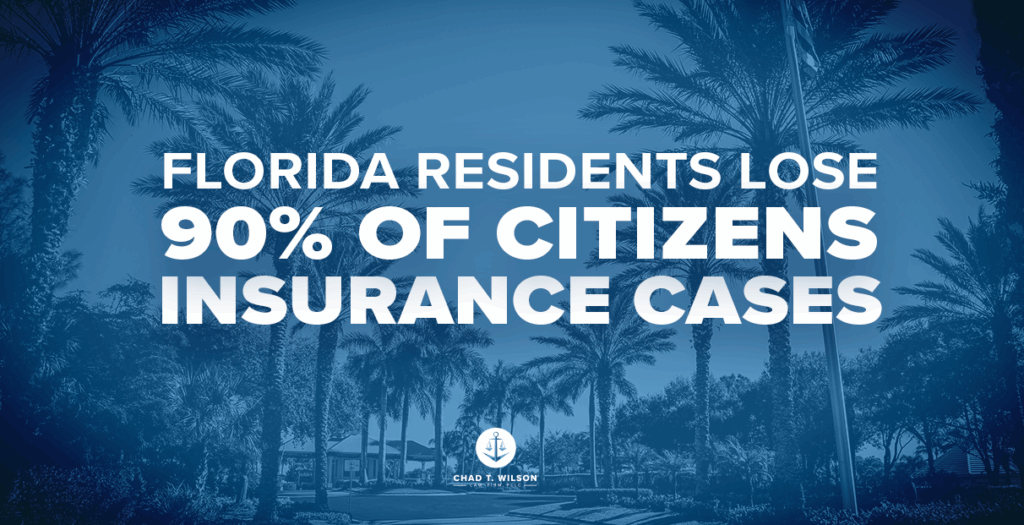
According to ProPublica and the Sun Sentinel, Citizens wins more than 90% of cases brought before the Division of Administrative Hearings (DOAH), compared to just 55% when disputes go through circuit court. For many homeowners, that difference determines whether they can afford to rebuild—or are left with devastating out-of-pocket costs.

A Legal Process Few Florida Homeowners Chose

In 2023, Florida lawmakers passed legislation that gave Citizens the power to reroute insurance disputes from traditional courts into DOAH arbitration. Supporters argued the system would be faster and cheaper. But in practice, it removes fundamental protections: no jury trial, limited discovery, and restrictions on presenting evidence.

Critics say it’s no coincidence that Citizens, which lobbied for the change, pays the salaries of the administrative judges who oversee these hearings. Rep. Hillary Cassel, a former insurance attorney, called it a direct violation of policyholders’ right to a fair trial.

The Numbers Behind the Crisis

The disparities are stark:

  • Win Rate: Citizens prevails in over 90% of DOAH hearings, compared with about 55% in circuit court.

  • Settlements: Nearly 80% of cases never reach a final ruling, with half of the settlements paying out $500 or less.

  • Scope: Citizens is on track to send thousands of disputes through DOAH annually, funding the program with more than $19 million through 2027.

Homeowners often feel forced to accept whatever settlement is offered—sometimes just pennies on the dollar—because the system makes it too risky to continue fighting.

The Human Cost

Behind the statistics are real families.

  • Peter and Linda Kilfoil of Fort Lauderdale discovered water damage in their kitchen. Their claim was denied as “long-term leakage,” even after they found the hidden pipe leak. When their case went to DOAH, the judge barred them from deposing a Citizens adjuster. With Peter battling cancer, the couple settled for just $500 on a $40,000 claim. Peter passed away six months later.
  • Jeffery McShane, a former Navy pilot, faced $200,000 in repairs after a burst pipe and roof leak caused extensive mold damage. Citizens denied the claim. Knowing the odds, he settled for $5,000.

These stories are not rare—they illustrate how limited legal recourse can devastate homeowners already struggling with claim losses.

Signs of Pushback

There may be a change on the horizon. After Hurricane Milton in 2024, homeowner Martin Alvarez challenged Citizens’ use of DOAH. In August 2025, Hillsborough County Judge Melissa Polo issued an injunction halting the arbitration process statewide. She called DOAH “structurally biased” and noted it deprived policyholders of neutral discovery, motion practice, and judicial review.

Still, Citizens continues to defend the system, framing it as efficient and cost-saving. CEO Tim Cerio argues the process ensures solvency for the insurer and points to statistics showing some cases result in reversed decisions.

What Homeowners Can Do

For homeowners, this environment is daunting—but not hopeless. Here are key steps to take:

Act quickly—if you’ve received a claim denial or non-renewal, timelines matter under Florida’s statute of limitations (SOL).

How Chad T. Wilson Law Firm Can Help

At the Chad T. Wilson Law Firm, we fight for policyholders who have been denied, underpaid, or forced into unfair processes. Whether your dispute involves hail damage, water damage, fire and smoke, windstorm claims, or commercial property losses, we’re here to stand up for your rights.

Contact us today for a free consultation. Your recovery is our mission.

This blog is based on reporting by Allaire Conte for Yahoo News, with additional context from ProPublica and the Sun Sentinel.


Practice Areas

Do not lose hope if you have filed an insurance claim and were denied or underpaid. Let the Chad T. Wilson Law Firm get justice for you.

Name

What You Can Do When Home Insurance Fails

home insurance fails

For Karen and Tony Hoover, the last thing they expected after nearly 50 years of insuring their San Francisco Victorian home with Liberty Mutual Insurance was to face a sudden non-renewal of their policy. The cited reason? Aerial photographs allegedly showing “moss, mildew, algae, and mold” on their roof—photos that turned out to be misleading. The Hoovers’ determined fight to restore their coverage not only highlights the challenges many homeowners face today but also serves as a guide for others navigating similar situations.

The Hoovers’ Fight for Coverage

After receiving a non-renewal letter, the Hoovers were baffled. The aerial photograph, which seemed to be sourced from Google Earth, showed no visible evidence of the alleged damage. “All they do is show this picture of the whole roof—looking down. You can’t see one mark of discoloration,” Karen Hoover told reporters from 7NEWS (source).

Determined to clear their name, the couple hired Excelsior Roofing, a reputable local roofing company, to conduct a professional inspection. The results? The roof was in excellent condition, with no signs of mold, algae, or other issues. Armed with detailed photographs and a clean report, the Hoovers appealed the cancellation. While Liberty Mutual initially remained unresponsive, media involvement quickly led to their policy being reinstated.

A Growing Crisis in Home Insurance

The Hoovers’ case isn’t isolated. Across the U.S., especially in disaster-prone states like California and Florida, homeowners are facing increased challenges with insurance cancellations and non-renewals.

  • California: Since 2022, seven of the top 12 insurance carriers have cut existing policies or stopped issuing new ones, leaving thousands of homeowners scrambling for coverage.

  • Florida: In November 2024, Florida’s leading insurance company dropped over 200,000 policies in the wake of Hurricanes Helene and Milton.

An NBC News analysis found that 1 in 8 American homeowners now lack insurance—a troubling statistic in the face of increasing natural disasters.

What to Do if Your Home Insurance Is Canceled

Facing a non-renewal or cancellation can be overwhelming, but there are steps you can take:

  1. Request DocumentationAsk your insurer for a detailed explanation of the decision and any supporting materials, such as photographs or assessments.

  2. Get an Independent Inspection: If cited for property issues, hire a reputable inspector to provide a second opinion.

  3. Complete Necessary Repairs: Address any issues promptly, such as roof repairs or removing debris, to meet the insurer’s requirements.

  4. Contact Your State’s Department of Insurance: If you’re unable to resolve the issue, your state’s Department of Insurance can help ensure the insurer is complying with regulations.

  5. Explore State Insurance Plans: Many states offer last-resort insurance options. For example:

    • California FAIR Plan: Provides basic fire insurance for at-risk properties.

    • Florida Citizens Property Insurance: A non-profit program for homeowners unable to secure traditional policies.

Advocating for Your Rights

The Hoovers’ ordeal underscores the importance of self-advocacy and persistence. By staying informed and proactive, homeowners can challenge unjust decisions and secure the coverage they need.

How Chad T. Wilson Law Firm Can Help

At the Chad T. Wilson Law Firm, we specialize in helping policyholders navigate insurance disputes, from non-renewals to denied claims. Our team of experienced attorneys is dedicated to ensuring that your rights are protected and that you receive the coverage and compensation you deserve.

If your home insurance has been canceled or your claim unfairly denied, don’t face it alone. Contact us today for a free consultation, and let us help you fight back and protect your home.

Insurance Attorney Can Be Your Beacon After Texas Storms

In the wake of the devastating storms that swept through Texas, countless residents are now embarking on the challenging journey of recovery. This path is often complicated by the daunting task of navigating insurance claims, particularly when faced with denials or underpayments by insurance companies. This is where the Chad T. Wilson Law Firm emerges as your advocate and guide, ensuring that you traverse these complex legal pathways with confidence and obtain the compensation you rightfully deserve.

Our firm is anchored by a formidable team of dedicated property insurance attorneys, who specialize in the nuances of storm damage claims, including Texas windstorm and hail damage. The Chad T. Wilson Law Firm operates on the foundational belief that justice for policyholders should be unwavering and pursued with tenacity. Our legal expertise encompasses a broad spectrum of storm-related damages, highlighting our role as a leading hail damage claim and wind damage attorney. We stand as a beacon of hope and unwavering support for Texans who find themselves at the mercy of an insurance system that too often seeks to minimize payouts rather than alleviate loss.

Why You Need a Champion in Your Corner

Our firm has consistently observed countless instances where insurance companies, under the guise of complex policies and provisions, deny or undervalue legitimate claims. This practice, unfortunately common, leaves policyholders stranded. The aftermath of the Texas storms has vividly illustrated this issue, with innumerable families and businesses discovering their pathways to recovery unjustly obstructed by insurance denials.

The necessity of engaging a storm damage lawyer in these situations is paramount. The Chad T. Wilson Law Firm not only provides you with stalwart legal representation but a team deeply familiar with both the Texas environment and the unique challenges posed post-storm. Our attorneys excel at unraveling the complex language of insurance policies and identifying key elements that can transform a denied hail damage claim into a successful recovery, all within the hail damage claim time limit.

Your Recovery is Our Priority

Our strategy is rooted in thorough analysis and assertive representation. When we take on your case, it becomes a mission. We meticulously assess the damages, carefully review your insurance policy’s terms, and craft a strong case aimed at securing your rightful compensation. Our considerable success stories echo our legal prowess and steadfast commitment to our clients’ welfare.

The Chad T. Wilson Law Firm works on a contingency basis, affirming our confidence in our ability to deliver results. This means you incur no out-of-pocket expenses; our compensation is tied to the successful outcome of your case. In essence, our interests align perfectly with yours — securing the maximum recovery for your storm-related losses.

Empowerment through Legal Advocacy

At the core of our practice is empowerment. By lifting the legal burden from your shoulders, we enable you to focus on rebuilding, knowing your claim is managed by experienced professionals. Our team diligently navigates legal complexities, liaises with insurance companies on your behalf, and fights for the compensation you legally deserve.

The unpredictable Texas weather can wreak havoc, leaving behind a path of destruction. Yet, the journey to secure a fair insurance settlement in the wake of such events should not exacerbate your stress. With the Chad T. Wilson Law Firm at your side, representing you as your trusted wind damage attorney and storm damage lawyer, you’ve secured a formidable ally against the injustices of the insurance claims process.

The Path Forward

Recovery from the Texas storms is a daunting challenge. However, with the Chad T. Wilson Law Firm by your side, you have an empowered ally to guide you through the chaos that follows. We invite you to take advantage of our expertise, compassion, and relentless pursuit of justice for Texas policyholders.

The journey to recovery is undoubtedly filled with hurdles, but it’s a journey you don’t have to make alone. Contact us for a free consultation — let’s explore how our dedicated team can help you reclaim your peace of mind and secure the compensation necessary for rebuilding. In the face of a storm’s aftermath, remember, you have rights. Let Chad T. Wilson Law Firm be your voice.

Is your claim being denied or underpaid? Call Chad T. Wilson Law Firm, PLLC.

Speak with one of our attorney if you’re having trouble getting your claim processed or if the insurance company is attempting to pay less for the claim than is reasonable.

Contact us: https://cwilsonlaw.com/contact-us/ 

Follow us on Social media: https://beacons.ai/chadtwilsonlaw

Contact our office locations to schedule a free consultation.


Chad T. Wilson is an attorney whose firm specializes in property insurance disputes.

Schedule a free Consultation

Chad T. Wilson – What Is the Difference Between RCV and ACV Coverage? (2024)
April 25th, 2024
Source: https://cwilsonlaw.com/
https://www.opic.texas.gov/residential-property-insurance/basics/acv-vs-rcv/

So what is the difference between RCV (replacement cost value) insurance and ACV (actual cash value) insurance?

What is RCV and ACV?

If you have replacement costs or RCV coverage, your insurance policy will pay the cost to repair or replace your damaged property without deducting depreciation.

If you have actual cash value or ACV coverage, your insurance policy will pay the depreciation costs to repair or replace your damaged property.

Regardless of what type of policy you have, the company will first pay you the ACV of an item, which means depreciation will be withheld.

If your policy allows RCV coverage, once the property is replaced, they will release the deductible depreciation, giving you the full replacement cost of your policy. If you upgrade your policy, the difference will be your financial responsibility as the insurance company will not allow the upgrade.

All additional estimates must be submitted to your insurance company for approval. If you’re not sure what type of coverage you have, check the declarations page of your home insurance policy to see if it offers replacement cost coverage.

If it specifies a replacement cost, then you will benefit from replacement cost coverage. If it doesn’t specify a replacement cost, your policy likely only covers actual cash value. Remember that there are different ways for your insurance company to handle your claim, depending on the type of insurance policy you have.

RCV (Replacement Cost Value)

Replacement cost settlement ensures that you receive compensation equivalent to the current market value needed to replace a damaged item. Let’s consider the case of replacing a 10-year-old roof, which is estimated to cost $30,000. With a deductible of $1,500 and a recoverable depreciation of $15,000, the insurance company initially provides an Actual Cash Value (ACV) payment of $13,500. Upon completing all necessary repairs, you become eligible to claim the remaining $15,000 in recoverable depreciation. 

This means you can potentially recover up to $28,500 after all claim payments have been processed, ultimately covering just your deductible. The insurance payout calculation involves deducting the recoverable depreciation and deductible from the cost of the new roof, resulting in an initial payment of $13,500. Subsequently, once repairs are finalized, you can claim the remaining $15,000 in recoverable depreciation, leading to a total insurance claim settlement of $28,500 after all adjustments have been made.

ACV (Actual Cash Value)

Now, let’s consider a scenario where we compare the insurance settlement approaches. An Actual Cash Value (ACV) settlement allows the insurer to compensate you for the cost of repairing or replacing your property, minus depreciation. Depreciation, representing the decline in asset value over time due to age or usage, is calculated at $1,000 per year. For instance, if the cost to replace a 10-year-old roof is $30,000, with a deductible of $1,500 and an irrecoverable depreciation of $15,000, the ACV payment from the company would amount to $18,500.

Under your insurance policy, your out-of-pocket expense will be limited to your deductible amount. In the case of a Replacement Cost Value (RCV) policy, you might also need to cover the recoverable depreciation. Keep in mind that the insurance company won’t automatically reimburse you for recoverable depreciation; you’ll need to provide supporting documentation, like paid receipts for repairs and relevant photos. You’ll have a specific timeframe to submit these documents for the company to consider releasing any recoverable refund funds.

The insurance payment is calculated by taking the cost of the new roof, which is $30,000. Next, you subtract the depreciation, which is $1,000 per year over 10 years, giving you a total depreciation of $10,000. Then, subtract the deductible of $1,500. This results in a total insurance payment of $18,500.

You will be responsible for your deductible and the remainder of the difference. As evident, the same damage can yield varying insurance payments. While an Actual Cash Value (ACV) policy typically offers lower premiums compared to Replacement Cost Value (RCV) policies, the latter aims to fully compensate the policyholder for covered losses. Understanding your policy and selecting the most suitable option is crucial. For any additional questions or concerns, it’s advisable to contact your insurance agent or company.

Structural Integrity: A damaged roof can compromise the structural integrity of your property. If left unrepaired, even minor damage can worsen over time, potentially leading to more extensive structural issues.

Water Damage: One of the most common problems associated with roof damage is water leakage. Holes, cracks, or missing shingles can allow water to seep into the attic, ceilings, walls, and other structural components of your property. This water infiltration can lead to rotting wood, mold growth, and damage to insulation, drywall, and electrical systems.

Decreased Energy Efficiency: A damaged roof may result in poor insulation and ventilation, leading to increased energy consumption and higher utility bills. Gaps in the roof can allow heated or cooled air to escape, forcing your HVAC system to work harder to maintain a comfortable indoor temperature.

Pest Infestation: Holes or openings in the roof can provide entry points for pests such as birds, rodents, insects, and other unwanted critters. Once inside, these pests can cause further damage to your property and pose health risks to occupants.

Decreased Property Value: Roof damage can detract from the aesthetic appeal and overall value of your property. Potential buyers may view a damaged roof as a red flag and either negotiate a lower price or choose to look elsewhere, impacting your ability to sell the property at a desirable price.

Safety Hazards: Loose or damaged roofing materials can pose safety hazards to occupants and visitors. For example, loose shingles or tiles may fall off and cause injury to individuals below, especially during windy conditions.

Insurance Issues: If roof damage leads to other problems such as water damage or mold growth, your insurance company may be less likely to cover the costs if they determine that the damage resulted from neglect or lack of proper maintenance. It’s important to address roof damage promptly to avoid potential disputes with your insurance provider.

Overall, addressing roof damage promptly through regular inspections, maintenance, and timely repairs is essential for preserving the integrity, safety, and value of your property.

When should I hire a property insurance attorney for hail damage on my roof?

In the following cases, you should think about contacting a property insurance lawyer regarding hail damage to your roof:

Denied Claim: It could be a good idea to get legal counsel if your insurance provider rejects your claim for hail damage to your roof. After reviewing the denial, a lawyer can determine if you have a case for an appeal or other legal action.

Underpaid Claim: An attorney can negotiate on your behalf or take legal action to seek just compensation if your insurance carrier offers a settlement that you feel is insufficient to pay for the expense of fixing or replacing your roof.

Complex Claims: An attorney with experience in property insurance law can be very helpful if your claim involves complex issues, including conflicts over the level of damage, policy coverage, or the insurance company’s assessment.

Bad Faith Practices: An attorney can look into the matter and fight for your rights if you believe that your insurance company is acting unfairly by refusing or postponing your claim. If required, they may also take the insurer to court.

Policy Interpretation: Insurance plans can be confusing, and there may be room for interpretation when it comes to the wording about coverage for hail damage. A lawyer can examine your policy, clarify the alternatives you have for coverage, and suggest the best line of action for you.

Litigation Representation: If your case goes to trial, a property insurance law specialist can represent you in court and try to get the best result possible out of your case.

If you need help resolving complicated issues, need counsel in court, or have problems with your insurance company, consulting The Chad T. Wilson Law Firm for hail damage on your roof will be a major advantage.

Is your claim being denied or underpaid? Call Chad T. Wilson Law Firm, PLLC.

Speak with one of our attorney if you’re having trouble getting your claim processed or if the insurance company is attempting to pay less for the claim than is reasonable.

Contact us: https://cwilsonlaw.com/contact-us/ 

Learn more about our attorneys:
https://cwilsonlaw.com/meet-the-team-chad-t-wilson-law-firm-pllc-insurance-attorney/

Follow us on Social media:
https://beacons.ai/chadtwilsonlaw

Contact our Chad T. Wilson Law Firm Office Locations to Schedule a free Consultation.


Chad T. Wilson is an attorney whose firm specializes in property insurance disputes.

Written By:
Alejandro Caro

Schedule a free Consultation

Yes, hail damage to your roof, along with any other structures on your property, should be covered by your homeowner’s insurance policy. In addition, hail damage to windows, siding, gutters, and exterior hardscaping should be covered by your policy. Furthermore, “other structures” may be covered separately for hail damage under some policies.

It is crucial to take action if you have roof damage on your property as soon as possible. Ignoring such damage can lead to:

Structural Integrity: A damaged roof can compromise the structural integrity of your property. If left unrepaired, even minor damage can worsen over time, potentially leading to more extensive structural issues.

Water Damage: One of the most common problems associated with roof damage is water leakage. Holes, cracks, or missing shingles can allow water to seep into the attic, ceilings, walls, and other structural components of your property. This water infiltration can lead to rotting wood, mold growth, and damage to insulation, drywall, and electrical systems.

Decreased Energy Efficiency: A damaged roof may result in poor insulation and ventilation, leading to increased energy consumption and higher utility bills. Gaps in the roof can allow heated or cooled air to escape, forcing your HVAC system to work harder to maintain a comfortable indoor temperature.

Pest Infestation: Holes or openings in the roof can provide entry points for pests such as birds, rodents, insects, and other unwanted critters. Once inside, these pests can cause further damage to your property and pose health risks to occupants.

Decreased Property Value: Roof damage can detract from the aesthetic appeal and overall value of your property. Potential buyers may view a damaged roof as a red flag and either negotiate a lower price or choose to look elsewhere, impacting your ability to sell the property at a desirable price.

Safety Hazards: Loose or damaged roofing materials can pose safety hazards to occupants and visitors. For example, loose shingles or tiles may fall off and cause injury to individuals below, especially during windy conditions.

Insurance Issues: If roof damage leads to other problems such as water damage or mold growth, your insurance company may be less likely to cover the costs if they determine that the damage resulted from neglect or lack of proper maintenance. It’s important to address roof damage promptly to avoid potential disputes with your insurance provider.

Overall, addressing roof damage promptly through regular inspections, maintenance, and timely repairs is essential for preserving the integrity, safety, and value of your property.

When should I hire a property insurance attorney for hail damage on my roof?

In the following cases, you should think about contacting a property insurance lawyer regarding hail damage to your roof:

Denied Claim: It could be a good idea to get legal counsel if your insurance provider rejects your claim for hail damage to your roof. After reviewing the denial, a lawyer can determine if you have a case for an appeal or other legal action.

Underpaid Claim: An attorney can negotiate on your behalf or take legal action to seek just compensation if your insurance carrier offers a settlement that you feel is insufficient to pay for the expense of fixing or replacing your roof.

Complex Claims: An attorney with experience in property insurance law can be very helpful if your claim involves complex issues, including conflicts over the level of damage, policy coverage, or the insurance company’s assessment.

Bad Faith Practices: An attorney can look into the matter and fight for your rights if you believe that your insurance company is acting unfairly by refusing or postponing your claim. If required, they may also take the insurer to court.

Policy Interpretation: Insurance plans can be confusing, and there may be room for interpretation when it comes to the wording about coverage for hail damage. A lawyer can examine your policy, clarify the alternatives you have for coverage, and suggest the best line of action for you.

Litigation Representation: If your case goes to trial, a property insurance law specialist can represent you in court and try to get the best result possible out of your case.

If you need help resolving complicated issues, need counsel in court, or have problems with your insurance company, consulting The Chad T. Wilson Law Firm for hail damage on your roof will be a major advantage.

Is your claim being denied or underpaid? Call Chad T. Wilson Law Firm, PLLC.

Speak with one of our attorney if you’re having trouble getting your claim processed or if the insurance company is attempting to pay less for the claim than is reasonable.

Contact us: https://cwilsonlaw.com/contact-us/ 

Learn more about our attorneys:
https://cwilsonlaw.com/meet-the-team-chad-t-wilson-law-firm-pllc-insurance-attorney/

Follow us on Social media:
https://beacons.ai/chadtwilsonlaw

Contact our Chad T. Wilson Law Firm Office Locations to Schedule a free Consultation.


Chad T. Wilson is an attorney whose firm specializes in property insurance disputes.

Written By:
Alejandro Caro

Schedule a free Consultation

The level of the damage, the size of the roof, the materials used in the roof’s construction, the insurance policy coverage, the deductible amounts, and the location of the property are some of the factors that can affect the typical insurance payment for hail damage to a roof.

But insurance benefits for hail damage to a roof usually run from a few hundred to several thousand dollars, to give you an idea. Payouts may reach several thousand dollars or even tens of thousands of dollars in extreme situations if the harm is extensive.

Does hail damage get covered by home insurance?

Yes, hail damage to your roof, along with any other structures on your property, should be covered by your homeowner’s insurance policy. In addition, hail damage to windows, siding, gutters, and exterior hardscaping should be covered by your policy. Furthermore, “other structures” may be covered separately for hail damage under some policies.

It is crucial to take action if you have roof damage on your property as soon as possible. Ignoring such damage can lead to:

Structural Integrity: A damaged roof can compromise the structural integrity of your property. If left unrepaired, even minor damage can worsen over time, potentially leading to more extensive structural issues.

Water Damage: One of the most common problems associated with roof damage is water leakage. Holes, cracks, or missing shingles can allow water to seep into the attic, ceilings, walls, and other structural components of your property. This water infiltration can lead to rotting wood, mold growth, and damage to insulation, drywall, and electrical systems.

Decreased Energy Efficiency: A damaged roof may result in poor insulation and ventilation, leading to increased energy consumption and higher utility bills. Gaps in the roof can allow heated or cooled air to escape, forcing your HVAC system to work harder to maintain a comfortable indoor temperature.

Pest Infestation: Holes or openings in the roof can provide entry points for pests such as birds, rodents, insects, and other unwanted critters. Once inside, these pests can cause further damage to your property and pose health risks to occupants.

Decreased Property Value: Roof damage can detract from the aesthetic appeal and overall value of your property. Potential buyers may view a damaged roof as a red flag and either negotiate a lower price or choose to look elsewhere, impacting your ability to sell the property at a desirable price.

Safety Hazards: Loose or damaged roofing materials can pose safety hazards to occupants and visitors. For example, loose shingles or tiles may fall off and cause injury to individuals below, especially during windy conditions.

Insurance Issues: If roof damage leads to other problems such as water damage or mold growth, your insurance company may be less likely to cover the costs if they determine that the damage resulted from neglect or lack of proper maintenance. It’s important to address roof damage promptly to avoid potential disputes with your insurance provider.

Overall, addressing roof damage promptly through regular inspections, maintenance, and timely repairs is essential for preserving the integrity, safety, and value of your property.

When should I hire a property insurance attorney for hail damage on my roof?

In the following cases, you should think about contacting a property insurance lawyer regarding hail damage to your roof:

Denied Claim: It could be a good idea to get legal counsel if your insurance provider rejects your claim for hail damage to your roof. After reviewing the denial, a lawyer can determine if you have a case for an appeal or other legal action.

Underpaid Claim: An attorney can negotiate on your behalf or take legal action to seek just compensation if your insurance carrier offers a settlement that you feel is insufficient to pay for the expense of fixing or replacing your roof.

Complex Claims: An attorney with experience in property insurance law can be very helpful if your claim involves complex issues, including conflicts over the level of damage, policy coverage, or the insurance company’s assessment.

Bad Faith Practices: An attorney can look into the matter and fight for your rights if you believe that your insurance company is acting unfairly by refusing or postponing your claim. If required, they may also take the insurer to court.

Policy Interpretation: Insurance plans can be confusing, and there may be room for interpretation when it comes to the wording about coverage for hail damage. A lawyer can examine your policy, clarify the alternatives you have for coverage, and suggest the best line of action for you.

Litigation Representation: If your case goes to trial, a property insurance law specialist can represent you in court and try to get the best result possible out of your case.

If you need help resolving complicated issues, need counsel in court, or have problems with your insurance company, consulting The Chad T. Wilson Law Firm for hail damage on your roof will be a major advantage.

Is your claim being denied or underpaid? Call Chad T. Wilson Law Firm, PLLC.

Speak with one of our attorney if you’re having trouble getting your claim processed or if the insurance company is attempting to pay less for the claim than is reasonable.

Contact us: https://cwilsonlaw.com/contact-us/ 

Learn more about our attorneys:
https://cwilsonlaw.com/meet-the-team-chad-t-wilson-law-firm-pllc-insurance-attorney/

Follow us on Social media:
https://beacons.ai/chadtwilsonlaw

Contact our Chad T. Wilson Law Firm Office Locations to Schedule a free Consultation.


Chad T. Wilson is an attorney whose firm specializes in property insurance disputes.

Written By:
Alejandro Caro

Schedule a free Consultation

Roof damage can pose several significant problems to your property. Depending on the extent of the damage, hail-damaged roof repair can cost anywhere from $300 to $32,500, with an average of $4,250 (2024). Golf-ball-sized hail can cause issues, but most hail is too small to seriously harm a roof that has been constructed correctly.

While small dents and dings might only need cosmetic repairs, punctures should be fixed immediately since they could expose the roof’s structure to water damage. We’ll go over major and small repair costs as well as how much your insurance will likely pay below.

The level of the damage, the size of the roof, the materials used in the roof’s construction, the insurance policy coverage, the deductible amounts, and the location of the property are some of the factors that can affect the typical insurance payment for hail damage to a roof.

But insurance benefits for hail damage to a roof usually run from a few hundred to several thousand dollars, to give you an idea. Payouts may reach several thousand dollars or even tens of thousands of dollars in extreme situations if the harm is extensive.

Does hail damage get covered by home insurance?

Yes, hail damage to your roof, along with any other structures on your property, should be covered by your homeowner’s insurance policy. In addition, hail damage to windows, siding, gutters, and exterior hardscaping should be covered by your policy. Furthermore, “other structures” may be covered separately for hail damage under some policies.

It is crucial to take action if you have roof damage on your property as soon as possible. Ignoring such damage can lead to:

Structural Integrity: A damaged roof can compromise the structural integrity of your property. If left unrepaired, even minor damage can worsen over time, potentially leading to more extensive structural issues.

Water Damage: One of the most common problems associated with roof damage is water leakage. Holes, cracks, or missing shingles can allow water to seep into the attic, ceilings, walls, and other structural components of your property. This water infiltration can lead to rotting wood, mold growth, and damage to insulation, drywall, and electrical systems.

Decreased Energy Efficiency: A damaged roof may result in poor insulation and ventilation, leading to increased energy consumption and higher utility bills. Gaps in the roof can allow heated or cooled air to escape, forcing your HVAC system to work harder to maintain a comfortable indoor temperature.

Pest Infestation: Holes or openings in the roof can provide entry points for pests such as birds, rodents, insects, and other unwanted critters. Once inside, these pests can cause further damage to your property and pose health risks to occupants.

Decreased Property Value: Roof damage can detract from the aesthetic appeal and overall value of your property. Potential buyers may view a damaged roof as a red flag and either negotiate a lower price or choose to look elsewhere, impacting your ability to sell the property at a desirable price.

Safety Hazards: Loose or damaged roofing materials can pose safety hazards to occupants and visitors. For example, loose shingles or tiles may fall off and cause injury to individuals below, especially during windy conditions.

Insurance Issues: If roof damage leads to other problems such as water damage or mold growth, your insurance company may be less likely to cover the costs if they determine that the damage resulted from neglect or lack of proper maintenance. It’s important to address roof damage promptly to avoid potential disputes with your insurance provider.

Overall, addressing roof damage promptly through regular inspections, maintenance, and timely repairs is essential for preserving the integrity, safety, and value of your property.

When should I hire a property insurance attorney for hail damage on my roof?

In the following cases, you should think about contacting a property insurance lawyer regarding hail damage to your roof:

Denied Claim: It could be a good idea to get legal counsel if your insurance provider rejects your claim for hail damage to your roof. After reviewing the denial, a lawyer can determine if you have a case for an appeal or other legal action.

Underpaid Claim: An attorney can negotiate on your behalf or take legal action to seek just compensation if your insurance carrier offers a settlement that you feel is insufficient to pay for the expense of fixing or replacing your roof.

Complex Claims: An attorney with experience in property insurance law can be very helpful if your claim involves complex issues, including conflicts over the level of damage, policy coverage, or the insurance company’s assessment.

Bad Faith Practices: An attorney can look into the matter and fight for your rights if you believe that your insurance company is acting unfairly by refusing or postponing your claim. If required, they may also take the insurer to court.

Policy Interpretation: Insurance plans can be confusing, and there may be room for interpretation when it comes to the wording about coverage for hail damage. A lawyer can examine your policy, clarify the alternatives you have for coverage, and suggest the best line of action for you.

Litigation Representation: If your case goes to trial, a property insurance law specialist can represent you in court and try to get the best result possible out of your case.

If you need help resolving complicated issues, need counsel in court, or have problems with your insurance company, consulting The Chad T. Wilson Law Firm for hail damage on your roof will be a major advantage.

Is your claim being denied or underpaid? Call Chad T. Wilson Law Firm, PLLC.

Speak with one of our attorney if you’re having trouble getting your claim processed or if the insurance company is attempting to pay less for the claim than is reasonable.

Contact us: https://cwilsonlaw.com/contact-us/ 

Learn more about our attorneys:
https://cwilsonlaw.com/meet-the-team-chad-t-wilson-law-firm-pllc-insurance-attorney/

Follow us on Social media:
https://beacons.ai/chadtwilsonlaw

Contact our Chad T. Wilson Law Firm Office Locations to Schedule a free Consultation.


Chad T. Wilson is an attorney whose firm specializes in property insurance disputes.

Written By:
Alejandro Caro

Schedule a free Consultation

Chad T. Wilson – What Is the Average Cost of Fixing Hail Damage to Your Roof? (2024)
April, 9th 2024
Updated: April, 9th 2024 –12:40 p.m.
Source: https://cwilsonlaw.com/
https://www.angi.com/articles/how-much-repair-roof-hail-damage-cost.htm

What Is the Average Cost of Fixing Hail Damage to Your Roof?

What Is the Average Cost of Fixing Hail Damage to Your Roof?

Roof damage can pose several significant problems to your property. Depending on the extent of the damage, hail-damaged roof repair can cost anywhere from $300 to $32,500, with an average of $4,250 (2024). Golf-ball-sized hail can cause issues, but most hail is too small to seriously harm a roof that has been constructed correctly.

While small dents and dings might only need cosmetic repairs, punctures should be fixed immediately since they could expose the roof’s structure to water damage. We’ll go over major and small repair costs as well as how much your insurance will likely pay below.

The level of the damage, the size of the roof, the materials used in the roof’s construction, the insurance policy coverage, the deductible amounts, and the location of the property are some of the factors that can affect the typical insurance payment for hail damage to a roof.

But insurance benefits for hail damage to a roof usually run from a few hundred to several thousand dollars, to give you an idea. Payouts may reach several thousand dollars or even tens of thousands of dollars in extreme situations if the harm is extensive.

Does hail damage get covered by home insurance?

Yes, hail damage to your roof, along with any other structures on your property, should be covered by your homeowner’s insurance policy. In addition, hail damage to windows, siding, gutters, and exterior hardscaping should be covered by your policy. Furthermore, “other structures” may be covered separately for hail damage under some policies.

It is crucial to take action if you have roof damage on your property as soon as possible. Ignoring such damage can lead to:

Structural Integrity: A damaged roof can compromise the structural integrity of your property. If left unrepaired, even minor damage can worsen over time, potentially leading to more extensive structural issues.

Water Damage: One of the most common problems associated with roof damage is water leakage. Holes, cracks, or missing shingles can allow water to seep into the attic, ceilings, walls, and other structural components of your property. This water infiltration can lead to rotting wood, mold growth, and damage to insulation, drywall, and electrical systems.

Decreased Energy Efficiency: A damaged roof may result in poor insulation and ventilation, leading to increased energy consumption and higher utility bills. Gaps in the roof can allow heated or cooled air to escape, forcing your HVAC system to work harder to maintain a comfortable indoor temperature.

Pest Infestation: Holes or openings in the roof can provide entry points for pests such as birds, rodents, insects, and other unwanted critters. Once inside, these pests can cause further damage to your property and pose health risks to occupants.

Decreased Property Value: Roof damage can detract from the aesthetic appeal and overall value of your property. Potential buyers may view a damaged roof as a red flag and either negotiate a lower price or choose to look elsewhere, impacting your ability to sell the property at a desirable price.

Safety Hazards: Loose or damaged roofing materials can pose safety hazards to occupants and visitors. For example, loose shingles or tiles may fall off and cause injury to individuals below, especially during windy conditions.

Insurance Issues: If roof damage leads to other problems such as water damage or mold growth, your insurance company may be less likely to cover the costs if they determine that the damage resulted from neglect or lack of proper maintenance. It’s important to address roof damage promptly to avoid potential disputes with your insurance provider.

Overall, addressing roof damage promptly through regular inspections, maintenance, and timely repairs is essential for preserving the integrity, safety, and value of your property.

When should I hire a property insurance attorney for hail damage on my roof?

In the following cases, you should think about contacting a property insurance lawyer regarding hail damage to your roof:

Denied Claim: It could be a good idea to get legal counsel if your insurance provider rejects your claim for hail damage to your roof. After reviewing the denial, a lawyer can determine if you have a case for an appeal or other legal action.

Underpaid Claim: An attorney can negotiate on your behalf or take legal action to seek just compensation if your insurance carrier offers a settlement that you feel is insufficient to pay for the expense of fixing or replacing your roof.

Complex Claims: An attorney with experience in property insurance law can be very helpful if your claim involves complex issues, including conflicts over the level of damage, policy coverage, or the insurance company’s assessment.

Bad Faith Practices: An attorney can look into the matter and fight for your rights if you believe that your insurance company is acting unfairly by refusing or postponing your claim. If required, they may also take the insurer to court.

Policy Interpretation: Insurance plans can be confusing, and there may be room for interpretation when it comes to the wording about coverage for hail damage. A lawyer can examine your policy, clarify the alternatives you have for coverage, and suggest the best line of action for you.

Litigation Representation: If your case goes to trial, a property insurance law specialist can represent you in court and try to get the best result possible out of your case.

If you need help resolving complicated issues, need counsel in court, or have problems with your insurance company, consulting The Chad T. Wilson Law Firm for hail damage on your roof will be a major advantage.

Is your claim being denied or underpaid? Call Chad T. Wilson Law Firm, PLLC.

Speak with one of our attorney if you’re having trouble getting your claim processed or if the insurance company is attempting to pay less for the claim than is reasonable.

Contact us: https://cwilsonlaw.com/contact-us/ 

Learn more about our attorneys:
https://cwilsonlaw.com/meet-the-team-chad-t-wilson-law-firm-pllc-insurance-attorney/

Follow us on Social media:
https://beacons.ai/chadtwilsonlaw

Contact our Chad T. Wilson Law Firm Office Locations to Schedule a free Consultation.


Chad T. Wilson is an attorney whose firm specializes in property insurance disputes.

Written By:
Alejandro Caro

Schedule a free Consultation

Chad T. Wilson – What Is the Average Cost of Fixing Hail Damage to Your Roof? (2024)
April, 9th 2024
Updated: April, 9th 2024 –12:40 p.m.
Source: https://cwilsonlaw.com/
https://www.angi.com/articles/how-much-repair-roof-hail-damage-cost.htm

What Is the Average Cost of Fixing Hail Damage to Your Roof?

What Is the Average Cost of Fixing Hail Damage to Your Roof?

Roof damage can pose several significant problems to your property. Depending on the extent of the damage, hail-damaged roof repair can cost anywhere from $300 to $32,500, with an average of $4,250 (2024). Golf-ball-sized hail can cause issues, but most hail is too small to seriously harm a roof that has been constructed correctly.

While small dents and dings might only need cosmetic repairs, punctures should be fixed immediately since they could expose the roof’s structure to water damage. We’ll go over major and small repair costs as well as how much your insurance will likely pay below.

The level of the damage, the size of the roof, the materials used in the roof’s construction, the insurance policy coverage, the deductible amounts, and the location of the property are some of the factors that can affect the typical insurance payment for hail damage to a roof.

But insurance benefits for hail damage to a roof usually run from a few hundred to several thousand dollars, to give you an idea. Payouts may reach several thousand dollars or even tens of thousands of dollars in extreme situations if the harm is extensive.

Does hail damage get covered by home insurance?

Yes, hail damage to your roof, along with any other structures on your property, should be covered by your homeowner’s insurance policy. In addition, hail damage to windows, siding, gutters, and exterior hardscaping should be covered by your policy. Furthermore, “other structures” may be covered separately for hail damage under some policies.

It is crucial to take action if you have roof damage on your property as soon as possible. Ignoring such damage can lead to:

Structural Integrity: A damaged roof can compromise the structural integrity of your property. If left unrepaired, even minor damage can worsen over time, potentially leading to more extensive structural issues.

Water Damage: One of the most common problems associated with roof damage is water leakage. Holes, cracks, or missing shingles can allow water to seep into the attic, ceilings, walls, and other structural components of your property. This water infiltration can lead to rotting wood, mold growth, and damage to insulation, drywall, and electrical systems.

Decreased Energy Efficiency: A damaged roof may result in poor insulation and ventilation, leading to increased energy consumption and higher utility bills. Gaps in the roof can allow heated or cooled air to escape, forcing your HVAC system to work harder to maintain a comfortable indoor temperature.

Pest Infestation: Holes or openings in the roof can provide entry points for pests such as birds, rodents, insects, and other unwanted critters. Once inside, these pests can cause further damage to your property and pose health risks to occupants.

Decreased Property Value: Roof damage can detract from the aesthetic appeal and overall value of your property. Potential buyers may view a damaged roof as a red flag and either negotiate a lower price or choose to look elsewhere, impacting your ability to sell the property at a desirable price.

Safety Hazards: Loose or damaged roofing materials can pose safety hazards to occupants and visitors. For example, loose shingles or tiles may fall off and cause injury to individuals below, especially during windy conditions.

Insurance Issues: If roof damage leads to other problems such as water damage or mold growth, your insurance company may be less likely to cover the costs if they determine that the damage resulted from neglect or lack of proper maintenance. It’s important to address roof damage promptly to avoid potential disputes with your insurance provider.

Overall, addressing roof damage promptly through regular inspections, maintenance, and timely repairs is essential for preserving the integrity, safety, and value of your property.

When should I hire a property insurance attorney for hail damage on my roof?

In the following cases, you should think about contacting a property insurance lawyer regarding hail damage to your roof:

Denied Claim: It could be a good idea to get legal counsel if your insurance provider rejects your claim for hail damage to your roof. After reviewing the denial, a lawyer can determine if you have a case for an appeal or other legal action.

Underpaid Claim: An attorney can negotiate on your behalf or take legal action to seek just compensation if your insurance carrier offers a settlement that you feel is insufficient to pay for the expense of fixing or replacing your roof.

Complex Claims: An attorney with experience in property insurance law can be very helpful if your claim involves complex issues, including conflicts over the level of damage, policy coverage, or the insurance company’s assessment.

Bad Faith Practices: An attorney can look into the matter and fight for your rights if you believe that your insurance company is acting unfairly by refusing or postponing your claim. If required, they may also take the insurer to court.

Policy Interpretation: Insurance plans can be confusing, and there may be room for interpretation when it comes to the wording about coverage for hail damage. A lawyer can examine your policy, clarify the alternatives you have for coverage, and suggest the best line of action for you.

Litigation Representation: If your case goes to trial, a property insurance law specialist can represent you in court and try to get the best result possible out of your case.

If you need help resolving complicated issues, need counsel in court, or have problems with your insurance company, consulting The Chad T. Wilson Law Firm for hail damage on your roof will be a major advantage.

Is your claim being denied or underpaid? Call Chad T. Wilson Law Firm, PLLC.

Speak with one of our attorney if you’re having trouble getting your claim processed or if the insurance company is attempting to pay less for the claim than is reasonable.

Contact us: https://cwilsonlaw.com/contact-us/ 

Learn more about our attorneys:
https://cwilsonlaw.com/meet-the-team-chad-t-wilson-law-firm-pllc-insurance-attorney/

Follow us on Social media:
https://beacons.ai/chadtwilsonlaw

Contact our Chad T. Wilson Law Firm Office Locations to Schedule a free Consultation.


Chad T. Wilson is an attorney whose firm specializes in property insurance disputes.

Written By:
Alejandro Caro

Schedule a free Consultation
Chad T. Wilson – Blogs and Resources March, 22nd 2024 Updated: March, 22nd 2024 –12:30 p.m. Source: https://cwilsonlaw.com/ Most common types of windstorm damage claims

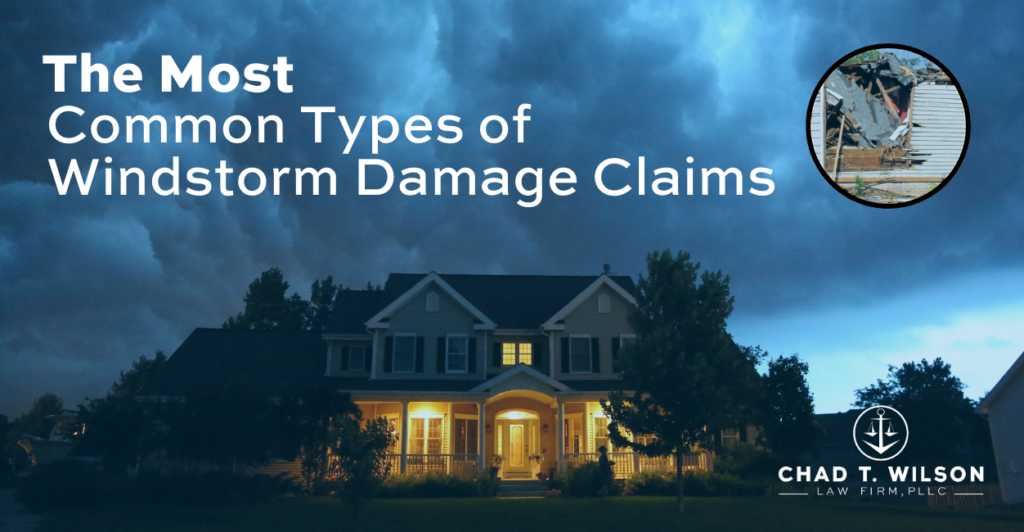
What are the most common types of windstorm damage claims?

Windstorms can cause damage to property in a number of ways and can take many different forms, from gentle breezes to strong hurricanes and tornadoes.

These windstorms have the potential to cause a variety of property damages, such as:

Damage to landscape:

Strong winds have the power to uproot vegetation, knock down trees, and disperse debris, which can harm landscape both aesthetically and monetarily.

Damage to Roofing Components:

Strong winds have the ability to lift tiles, shingles, or other roofing components, which can cause leaks, structural damage, and possibly even interior water damage.

Damage to Sidings:

Powerful winds have the ability to rip off or loosen siding components, such as aluminum, wood, or vinyl siding, leaving the underlying structure vulnerable to possible harm.

Broken Windows:

Windows can be broken by flying debris or, by direct impact from powerful gusts. This can result in possible water damage, security problems, and heightened susceptibility to more wind damage.

Trees and Branches:

Trees or large branches can fall onto buildings, vehicles, or other structures during windstorms, causing significant damage to roofs, windows, siding, and other property components.

Structural Damage:

Severe windstorms may cause structural damage to buildings, including wall collapse, damage to support beams, or compromised foundations.

Water Damage:

Wind-driven rain can infiltrate buildings through damaged roofing, siding, windows, or doors, leading to water damage to walls, ceilings, floors, and personal belongings.

Damage to Outdoor Structures:

Windstorms can also damage outdoor structures such as sheds, fences, pergolas, and decks, compromising their structural integrity and functionality.

Power Outages:

Windstorms often cause power outages due to downed power lines, fallen trees on power lines, or damage to electrical infrastructure, leading to inconvenience and potential property damage if backup systems fail.

Damage to Vehicles:

Windstorms can cause damage to vehicles parked outdoors, including dents, scratches, broken windows, and more severe damage if struck by falling trees or debris.

Business Interruption:

Windstorms may disrupt business operations due to property damage, power outages, or safety concerns, resulting in lost revenue and additional expenses for repairs and recovery efforts.

Flying Debris:

In strong gusts, projectiles like garbage cans, signs, and other things can go airborne and endanger both personal safety and property.

Flooding Damage:

Windstorms can result in storm surges or floods in coastal locations or areas that frequently see severe rainfall, which can seriously damage properties with water.

Is your claim being denied or underpaid? Call Chad T. Wilson Law Firm, PLLC.

Speak with one of our attorney if you’re having trouble getting your claim processed or if the insurance company is attempting to pay less for the claim than is reasonable. Contact us: https://cwilsonlaw.com/contact-us/  Learn more about our attorneys: https://cwilsonlaw.com/meet-the-team-chad-t-wilson-law-firm-pllc-insurance-attorney/ Follow us on Social media: https://beacons.ai/chadtwilsonlaw

Chad T. Wilson – Blogs and Resources
March, 18th 2024
Updated: March, 18th 2024 012:30 p.m.
Source: https://cwilsonlaw.com/

Untrustworthy Claims Management Techniques Used by Allstate

Allstate, a leading insurance company, is currently facing significant controversy due to accusations that it prioritizes shareholder profits over customer satisfaction.

Untrustworthy Claims Management Techniques Used by Allstate

Thomas Wilson, CEO of Allstate, acknowledged a harsh fact in his admission:

The company’s primary allegiance lies in generating robust returns for its shareholders, rather than championing the needs of its clientele. This admission gains weight when compared with internal documents that paint the picture of a glaring dissonance between the outward portrayal of protection, symbolized by the iconic “good hands” image in advertisements, and the internal directives mandating stringent contestation of claims put forth by policyholders.

Opponents, primarily the American Association for Justice (AAJ), criticize Allstate for what they see as a calculated approach that prioritizes profits over the fair treatment of its policyholders by providing pitiful settlements and using aggressive legal tactics when facing claims. This greedy business strategy has definitely boosted the company’s finances, as evidenced by CEO Wilson’s incredible salary package, which came to an eye-watering $16.3 million in past years. 

Allstate’s substantial financial profits are allegedly making it difficult for many unhappy claimants to receive adequate compensation, if any at all.

Adding fuel to the fire, Allstate stands accused of cloaking its policies, a labyrinth designed to capture policyholders in a web of misunderstanding. Critics argue that this deliberate obfuscation serves as a smokescreen, allowing Allstate to rake in premiums under false pretenses, leaving policyholders woefully underprepared when calamity strikes and their anticipated coverage proves elusive.

In the court of public opinion, Allstate has been dealt a damning blow, earning the ignominious title of the worst insurance company. This denunciation, levied by vocal critics who decry the company’s rapacious pursuit of profit, underscores a seismic rupture in the delicate fabric of trust between insurer and insured, with Allstate’s profit-driven machinations coming at the egregious expense of its policyholders’ welfare and confidence.

Is your claim being denied or underpaid? Call Chad T. Wilson Law Firm, PLLC.

Speak with one of our attorney if you’re having trouble getting your claim processed or if the insurance company is attempting to pay less for the claim than is reasonable.

Contact us: https://cwilsonlaw.com/contact-us/ 

Learn more about our attorneys:
https://cwilsonlaw.com/meet-the-team-chad-t-wilson-law-firm-pllc-insurance-attorney/

Follow us on Social media:
https://beacons.ai/chadtwilsonlaw

Contact our Chad T. Wilson Law Firm Office Locations to Schedule a free Consultation.


Chad T. Wilson is an attorney whose firm specializes in property insurance disputes.

Written By:
Alejandro Caro

Schedule a free Consultation

Chad T. Wilson – Blogs and Resources
February, 27th 2024
Updated: February, 27th 2024 12:30 p.m.
Source: https://cwilsonlaw.com/

Types-of-Hail-Damage-Claims

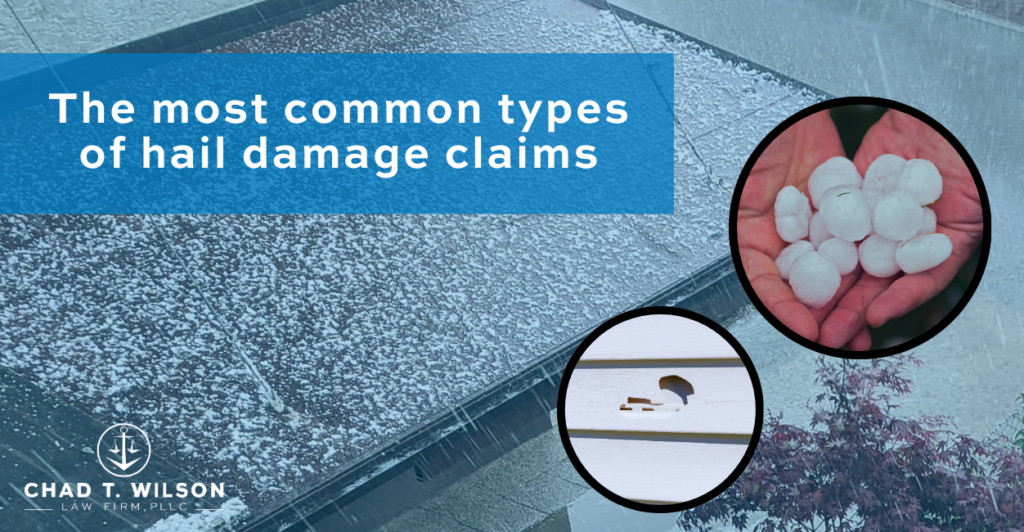
What are the most common types of hail damage claims?

Hailstorms can cause various types of property damage, leading to property insurance claims. The most common types of hail damage claims include:

It’s crucial to file a property hail insurance claim for a number of reasons:

  • Financial Protection: Your property, including cars, windows, siding, and roofs, may sustain major damage from hailstorms. You can pursue financial reimbursement for the repair or replacement of the damaged items by submitting an insurance claim. If you didn’t have insurance, you would have to pay for these things yourself.
  • Risk Mitigation: Insurance is a tool for risk transfer, or risk mitigation. You shift the financial risk of hail damage to the insurance provider by purchasing hail insurance. This guarantees that you may recover from the losses brought on by the hailstorm and helps safeguard your financial stability.
  • Policyholder’s Rights: If hail damage is covered by a current insurance policy, you are entitled to make a claim and be compensated in accordance with the terms of your policy. Making a claim is a requirement of the contract between you and the insurance company, and insurance companies are required to honor legitimate claims.
  • Preserving the Value of the Property: After a hailstorm, prompt repairs can help preserve the value of your property and stop additional damage. Ignoring hail damage and waiting to fix it could eventually result in more complex and expensive repairs.
  • Legal and commercial obligations: Should you own a mortgage on your home, the lender may demand that you keep up your insurance. In case you neglect to report hail damage and take appropriate action, you can be in breach of your mortgage contract.
  • Community Safety: If a hailstorm damages a community as a whole, submitting insurance claims jointly can help with the process of recovery and reconstruction. It facilitates the more efficient recovery of communities following natural disasters.

To guarantee a seamless and effective claims procedure, it’s critical to fully record the damage, give your insurance company precise information, and submit the claim as soon as possible. See your Property Insurance Attorney for advice if you have any questions concerning the coverage or the claims procedure.

Is your claim being denied or underpaid? Call Chad T. Wilson Law Firm, PLLC.

Speak with one of our attorney if you’re having trouble getting your claim processed or if the insurance company is attempting to pay less for the claim than is reasonable.

Contact us: https://cwilsonlaw.com/contact-us/ 

Learn more about our attorneys:
https://cwilsonlaw.com/meet-the-team-chad-t-wilson-law-firm-pllc-insurance-attorney/

Follow us on Social media:
https://beacons.ai/chadtwilsonlaw

Contact our Chad T. Wilson Law Firm Office Locations to Schedule a free Consultation.


Chad T. Wilson is an attorney whose firm specializes in property insurance disputes.

Written By:
Alejandro Caro

Schedule a free Consultation

Chad T. Wilson – Blogs and Resources
February, 5th 2024
Updated: February, 13th 2024 11:22 a.m.
Source: https://cwilsonlaw.com/

types of water Damage Insurance Claims

Water damage claims can arise from various sources, and the types of water damage can be categorized based on the cause and the affected property. The most common types of water damage insurance claims often result from common household issues, accidents, or environmental factors.

Here are some of the most prevalent types:

Insurance Coverage

Different types of water damage may be covered or excluded under your insurance policy. Insurance policies often have specific provisions for certain types of water damage, such as sudden and accidental leaks versus gradual or long-term damage. Understanding the nature of the damage will help you determine whether it falls within the scope of your coverage.

Claim Approval 

Knowing the specific cause and type of water damage enables you to provide accurate and detailed information when filing a claim. Insurance companies require thorough documentation, and providing precise details helps in the approval process. Misidentifying the cause may lead to claim denial or delays.

Cost Estimation 

The cost of repairs can vary depending on the type of water damage. Identifying the source and extent of the damage allows you to obtain accurate estimates for repairs. This information is crucial for both you and the insurance company to assess the financial impact of the claim.

Preventing Further Damage 

Different types of water damage may require different mitigation strategies. Knowing the cause allows you to take immediate steps to prevent further damage and minimize the impact on your property. Prompt action can also demonstrate to the insurance company that you are taking responsible measures to mitigate the loss.

Professional Assistance

Identifying the type of water damage often requires the expertise of professionals, such as water damage restoration specialists or plumbers. Their assessment can provide valuable documentation for your insurance claim and help ensure that all relevant information is considered.

Understanding the type of water damage in your home is crucial for a smooth and successful insurance claims process. It helps you navigate your policy coverage, provides accurate information for the claim, ensures appropriate actions are taken to prevent further damage, and allows for accurate cost estimation for repairs.

Is your claim being denied or underpaid? Call Chad T. Wilson Law Firm, PLLC.

Speak with one of our attorney if you’re having trouble getting your claim processed or if the insurance company is attempting to pay less for the claim than is reasonable.

Contact us: https://cwilsonlaw.com/contact-us/ 

Learn more about our attorneys:
https://cwilsonlaw.com/meet-the-team-chad-t-wilson-law-firm-pllc-insurance-attorney/

Follow us on Social media:
https://beacons.ai/chadtwilsonlaw

Chad T. Wilson – Blogs and Resources
February, 5th 2024
Updated: February, 5th 2024 01:55 p.m.
Source: https://cwilsonlaw.com/

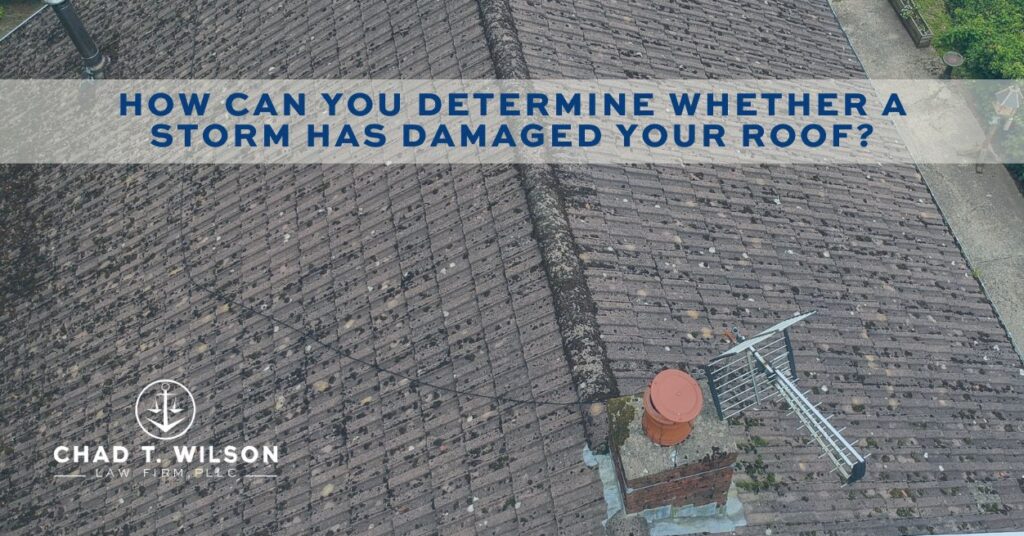
How can you determine whether a storm has damaged your roof?

Detecting damage on your roof is essential for timely repairs and insurance claims after any storm. If your home was hit by a hailstorm, windstorm, hurricane, tornado, fire, or other natural disaster, you should follow the following inspection steps.

Note: Before inspecting your roof, ensure your safety. Use a sturdy ladder and take necessary precautions to prevent accidents.

How can you determine whether a storm has damaged your roof?

What should you examine on your roof after a storm?

  • Check gutters, downspouts, and vents:
    Examine your gutters, downspouts, and roof vents for signs of damage. Look for dents, dings, or pockmarks on the metal surfaces.
  • Inspect the roof visually:
    Look for visible signs of damage from the ground. Binoculars may help you get a closer look. Pay attention to any dislodged or missing shingles.
  • Examine shingles:
    Go up on the roof to inspect the shingles more closely. Look for circular or semi-circular dents, cracks, or splits in the shingles. Hail damage may also cause granule loss, exposing the underlying asphalt.
  • Check for bruising:
    Press on the shingles gently to check for bruising. Hail damage can sometimes cause soft spots or depressions in the shingles.
  • Inspect metal components:
    Examine metal components such as flashing, vents, and chimney caps for dents or damage.
  • Look for signs of leaks:
    Check your attic for any signs of water leaks. Water stains, dampness, or mold growth are indicators that your roof may be compromised.
  • Document the damage:
    Take clear photographs of any hail damage you find. This documentation can be crucial when filing an insurance claim.
  • Professional inspection:
    If you’re unsure or if the damage seems extensive, consider hiring a professional roofing inspector. They have the expertise to assess the full extent of the damage.
  • Contact your insurance company:
    If you find roof damage, contact your insurance company as soon as possible. Provide them with the documentation and photographs you’ve taken. Follow their instructions for filing a claim.

Remember that roof damage may not always be immediately apparent. It’s advisable to inspect your roof after a severe weather event, especially if there has been hail. Early detection and prompt repairs can prevent further damage and ensure the longevity of your roof.

Is your claim being denied or underpaid? Call Chad T. Wilson Law Firm, PLLC.

Speak with one of our attorney if you’re having trouble getting your claim processed or if the insurance company is attempting to pay less for the claim than is reasonable.

Contact us: https://cwilsonlaw.com/contact-us/ 

Learn more about our attorneys:
https://cwilsonlaw.com/meet-the-team-chad-t-wilson-law-firm-pllc-insurance-attorney/

Follow us on Social media:
https://beacons.ai/chadtwilsonlaw

Chad T. Wilson – Blogs and Resources
February, 5th 2024
Updated: February, 5th 2024 01:55 p.m.
Source: https://cwilsonlaw.com/

How can you determine whether a storm has damaged your roof?

Detecting damage on your roof is essential for timely repairs and insurance claims after any storm. If your home was hit by a hailstorm, windstorm, hurricane, tornado, fire, or other natural disaster, you should follow the following inspection steps.

Note: Before inspecting your roof, ensure your safety. Use a sturdy ladder and take necessary precautions to prevent accidents.

How can you determine whether a storm has damaged your roof?

What should you examine on your roof after a storm?

  • Check gutters, downspouts, and vents:
    Examine your gutters, downspouts, and roof vents for signs of damage. Look for dents, dings, or pockmarks on the metal surfaces.
  • Inspect the roof visually:
    Look for visible signs of damage from the ground. Binoculars may help you get a closer look. Pay attention to any dislodged or missing shingles.
  • Examine shingles:
    Go up on the roof to inspect the shingles more closely. Look for circular or semi-circular dents, cracks, or splits in the shingles. Hail damage may also cause granule loss, exposing the underlying asphalt.
  • Check for bruising:
    Press on the shingles gently to check for bruising. Hail damage can sometimes cause soft spots or depressions in the shingles.
  • Inspect metal components:
    Examine metal components such as flashing, vents, and chimney caps for dents or damage.
  • Look for signs of leaks:
    Check your attic for any signs of water leaks. Water stains, dampness, or mold growth are indicators that your roof may be compromised.
  • Document the damage:
    Take clear photographs of any hail damage you find. This documentation can be crucial when filing an insurance claim.
  • Professional inspection:
    If you’re unsure or if the damage seems extensive, consider hiring a professional roofing inspector. They have the expertise to assess the full extent of the damage.
  • Contact your insurance company:
    If you find roof damage, contact your insurance company as soon as possible. Provide them with the documentation and photographs you’ve taken. Follow their instructions for filing a claim.

Remember that roof damage may not always be immediately apparent. It’s advisable to inspect your roof after a severe weather event, especially if there has been hail. Early detection and prompt repairs can prevent further damage and ensure the longevity of your roof.

Is your claim being denied or underpaid? Call Chad T. Wilson Law Firm, PLLC.

Speak with one of our attorney if you’re having trouble getting your claim processed or if the insurance company is attempting to pay less for the claim than is reasonable.

Contact us: https://cwilsonlaw.com/contact-us/ 

Learn more about our attorneys:
https://cwilsonlaw.com/meet-the-team-chad-t-wilson-law-firm-pllc-insurance-attorney/

Follow us on Social media:
https://beacons.ai/chadtwilsonlaw

1 2 3 4 5