
sweepingout-garage-1024x768-1-min

Texas Underpaid Homeowners Insurance Claim Victory

Do you have an underpaid homeowners insurance claim?

Many insurance companies regard plumbing to be part of routine homeowner maintenance. Maintenance is entirely the property owner’s responsibility. Damage to pipes that develops over time because of lack of maintenance is typically not covered. Pipes in this state could potentially flood an entire house, causing catastrophic damage! Many Insurance agencies will deny or send you away with an underpaid homeowners insurance claim. For an insurance company to cover a broken pipe, the burst must have occurred suddenly and by accident, and should not have been easily preventable. If an ignored leaking pipe suddenly burst, the insurance company’s agents will look for evidence of a long-term leak and will likely deny your claim. Some insurance policies look at the differences in what is referred to as “resulting damage” versus “initial damage”. If water damage resulting from a broken pipe or appliance is addressed in your insurance policy, then you could be compensated for all or some of the damages…even if those damages did not occur instantly. 

When a pipe does burst, homeowners insurance typically covers carpets or rugs, flooring, drywall, and paint in most cases. Any clean-up service may also be included in your coverage. Sadly, the cost of the problem, repairing the busted pipe or replacing the broken appliance is generally not covered.

What Came First? The Foundation Damage Or The Pipe Burst?

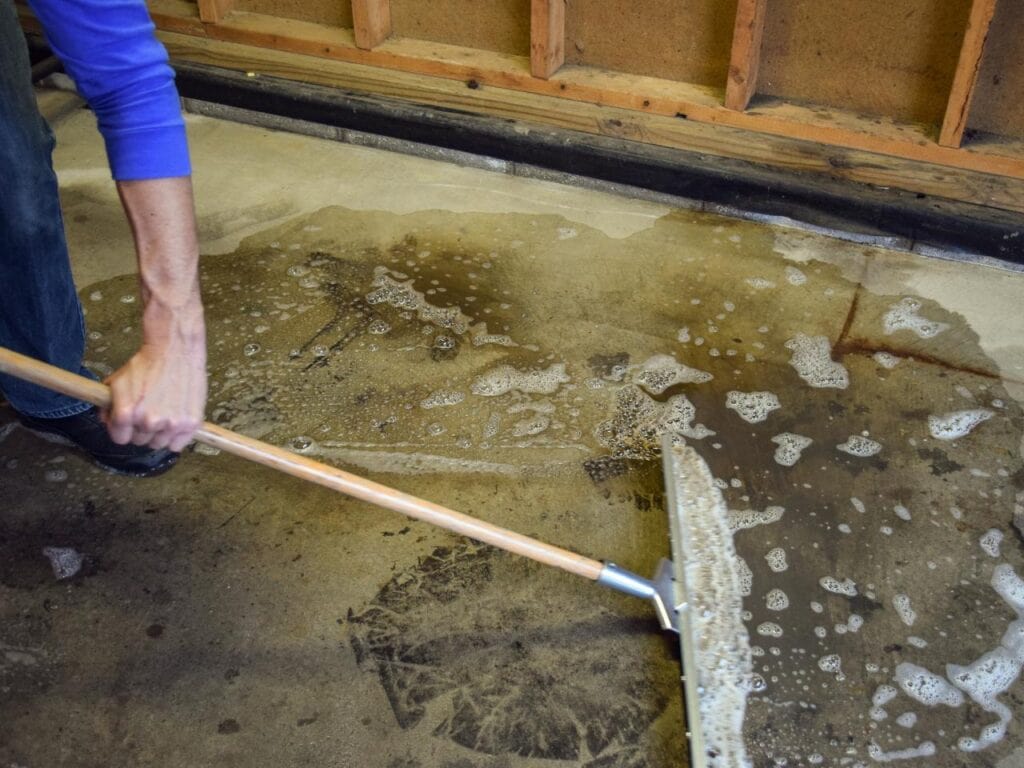
In the case of a client of ours out of Montgomery, Texas, the family of three experienced a pipe burst the wall of their garage. The pipe burst leaked sewage onto the garage floor and the resulting odors penetrated the house for a year before the case was resolved. Because the insurance claim was underpaid, the homeowner had little choice but to clean up the mess himself which ultimately lead to him getting E.coli and requiring urgent medical attention. 

Along with the damage to the garage and living with the sewage smell inside their home for a year, our client lost all personal possessions in the garage when it flooded. Their insurance company sent out an adjuster and an engineer to handle the carrier’s side of the insurance claim and both remarked the damage could be from the foundation moving, citing cosmetic repairs which had been made to the foundation’s corners. Our adjuster determined that the damage was indeed sudden and accidental and covered under the homeowner’s insurance policy. This slight on the insurance company’s end made it possible for us to pursue 8 times the initial payout to our client from the insurance company, allowing our client to make the appropriate repairs and get on with life without the smell of sewage in their home.

What Can You Do To Prevent Your Water Damage Claim From Being Denied?

Make sure you have any repairs to your home well documented. Keep any receipts from any professional services that may have worked on your pipes or home. These records can make or break a denied, delayed, or underpaid homeowners insurance claim. Replace pipes that have outlived their structural integrity. Inspectors can find tell-tale evidence of a slow leak and can deny your insurance claim accordingly. Know where the shutoff valve for your home is at in case you need to turn off the water quickly. Make your best effort to prevent your pipes from freezing. Wrap pipes, leave them to drip when appropriate, heat the home, and so on.

Filing A Claim Tips

  • Keep proof that you paid the deductible for your claim. State law allows insurance companies to ask for verification, like a receipt or check stub, that you paid for repairs in the amount of your deductible.
  • Keep your receipts for temporary repairs, but don’t make any permanent repairs until the insurance adjuster authorizes you to do so. Failure to do so may complicate the payment of your claim.
  • Look over your policy. Determine what is covered and what is not and any deductibles there may be. Contact your insurance agent if you are uncertain about your coverage.
  • Document your communication with the insurance company. Record the date, name, and role of each person you speak with and the content of the conversation.
  • Get a second opinion. Get repair bids from other contractors and compare them with the insurance adjuster’s report before resolving your claim.
  • Assert your right to the protection you paid for and be prepared to negotiate for a fair settlement of your claim.
  • Be present during the claim adjusters’ visit so you can point out all of the damage.
  • Document the damage. Photos and videos can strengthen your claim.
  • Be patient. Every insurance company handles claims differently.

Should I Hire An Attorney?

If you have an underpaid homeowners insurance claim and you think your insurance policy covers your loss and your insurer doesn’t, or if you feel the damage you sustained is far more than what your insurance company compensates you for, or if your carrier neglected your claim altogether, then the Texas Insurance Code allows recovery of “actual damages, plus court costs and reasonable attorney’s fees” and if the insurer acted in bad faith you may pursue an award of up to “three times the number of actual damages.”

If you’re unsure of whether or not your situation warrants filing a claim against your homeowner’s insurance company, contact us. Free consultation. No recovery equals no fee.

C-Wilson-COVID-19-shutdown-min

Here’s How to Get Compensation

If your business was harmed by the COVID-19 shutdown, you may be wondering how to get compensated. Unfortunately, there is no one-size-fits-all answer to this question. Every business will have a different experience and will need to approach things differently. In this blog post, we will discuss some of the options that are available to business owners who have been impacted by the pandemic.

Check your Insurance Policy

First and foremost, it is important to check your insurance policy. Many business owners have paid their premiums for years, thinking that they are protected in the case of a pandemic or other disaster. However, insurers are now stalling or denying coverage to many businesses that need it. If you think you may be covered by your insurance policy, it is important to contact your insurer as soon as possible and find out what your options are.

Another option that may be available to you is government assistance. The Small Business Administration (SBA) has created a number of programs to help businesses that have been impacted by the pandemic. If you think you may be eligible for any of these programs, you can find out more information on the SBA website.

Finally, you may also be able to get compensation from your state or local government. Many states and municipalities have set up programs to help businesses that have been impacted by the shutdown. You can find out more information about these programs by contacting your state or local government.

C-Wilson-COVID-19-shutdown-insurance-min

Business Interruption Insurance

If you have business interruption or business income insurance, you may be covered for the COVID-19 shutdown. Even if your policy has an exclusion, coverage may still be possible. The insurance company must demonstrate that an exception is real and applies.

A qualified insurance claims attorney can help you determine if coverage is possible. They will review your policy and help you understand the coverage debate.

If you have business interruption insurance, don’t wait to file a claim. The sooner you file, the sooner you can get the compensation you deserve. Contact a qualified insurance claims attorney today. They will help you navigate the process and get the best possible outcome for your claim.

C Wilson COVID-19 shutdown business interruption insurance policy

Consult with one of our experienced insurance claims attorneys

The first step is to take a look at your policy and see if you have business interruption insurance. This type of insurance is designed to protect businesses from lost income in the event that they are forced to close due to an unforeseen event. If you do have this type of coverage, there will likely be some restrictions and exclusions that apply. However, it is still worth looking into to see if you can make a claim.

The next step is to consult with an experienced insurance claims attorney. They will be able to review your policy and help you determine if you have a valid claim. If you do have a case, they can also assist you in filing the necessary paperwork and representing you in court, if necessary.

There is no guarantee that you will be successful in making a claim for business interruption compensation. However, it is worth exploring all of your options and seeking professional help to give yourself the best chance at getting the money you deserve.

C-Wilson-COVID-19-government-shutdown-1-min

Government COVID-19 Shutdown

Most business insurance policies have a civil authority exclusion that limits or excludes coverage for business income losses caused by an order from civil authority, like a state or local government. So if your policy has this exclusion and you’re forced to shut down due to a government-mandated stay-at-home order, you likely won’t be covered for any resulting business income losses.

However, some policies may have a civil authority coverage endorsement that can provide limited coverage for business income losses in these situations. Whether or not you’re covered will depend on the specifics of your policy, so it’s important to check with your insurance company or broker to see if you have this coverage.

If you don’t have a civil authority exclusion or coverage endorsement in your policy, you may still be covered for business income losses caused by the shutdown. That’s because most policies have a virus exclusion, which excludes coverage for any loss that is directly or indirectly caused by a virus. So if your policy has a virus exclusion and you’re forced to shut down due to a government-mandated stay-at-home order, you likely won’t be covered for any resulting business income losses.

However, some courts have ruled that the virus exclusion does not apply in these circumstances because the shutdown was ordered by the government, not by the presence of the virus itself. So if your policy has a virus exclusion and you’re forced to shut down due to a government-mandated stay-at-home order, you may be able to get coverage for your business income losses.

If your business has been impacted by the COVID-19 shutdown, you may be wondering if you can get compensation from your insurance company. The answer to that question depends on the specific details of your policy.

The bottom line is that whether or not you’re covered for business income losses caused by the COVID-19 shutdown will depend on the specifics of your policy. So if you’re forced to shut down your business, the first thing you should do is check with your insurance company or broker to see if you have coverage.

If you have any questions about your policy or coverage, please contact us and we’ll be happy to help.

Should I make a claim for compensation?

If you are wondering if it is a good idea to make a claim on your insurance policy for business losses due to the COVID-19 shutdown, the answer is yes. Your insurance company should not drop you for making a business loss claim. Your insurer’s risks do not increase because you filed a claim, as this was not caused by you the business owner.

Making a claim is the only way to get compensated for your losses, and it is important to remember that you are not alone in this situation. Many businesses are facing hardship due to the shutdown, and insurance companies are expecting a high volume of claims. The key is to be prepared and have all of the necessary documentation ready when you file your claim.

One way to find out if you have coverage is to contact one of our expert attorneys. We offer free consultations so that you can get the information you need to make a decision about your next steps.

Don’t try to navigate this process on your own. Let us help you get the compensation you deserve. Contact us today to learn more.

Our team of expert attorneys has extensive experience in handling insurance claims and can help you get the compensation you deserve.

mortgage lenders that complicate the insurance

How did we get here?

All homeowner’s insurance policies have a provision that provides that any payments for damages to the dwelling must include the insured’s mortgage company as a payee on the check. The mortgage lender is included on the check to protect the lender and ensure the insured repairs the property (the lender’s collateral).  Issues arise when the insurance company denies or underpays a claim, a lawsuit is filed, and then the lawsuit is settled.

The insurance company will agree to settle the lawsuit for a sum of money in exchange for the insured signing a release that releases the insurance company from all claims, including bad faith, attorney fees, etc.  The settlement is not limited to the cost of repairs.

In the release, the insurance company will say it denies all liability but is only paying the settlement to buy peace.  However, certain insurance companies have recently insisted on paying the settlement with one check that includes the insured’s lender as a payee.  The problem with this situation is that when there is only one check for all of the settlement and it is made payable to the insured, the law firm, and the mortgage company, some mortgage companies refuse to recognize that part of that settlement is for the attorney’s contingent fee.

The attorney will not endorse the check because he or she is not going to get their fee.  The mortgage company will not endorse the check because the mortgage company wants all the money (even the lawyer’s money).  The result is a standoff that delays the insured getting the money to repair the property.

Recently, the Chad T. Wilson Law Firm has been able to combat this process through the Courts by obtaining a judgment that the insurance company must separate out payment for legal fees and expenses from the payment for repairs. [Olson v. Liberty Mutual]

In another case, the mortgage lender did not account for the law firm’s involvement. After many hours speaking with the loss claims department, we learned they did not have a system nor would they make an exception to ensure our interest in the case was protected and compensated, which directly places that burden on the homeowner. Their threshold was $40,000. The client, the lender, and our law firm are all listed on the check.

This mortgage lender wanted us and the client to endorse the check. Then the mortgage lender would deposit the check in their account and disburse $40,000 to the client to start making repairs. Once repairs are completed or proof from a contractor was provided, then the lender has the property inspected to determine if repairs were sufficient. The mortgage lender will issue a supplement payment to the client for additional repairs.

The key issue with all of those checks in this instance is the law firm is not listed as a payee. This creates the very likely scenario where the client receives the check, sees the additional funds, and thinks the law firm has been paid and that this check is money leftover that the client can do with as they please, thinking these funds may be part of mental anguish or the repairs were not as expensive as previously thought.

That puts a law firm in a position where it has not been paid for its services and the client is naive about the disbursement, making it the client’s responsibility to pay for the litigation instead of the lender.

Complicating matters further, if a contractor sees this money from the repairs and the insurance company is not agreeing to any repairs, then the contractor is essentially relying on the original contractor’s or public adjuster’s estimate of repairs. All that settlement money could likely be going to the contractor for repairs.

The alternative is the client has some money left over after repairs and the law firm is left without getting paid. All because the mortgage lender was not upfront about how it disburses funds. To avoid this, the attorney’s fees should be paid at the beginning of the process or front end in alignment with Texas law, “an attorney’s lien is paramount to the rights of the parties in the suit, and is superior to other liens on the money or property involved, subsequent in point of time.” 7A C.J.S. Attorney & Client § 385 at p. 758 (1980)” In re Willis, 143 B.R. 428 (Bankr. E.D. Tex. 1992). Louisiana law does have a provision specifically for attorney fees interest by way of special privilege, “Louisiana Revised Statute § 37:218(A)” Richards v. Louisiana Citizens Prop. Ins. Corp., 623 F.3d 241 (5th Cir. 2010).

In most cases, a demand letter sent to the mortgage lender is enough to get results. If the demand letter does not motivate the lender, then filing a lawsuit for not accounting for the payments is our last approach.

If the mortgage lender is complicating matters or the insurance company has denied, delayed, or underpaid your property insurance claim, or call the expert property litigation attorneys at the Chad T. Wilson Law Firm at (832) 415-1432. Maximize your settlement and contact us today! No recovery equals no fee.