
Homeowners Insurance Claim Victory Exceeds Policy Limits

Homeowners Insurance Claim Victory Exceeds Policy Limits

Policy limits put a cap on how much an insurer has to pay for an insurance claim. Policy limits determine the maximum amount an insurer has to pay and are set at the time the insurance policy is written. Some circumstances invalidate policy limits, such as the insurance company’s actions when handling the claim.

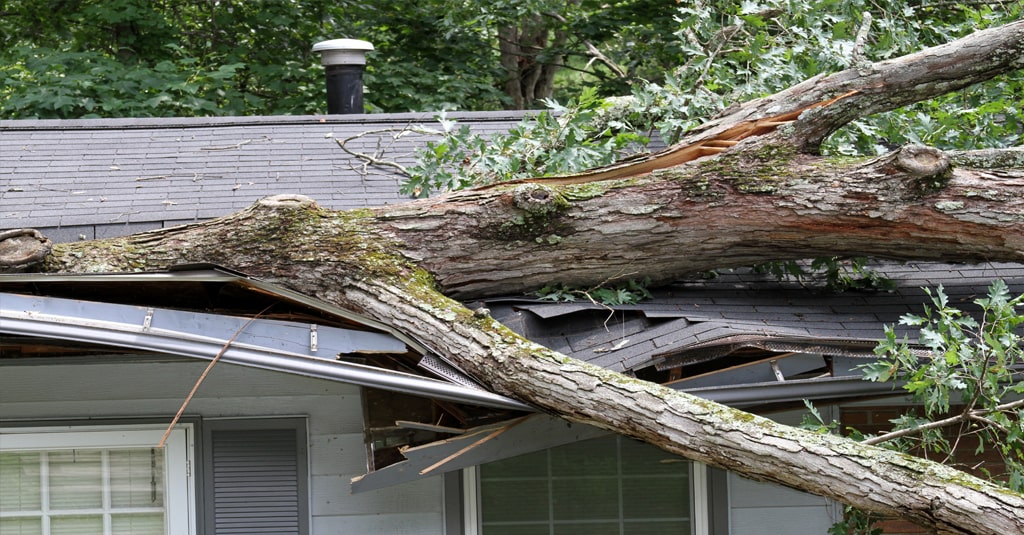
For Ruth, policy limits mean something else. On Memorial Day weekend, 2018, Ruth was sitting on her patio when lightning from a developing storm struck a tree in her yard. The tree split in half and crashed into Ruth’s roof, buckling the rafters and causing extensive roof damage. The rain made its way through the massive holes in the roof, saturating all of her belongings in the home. The tree also took out the powerlines going up to her home leaving the residence without power.

Panicked and devastated, Ruth called her insurance company only to be told she would have to wait until the Tuesday after Memorial Day. The lightning strike occurred on Saturday. This meant she would have to go three days without power in her home.

Living out in the country up in North Houston, Ruth did not see many options and hired her own contractors to remove the tree and tarp the roof. Her friends would lend a hand in moving her belongings out of her house so they could dry. Without electricity to the home, Ruth decided to stay with her mom, albeit for a short time until the property damage could be addressed.

The insurance company began their inspection which ended with them saying they would need an engineer to sufficiently assess the damages. At that time, the insurance company wrote her a check for $20,000. Her insurer did not offer to pay her ALE (Additional Living Expenses) because they were under the false impression that Ruth wanted to stay with her mother.

Ruth ended up staying with her mother for 18 months.

At Ruth’s residence, mold began to grow throughout the house because the house was never adequately dried out after the storm. As time passed the mold got worse. The insurance company hired mold experts to evaluate the mold damage. The mold experts agreed that the mold damage was severe but never followed through. A second check for another $20,000 would arrive unexpectedly and with no indication if it was for the mold damage or not.

Frustrated with the results, Ruth hired a public adjuster to help her situation, but the insurance company would not communicate with this adjuster. Determined to hold her insurer accountable, Ruth turned to us. We in turn filed a lawsuit. During negotiations, we discussed how wrong it was for the insurance company to stall and not offer to pay for Ruth’s living expenses instead of her staying with her mother.

The insurer never offered her assistance, an inventory of contents, or took the effort to address the mold damage. The mold damage may not have been a covered peril, but due to the insurance company’s actions, the mold got worse.

Ruth’s case was resolved before going to trial. Negotiating around policy limits was the main issue. Due to the severity of the mold damage, our client felt her damages exceed her policy limits. What should not have been a total loss ended up that way due to the insurer’s inactions. Through our efforts, Ruth was able to rebuild her life and her home. We are happy to have been able to assist Ruth with her home insurance claim and she is grateful to be able to leave the last year and a half of her life behind her.

If your homeowner’s insurance claim has been denied, delayed, or underpaid, call the expert property litigation attorneys at the Chad T. Wilson Law Firm at (832) 415-1432. Maximize your settlement and contact us today!

Chad-T.-Wilson-Law-Firm-Secures-Huge-Victory-For-Policyholders-in-Texas-Supreme-Court-min

Huge Victory For Policyholders in Texas Supreme Court!

On March 19, 2021 the Texas Supreme Court issued its opinion in Hinojos v. State Farm Lloyds (No. 19-0280), in favor of Louis Hinojos, a client of Chad T. Wilson Law Firm. This was a huge victory for Texas policyholders. The Hinojos opinion will substantially assist policyholders to win Texas Prompt Payment of Claims Act (“TPPCA”) damages including interest and attorney fees after appraisal.

Before the Texas Supreme Court decided the case of Barbara Technologies Corp. v. State Farm Lloyds, 589 S.W.3d 806 (Tex. 2019), insurance companies could avoid all damages, including TPPCA damages, by simply invoking appraisal and paying the resulting appraisal award. This situation was patently unfair to Texas policyholders because the typical fact pattern was that an insurer would make a low initial claim payment, the policyholder would file suit, and during litigation (months or years after the date of loss) the insurance company would invoke appraisal and then pay the resulting award…an award that was always substantially more than the initial claim payment. The insurance company would then file a motion for summary judgment and get the policyholder’s entire case dismissed, including 18% interest under the TPPCA and attorney fees. However, Barbara Technologies held that an insurer may not avoid TPPCA damages by simply paying an appraisal award. Not surprisingly, the insurance industry quickly tried to find ways around Barbara Technologies. Using a portion of a string cite in the 5th Circuit case of Mainali Corp. v. Covington Specialty Insurance Co. 872 F.3d 255, 259 (5th Cir. 2017), insurance companies argued that as long as the initial claim payment was “reasonable” then even if the appraisal award ended up being much higher than the initial claim payment, policyholders were still unable to pursue TPPCA damages against the insurance company. For example, in the case of Shin v. Allstate Texas Lloyds, No. 4:18-CV-01784, 2019 WL 4170259, at *2 (S.D. Tex. September 3, 2019) Allstate argued and the court held that an initial claim payment that was 5.6 times less than the ultimate appraisal award was still “reasonable” and the court granted summary judgment for Allstate, which eliminated the policyholder’s damages under the TPPCA.

Thanks to the Chad T. Wilson Law Firm, the Texas Supreme Court closed the door on this ridiculous “reasonable” claim payment argument. Louis Hinojos is a homeowner in El Paso, Texas who purchased an insurance policy from State Farm Lloyds. On June 3, 2013 the Hinojos home was hit by a severe wind and hailstorm. Hinojos filed a claim with State Farm. State Farm timely accepted the claim and investigated it. The outcome of its initial adjustment of the claim was State Farm agreed to $755.02 in property damage, but because Hinojos had a $1,290 deductible, State Farm paid nothing. Hinojos requested a second inspection and State Farm agreed to $3,859.22 in damages then but paid $1,995.11 after the subtracting depreciation and the $1,290 deductible. Not satisfied with this result, Hinojos hired the Chad T. Wilson Law Firm and suit was filed. Some fifteen months after suit was filed State Farm invoked appraisal. The appraisal award came in at $38,269.95 replacement cost value and $26,259.86 actual cash value in property damage. State Farm paid $22,974.75 on the award, which was the replacement cost value minus depreciation, the deductible, and the prior payment. This payment was made some two and one-half years after Hinojos submitted his claim. After payment on the award, State Farm filed a motion for summary judgment arguing that timely payment of the award precluded Hinojos’ TPPCA damages. The Chad T. Wilson Law Firm argued that State Farm was subject to liability because State Farm had not made any payments within the timelines set out in Section 542.057 or that State Farm was liable for interest on the difference between what State Farm had paid on the claim and the amount of the appraisal award. The trial court granted summary judgment against Hinojos and the court of appeals affirmed two and a half years later. The Texas Supreme Court granted review.

Reaffirming its holdings in Barbara Technologies and Alvarez v. State Farm Lloyds, 601 S.W.3d 781 (Tex. 2020) (per curium) the Hinojos Court held that State Farm paying the Hinojos appraisal award did not preclude Hinojos from pursuing TPPCA damages against State Farm. Better still, the Court went further. Recognizing that insurance companies could initially make a nominal payment toward a valid claim and avoid TPPCA damages by later paying an appraisal award, the Hinojos Court held that to be reasonable the initial claim payment must “roughly correspond to the amount owed on the claim.” Therefore, in the future when an appraisal award comes in several times higher than the initial claim payment, the Texas policyholder can sue for TPPCA damages on the difference between the initial claim payment and the amount of the award. Not only will this opinion allow policyholders to secure TPPCA damages for underpaid claims after appraisal, but it should also incentivize insurance companies to make valid claim payments at the inception of the claim.

Since 2005 I have dedicated my practice solely to representing policyholders in first-party cases and contract disputes. Over the years I have attended countless industry events where this person or that person gets on stage and pounds their chest talking about what they can do for policyholders. It is one thing to talk about what you can do for policyholders, but it is another thing altogether to actually do something for policyholders. Chad T. Wilson Law Firm actually did something for policyholders. Because the system was not fair to policyholders, we kept fighting this case, even after losing at the trial court and the court of appeals. We took the case all the way to the Texas Supreme Court and we won! This Hinojos decision marks a great day for all policyholders. Thanks to Andrew Bender for his appellate work in this case and to Sharon McCally who made the argument before the Texas Supreme Court.

Any-Which-Way-the-Wind-Blows-in-Georgia

Any Which Way the Wind Blows in Georgia

In the path of the storm was our client, a nursing home. Wind-blown debris brought on extensive roof damage along with exterior property damage to the siding, gutters, and HVAC units. This region has a history of property damage going back as far as 1845, so for the residents of the area getting used to property damage has become routine. What is also routine is how our client’s insurer responded to the commercial business insurance claim.

If your commercial business or homeowner insurance claim has been denied then you may be interested in how we have helped this client!

On October 11th, 2018, Hurricane Michael impacted Dougherty County, Georgia. What was the first Category 4 hurricane to hit the US mainland in over a century slowly progressed through Florida into George, where it became a Category 3 by the time it reached the city of Albany. The wind damage was more severe than the damage sustained in Hurricane Irma from a year previous, with wind gusts reaching over speeds of a hundred miles per hour. Many trees had been knocked down along with several businesses losing their facades and an abundance of road debris. The hurricane damage was so bad that residents were asked to stay inside. More than ninety percent of Albany’s Utilities Authority’s customers (24,000+ people) woke up Thursday morning with no power.

Insurance Policies Versus State Laws

Some insurance companies are allowed by the state to have shorter deadlines than the state’s law allows if the parties involved can agree. Georgia’s laws have a general two-year statute of limitations, but per our client’s insurance policy they were only allowed one year to file a lawsuit.

Thirteen days after the one-year limitations period, the insurance company sent our client a claim determination letter stating they had completed their review and determined there was no coverage. Later, we filed suit on behalf of our client. The insurance company responded with a motion to dismiss – claiming we filed suit more than a year after the date of loss. Our response to the court was that we did not have the right to sue until after the determination letter was received by our client and therefore excused from the one-year statute of limitation and the court should disregard the one-year statute of limitations.

On September 30th of this year, the court dismissed the motion to dismiss citing case law, that if the insurance company continues to adjust the claim with the insured and indicates the insurance company is continuing its investigation then the insured is excused from the one-year statute of limitations.

Professional Property Insurance Lawyers

If your commercial business or homeowner insurance claim has been denied, delayed, or underpaid your insurance claim, then we can help. The experienced attorneys at Chad T. Wilson Law Firm have represented more than a thousand clients in cases against insurance companies. Our property insurance lawyers aggressively protect the rights of insurance policyholders. Our consultations are free, and you owe us nothing until your case is won. Contact us today to see how we can help.