Insurance Attorney Can Be Your Beacon After Texas Storms

In the wake of the devastating storms that swept through Texas, countless residents are now embarking on the challenging journey of recovery. This path is often complicated by the daunting task of navigating insurance claims, particularly when faced with denials or underpayments by insurance companies. This is where the Chad T. Wilson Law Firm emerges as your advocate and guide, ensuring that you traverse these complex legal pathways with confidence and obtain the compensation you rightfully deserve.

Our firm is anchored by a formidable team of dedicated property insurance attorneys, who specialize in the nuances of storm damage claims, including Texas windstorm and hail damage. The Chad T. Wilson Law Firm operates on the foundational belief that justice for policyholders should be unwavering and pursued with tenacity. Our legal expertise encompasses a broad spectrum of storm-related damages, highlighting our role as a leading hail damage claim and wind damage attorney. We stand as a beacon of hope and unwavering support for Texans who find themselves at the mercy of an insurance system that too often seeks to minimize payouts rather than alleviate loss.

Why You Need a Champion in Your Corner

Our firm has consistently observed countless instances where insurance companies, under the guise of complex policies and provisions, deny or undervalue legitimate claims. This practice, unfortunately common, leaves policyholders stranded. The aftermath of the Texas storms has vividly illustrated this issue, with innumerable families and businesses discovering their pathways to recovery unjustly obstructed by insurance denials.

The necessity of engaging a storm damage lawyer in these situations is paramount. The Chad T. Wilson Law Firm not only provides you with stalwart legal representation but a team deeply familiar with both the Texas environment and the unique challenges posed post-storm. Our attorneys excel at unraveling the complex language of insurance policies and identifying key elements that can transform a denied hail damage claim into a successful recovery, all within the hail damage claim time limit.

Your Recovery is Our Priority

Our strategy is rooted in thorough analysis and assertive representation. When we take on your case, it becomes a mission. We meticulously assess the damages, carefully review your insurance policy’s terms, and craft a strong case aimed at securing your rightful compensation. Our considerable success stories echo our legal prowess and steadfast commitment to our clients’ welfare.

The Chad T. Wilson Law Firm works on a contingency basis, affirming our confidence in our ability to deliver results. This means you incur no out-of-pocket expenses; our compensation is tied to the successful outcome of your case. In essence, our interests align perfectly with yours — securing the maximum recovery for your storm-related losses.
Empowerment through Legal Advocacy

At the core of our practice is empowerment. By lifting the legal burden from your shoulders, we enable you to focus on rebuilding, knowing your claim is managed by experienced professionals. Our team diligently navigates legal complexities, liaises with insurance companies on your behalf, and fights for the compensation you legally deserve.

The unpredictable Texas weather can wreak havoc, leaving behind a path of destruction. Yet, the journey to secure a fair insurance settlement in the wake of such events should not exacerbate your stress. With the Chad T. Wilson Law Firm at your side, representing you as your trusted wind damage attorney and storm damage lawyer, you’ve secured a formidable ally against the injustices of the insurance claims process.

The Path Forward

Recovery from the Texas storms is a daunting challenge. However, with the Chad T. Wilson Law Firm by your side, you have an empowered ally to guide you through the chaos that follows. We invite you to take advantage of our expertise, compassion, and relentless pursuit of justice for Texas policyholders.

The journey to recovery is undoubtedly filled with hurdles, but it’s a journey you don’t have to make alone. Contact us for a free consultation — let’s explore how our dedicated team can help you reclaim your peace of mind and secure the compensation necessary for rebuilding. In the face of a storm’s aftermath, remember, you have rights. Let Chad T. Wilson Law Firm be your voice.

Is your claim being denied or underpaid? Call Chad T. Wilson Law Firm, PLLC.

Speak with one of our attorney if you’re having trouble getting your claim processed or if the insurance company is attempting to pay less for the claim than is reasonable.

Contact us: https://cwilsonlaw.com/contact-us/ 

Follow us on Social media: https://beacons.ai/chadtwilsonlaw

Contact our office locations to schedule a free consultation.


Chad T. Wilson is an attorney whose firm specializes in property insurance disputes.

Schedule a free Consultation

Structural Integrity: A damaged roof can compromise the structural integrity of your property. If left unrepaired, even minor damage can worsen over time, potentially leading to more extensive structural issues.

Water Damage: One of the most common problems associated with roof damage is water leakage. Holes, cracks, or missing shingles can allow water to seep into the attic, ceilings, walls, and other structural components of your property. This water infiltration can lead to rotting wood, mold growth, and damage to insulation, drywall, and electrical systems.

Decreased Energy Efficiency: A damaged roof may result in poor insulation and ventilation, leading to increased energy consumption and higher utility bills. Gaps in the roof can allow heated or cooled air to escape, forcing your HVAC system to work harder to maintain a comfortable indoor temperature.

Pest Infestation: Holes or openings in the roof can provide entry points for pests such as birds, rodents, insects, and other unwanted critters. Once inside, these pests can cause further damage to your property and pose health risks to occupants.

Decreased Property Value: Roof damage can detract from the aesthetic appeal and overall value of your property. Potential buyers may view a damaged roof as a red flag and either negotiate a lower price or choose to look elsewhere, impacting your ability to sell the property at a desirable price.

Safety Hazards: Loose or damaged roofing materials can pose safety hazards to occupants and visitors. For example, loose shingles or tiles may fall off and cause injury to individuals below, especially during windy conditions.

Insurance Issues: If roof damage leads to other problems such as water damage or mold growth, your insurance company may be less likely to cover the costs if they determine that the damage resulted from neglect or lack of proper maintenance. It’s important to address roof damage promptly to avoid potential disputes with your insurance provider.

Overall, addressing roof damage promptly through regular inspections, maintenance, and timely repairs is essential for preserving the integrity, safety, and value of your property.

When should I hire a property insurance attorney for hail damage on my roof?

In the following cases, you should think about contacting a property insurance lawyer regarding hail damage to your roof:

Denied Claim: It could be a good idea to get legal counsel if your insurance provider rejects your claim for hail damage to your roof. After reviewing the denial, a lawyer can determine if you have a case for an appeal or other legal action.

Underpaid Claim: An attorney can negotiate on your behalf or take legal action to seek just compensation if your insurance carrier offers a settlement that you feel is insufficient to pay for the expense of fixing or replacing your roof.

Complex Claims: An attorney with experience in property insurance law can be very helpful if your claim involves complex issues, including conflicts over the level of damage, policy coverage, or the insurance company’s assessment.

Bad Faith Practices: An attorney can look into the matter and fight for your rights if you believe that your insurance company is acting unfairly by refusing or postponing your claim. If required, they may also take the insurer to court.

Policy Interpretation: Insurance plans can be confusing, and there may be room for interpretation when it comes to the wording about coverage for hail damage. A lawyer can examine your policy, clarify the alternatives you have for coverage, and suggest the best line of action for you.

Litigation Representation: If your case goes to trial, a property insurance law specialist can represent you in court and try to get the best result possible out of your case.

If you need help resolving complicated issues, need counsel in court, or have problems with your insurance company, consulting The Chad T. Wilson Law Firm for hail damage on your roof will be a major advantage.

Is your claim being denied or underpaid? Call Chad T. Wilson Law Firm, PLLC.

Speak with one of our attorney if you’re having trouble getting your claim processed or if the insurance company is attempting to pay less for the claim than is reasonable.

Contact us: https://cwilsonlaw.com/contact-us/ 

Learn more about our attorneys:
https://cwilsonlaw.com/meet-the-team-chad-t-wilson-law-firm-pllc-insurance-attorney/

Follow us on Social media:
https://beacons.ai/chadtwilsonlaw

Contact our Chad T. Wilson Law Firm Office Locations to Schedule a free Consultation.


Chad T. Wilson is an attorney whose firm specializes in property insurance disputes.

Written By:
Alejandro Caro

Schedule a free Consultation

Yes, hail damage to your roof, along with any other structures on your property, should be covered by your homeowner’s insurance policy. In addition, hail damage to windows, siding, gutters, and exterior hardscaping should be covered by your policy. Furthermore, “other structures” may be covered separately for hail damage under some policies.

It is crucial to take action if you have roof damage on your property as soon as possible. Ignoring such damage can lead to:

Structural Integrity: A damaged roof can compromise the structural integrity of your property. If left unrepaired, even minor damage can worsen over time, potentially leading to more extensive structural issues.

Water Damage: One of the most common problems associated with roof damage is water leakage. Holes, cracks, or missing shingles can allow water to seep into the attic, ceilings, walls, and other structural components of your property. This water infiltration can lead to rotting wood, mold growth, and damage to insulation, drywall, and electrical systems.

Decreased Energy Efficiency: A damaged roof may result in poor insulation and ventilation, leading to increased energy consumption and higher utility bills. Gaps in the roof can allow heated or cooled air to escape, forcing your HVAC system to work harder to maintain a comfortable indoor temperature.

Pest Infestation: Holes or openings in the roof can provide entry points for pests such as birds, rodents, insects, and other unwanted critters. Once inside, these pests can cause further damage to your property and pose health risks to occupants.

Decreased Property Value: Roof damage can detract from the aesthetic appeal and overall value of your property. Potential buyers may view a damaged roof as a red flag and either negotiate a lower price or choose to look elsewhere, impacting your ability to sell the property at a desirable price.

Safety Hazards: Loose or damaged roofing materials can pose safety hazards to occupants and visitors. For example, loose shingles or tiles may fall off and cause injury to individuals below, especially during windy conditions.

Insurance Issues: If roof damage leads to other problems such as water damage or mold growth, your insurance company may be less likely to cover the costs if they determine that the damage resulted from neglect or lack of proper maintenance. It’s important to address roof damage promptly to avoid potential disputes with your insurance provider.

Overall, addressing roof damage promptly through regular inspections, maintenance, and timely repairs is essential for preserving the integrity, safety, and value of your property.

When should I hire a property insurance attorney for hail damage on my roof?

In the following cases, you should think about contacting a property insurance lawyer regarding hail damage to your roof:

Denied Claim: It could be a good idea to get legal counsel if your insurance provider rejects your claim for hail damage to your roof. After reviewing the denial, a lawyer can determine if you have a case for an appeal or other legal action.

Underpaid Claim: An attorney can negotiate on your behalf or take legal action to seek just compensation if your insurance carrier offers a settlement that you feel is insufficient to pay for the expense of fixing or replacing your roof.

Complex Claims: An attorney with experience in property insurance law can be very helpful if your claim involves complex issues, including conflicts over the level of damage, policy coverage, or the insurance company’s assessment.

Bad Faith Practices: An attorney can look into the matter and fight for your rights if you believe that your insurance company is acting unfairly by refusing or postponing your claim. If required, they may also take the insurer to court.

Policy Interpretation: Insurance plans can be confusing, and there may be room for interpretation when it comes to the wording about coverage for hail damage. A lawyer can examine your policy, clarify the alternatives you have for coverage, and suggest the best line of action for you.

Litigation Representation: If your case goes to trial, a property insurance law specialist can represent you in court and try to get the best result possible out of your case.

If you need help resolving complicated issues, need counsel in court, or have problems with your insurance company, consulting The Chad T. Wilson Law Firm for hail damage on your roof will be a major advantage.

Is your claim being denied or underpaid? Call Chad T. Wilson Law Firm, PLLC.

Speak with one of our attorney if you’re having trouble getting your claim processed or if the insurance company is attempting to pay less for the claim than is reasonable.

Contact us: https://cwilsonlaw.com/contact-us/ 

Learn more about our attorneys:
https://cwilsonlaw.com/meet-the-team-chad-t-wilson-law-firm-pllc-insurance-attorney/

Follow us on Social media:
https://beacons.ai/chadtwilsonlaw

Contact our Chad T. Wilson Law Firm Office Locations to Schedule a free Consultation.


Chad T. Wilson is an attorney whose firm specializes in property insurance disputes.

Written By:
Alejandro Caro

Schedule a free Consultation

The level of the damage, the size of the roof, the materials used in the roof’s construction, the insurance policy coverage, the deductible amounts, and the location of the property are some of the factors that can affect the typical insurance payment for hail damage to a roof.

But insurance benefits for hail damage to a roof usually run from a few hundred to several thousand dollars, to give you an idea. Payouts may reach several thousand dollars or even tens of thousands of dollars in extreme situations if the harm is extensive.

Does hail damage get covered by home insurance?

Yes, hail damage to your roof, along with any other structures on your property, should be covered by your homeowner’s insurance policy. In addition, hail damage to windows, siding, gutters, and exterior hardscaping should be covered by your policy. Furthermore, “other structures” may be covered separately for hail damage under some policies.

It is crucial to take action if you have roof damage on your property as soon as possible. Ignoring such damage can lead to:

Structural Integrity: A damaged roof can compromise the structural integrity of your property. If left unrepaired, even minor damage can worsen over time, potentially leading to more extensive structural issues.

Water Damage: One of the most common problems associated with roof damage is water leakage. Holes, cracks, or missing shingles can allow water to seep into the attic, ceilings, walls, and other structural components of your property. This water infiltration can lead to rotting wood, mold growth, and damage to insulation, drywall, and electrical systems.

Decreased Energy Efficiency: A damaged roof may result in poor insulation and ventilation, leading to increased energy consumption and higher utility bills. Gaps in the roof can allow heated or cooled air to escape, forcing your HVAC system to work harder to maintain a comfortable indoor temperature.

Pest Infestation: Holes or openings in the roof can provide entry points for pests such as birds, rodents, insects, and other unwanted critters. Once inside, these pests can cause further damage to your property and pose health risks to occupants.

Decreased Property Value: Roof damage can detract from the aesthetic appeal and overall value of your property. Potential buyers may view a damaged roof as a red flag and either negotiate a lower price or choose to look elsewhere, impacting your ability to sell the property at a desirable price.

Safety Hazards: Loose or damaged roofing materials can pose safety hazards to occupants and visitors. For example, loose shingles or tiles may fall off and cause injury to individuals below, especially during windy conditions.

Insurance Issues: If roof damage leads to other problems such as water damage or mold growth, your insurance company may be less likely to cover the costs if they determine that the damage resulted from neglect or lack of proper maintenance. It’s important to address roof damage promptly to avoid potential disputes with your insurance provider.

Overall, addressing roof damage promptly through regular inspections, maintenance, and timely repairs is essential for preserving the integrity, safety, and value of your property.

When should I hire a property insurance attorney for hail damage on my roof?

In the following cases, you should think about contacting a property insurance lawyer regarding hail damage to your roof:

Denied Claim: It could be a good idea to get legal counsel if your insurance provider rejects your claim for hail damage to your roof. After reviewing the denial, a lawyer can determine if you have a case for an appeal or other legal action.

Underpaid Claim: An attorney can negotiate on your behalf or take legal action to seek just compensation if your insurance carrier offers a settlement that you feel is insufficient to pay for the expense of fixing or replacing your roof.

Complex Claims: An attorney with experience in property insurance law can be very helpful if your claim involves complex issues, including conflicts over the level of damage, policy coverage, or the insurance company’s assessment.

Bad Faith Practices: An attorney can look into the matter and fight for your rights if you believe that your insurance company is acting unfairly by refusing or postponing your claim. If required, they may also take the insurer to court.

Policy Interpretation: Insurance plans can be confusing, and there may be room for interpretation when it comes to the wording about coverage for hail damage. A lawyer can examine your policy, clarify the alternatives you have for coverage, and suggest the best line of action for you.

Litigation Representation: If your case goes to trial, a property insurance law specialist can represent you in court and try to get the best result possible out of your case.

If you need help resolving complicated issues, need counsel in court, or have problems with your insurance company, consulting The Chad T. Wilson Law Firm for hail damage on your roof will be a major advantage.

Is your claim being denied or underpaid? Call Chad T. Wilson Law Firm, PLLC.

Speak with one of our attorney if you’re having trouble getting your claim processed or if the insurance company is attempting to pay less for the claim than is reasonable.

Contact us: https://cwilsonlaw.com/contact-us/ 

Learn more about our attorneys:
https://cwilsonlaw.com/meet-the-team-chad-t-wilson-law-firm-pllc-insurance-attorney/

Follow us on Social media:
https://beacons.ai/chadtwilsonlaw

Contact our Chad T. Wilson Law Firm Office Locations to Schedule a free Consultation.


Chad T. Wilson is an attorney whose firm specializes in property insurance disputes.

Written By:
Alejandro Caro

Schedule a free Consultation

Roof damage can pose several significant problems to your property. Depending on the extent of the damage, hail-damaged roof repair can cost anywhere from $300 to $32,500, with an average of $4,250 (2024). Golf-ball-sized hail can cause issues, but most hail is too small to seriously harm a roof that has been constructed correctly.

While small dents and dings might only need cosmetic repairs, punctures should be fixed immediately since they could expose the roof’s structure to water damage. We’ll go over major and small repair costs as well as how much your insurance will likely pay below.

The level of the damage, the size of the roof, the materials used in the roof’s construction, the insurance policy coverage, the deductible amounts, and the location of the property are some of the factors that can affect the typical insurance payment for hail damage to a roof.

But insurance benefits for hail damage to a roof usually run from a few hundred to several thousand dollars, to give you an idea. Payouts may reach several thousand dollars or even tens of thousands of dollars in extreme situations if the harm is extensive.

Does hail damage get covered by home insurance?

Yes, hail damage to your roof, along with any other structures on your property, should be covered by your homeowner’s insurance policy. In addition, hail damage to windows, siding, gutters, and exterior hardscaping should be covered by your policy. Furthermore, “other structures” may be covered separately for hail damage under some policies.

It is crucial to take action if you have roof damage on your property as soon as possible. Ignoring such damage can lead to:

Structural Integrity: A damaged roof can compromise the structural integrity of your property. If left unrepaired, even minor damage can worsen over time, potentially leading to more extensive structural issues.

Water Damage: One of the most common problems associated with roof damage is water leakage. Holes, cracks, or missing shingles can allow water to seep into the attic, ceilings, walls, and other structural components of your property. This water infiltration can lead to rotting wood, mold growth, and damage to insulation, drywall, and electrical systems.

Decreased Energy Efficiency: A damaged roof may result in poor insulation and ventilation, leading to increased energy consumption and higher utility bills. Gaps in the roof can allow heated or cooled air to escape, forcing your HVAC system to work harder to maintain a comfortable indoor temperature.

Pest Infestation: Holes or openings in the roof can provide entry points for pests such as birds, rodents, insects, and other unwanted critters. Once inside, these pests can cause further damage to your property and pose health risks to occupants.

Decreased Property Value: Roof damage can detract from the aesthetic appeal and overall value of your property. Potential buyers may view a damaged roof as a red flag and either negotiate a lower price or choose to look elsewhere, impacting your ability to sell the property at a desirable price.

Safety Hazards: Loose or damaged roofing materials can pose safety hazards to occupants and visitors. For example, loose shingles or tiles may fall off and cause injury to individuals below, especially during windy conditions.

Insurance Issues: If roof damage leads to other problems such as water damage or mold growth, your insurance company may be less likely to cover the costs if they determine that the damage resulted from neglect or lack of proper maintenance. It’s important to address roof damage promptly to avoid potential disputes with your insurance provider.

Overall, addressing roof damage promptly through regular inspections, maintenance, and timely repairs is essential for preserving the integrity, safety, and value of your property.

When should I hire a property insurance attorney for hail damage on my roof?

In the following cases, you should think about contacting a property insurance lawyer regarding hail damage to your roof:

Denied Claim: It could be a good idea to get legal counsel if your insurance provider rejects your claim for hail damage to your roof. After reviewing the denial, a lawyer can determine if you have a case for an appeal or other legal action.

Underpaid Claim: An attorney can negotiate on your behalf or take legal action to seek just compensation if your insurance carrier offers a settlement that you feel is insufficient to pay for the expense of fixing or replacing your roof.

Complex Claims: An attorney with experience in property insurance law can be very helpful if your claim involves complex issues, including conflicts over the level of damage, policy coverage, or the insurance company’s assessment.

Bad Faith Practices: An attorney can look into the matter and fight for your rights if you believe that your insurance company is acting unfairly by refusing or postponing your claim. If required, they may also take the insurer to court.

Policy Interpretation: Insurance plans can be confusing, and there may be room for interpretation when it comes to the wording about coverage for hail damage. A lawyer can examine your policy, clarify the alternatives you have for coverage, and suggest the best line of action for you.

Litigation Representation: If your case goes to trial, a property insurance law specialist can represent you in court and try to get the best result possible out of your case.

If you need help resolving complicated issues, need counsel in court, or have problems with your insurance company, consulting The Chad T. Wilson Law Firm for hail damage on your roof will be a major advantage.

Is your claim being denied or underpaid? Call Chad T. Wilson Law Firm, PLLC.

Speak with one of our attorney if you’re having trouble getting your claim processed or if the insurance company is attempting to pay less for the claim than is reasonable.

Contact us: https://cwilsonlaw.com/contact-us/ 

Learn more about our attorneys:
https://cwilsonlaw.com/meet-the-team-chad-t-wilson-law-firm-pllc-insurance-attorney/

Follow us on Social media:
https://beacons.ai/chadtwilsonlaw

Contact our Chad T. Wilson Law Firm Office Locations to Schedule a free Consultation.


Chad T. Wilson is an attorney whose firm specializes in property insurance disputes.

Written By:
Alejandro Caro

Schedule a free Consultation

Chad T. Wilson – What Is the Average Cost of Fixing Hail Damage to Your Roof? (2024)
April, 9th 2024
Updated: April, 9th 2024 –12:40 p.m.
Source: https://cwilsonlaw.com/
https://www.angi.com/articles/how-much-repair-roof-hail-damage-cost.htm

What Is the Average Cost of Fixing Hail Damage to Your Roof?

What Is the Average Cost of Fixing Hail Damage to Your Roof?

Roof damage can pose several significant problems to your property. Depending on the extent of the damage, hail-damaged roof repair can cost anywhere from $300 to $32,500, with an average of $4,250 (2024). Golf-ball-sized hail can cause issues, but most hail is too small to seriously harm a roof that has been constructed correctly.

While small dents and dings might only need cosmetic repairs, punctures should be fixed immediately since they could expose the roof’s structure to water damage. We’ll go over major and small repair costs as well as how much your insurance will likely pay below.

The level of the damage, the size of the roof, the materials used in the roof’s construction, the insurance policy coverage, the deductible amounts, and the location of the property are some of the factors that can affect the typical insurance payment for hail damage to a roof.

But insurance benefits for hail damage to a roof usually run from a few hundred to several thousand dollars, to give you an idea. Payouts may reach several thousand dollars or even tens of thousands of dollars in extreme situations if the harm is extensive.

Does hail damage get covered by home insurance?

Yes, hail damage to your roof, along with any other structures on your property, should be covered by your homeowner’s insurance policy. In addition, hail damage to windows, siding, gutters, and exterior hardscaping should be covered by your policy. Furthermore, “other structures” may be covered separately for hail damage under some policies.

It is crucial to take action if you have roof damage on your property as soon as possible. Ignoring such damage can lead to:

Structural Integrity: A damaged roof can compromise the structural integrity of your property. If left unrepaired, even minor damage can worsen over time, potentially leading to more extensive structural issues.

Water Damage: One of the most common problems associated with roof damage is water leakage. Holes, cracks, or missing shingles can allow water to seep into the attic, ceilings, walls, and other structural components of your property. This water infiltration can lead to rotting wood, mold growth, and damage to insulation, drywall, and electrical systems.

Decreased Energy Efficiency: A damaged roof may result in poor insulation and ventilation, leading to increased energy consumption and higher utility bills. Gaps in the roof can allow heated or cooled air to escape, forcing your HVAC system to work harder to maintain a comfortable indoor temperature.

Pest Infestation: Holes or openings in the roof can provide entry points for pests such as birds, rodents, insects, and other unwanted critters. Once inside, these pests can cause further damage to your property and pose health risks to occupants.

Decreased Property Value: Roof damage can detract from the aesthetic appeal and overall value of your property. Potential buyers may view a damaged roof as a red flag and either negotiate a lower price or choose to look elsewhere, impacting your ability to sell the property at a desirable price.

Safety Hazards: Loose or damaged roofing materials can pose safety hazards to occupants and visitors. For example, loose shingles or tiles may fall off and cause injury to individuals below, especially during windy conditions.

Insurance Issues: If roof damage leads to other problems such as water damage or mold growth, your insurance company may be less likely to cover the costs if they determine that the damage resulted from neglect or lack of proper maintenance. It’s important to address roof damage promptly to avoid potential disputes with your insurance provider.

Overall, addressing roof damage promptly through regular inspections, maintenance, and timely repairs is essential for preserving the integrity, safety, and value of your property.

When should I hire a property insurance attorney for hail damage on my roof?

In the following cases, you should think about contacting a property insurance lawyer regarding hail damage to your roof:

Denied Claim: It could be a good idea to get legal counsel if your insurance provider rejects your claim for hail damage to your roof. After reviewing the denial, a lawyer can determine if you have a case for an appeal or other legal action.

Underpaid Claim: An attorney can negotiate on your behalf or take legal action to seek just compensation if your insurance carrier offers a settlement that you feel is insufficient to pay for the expense of fixing or replacing your roof.

Complex Claims: An attorney with experience in property insurance law can be very helpful if your claim involves complex issues, including conflicts over the level of damage, policy coverage, or the insurance company’s assessment.

Bad Faith Practices: An attorney can look into the matter and fight for your rights if you believe that your insurance company is acting unfairly by refusing or postponing your claim. If required, they may also take the insurer to court.

Policy Interpretation: Insurance plans can be confusing, and there may be room for interpretation when it comes to the wording about coverage for hail damage. A lawyer can examine your policy, clarify the alternatives you have for coverage, and suggest the best line of action for you.

Litigation Representation: If your case goes to trial, a property insurance law specialist can represent you in court and try to get the best result possible out of your case.

If you need help resolving complicated issues, need counsel in court, or have problems with your insurance company, consulting The Chad T. Wilson Law Firm for hail damage on your roof will be a major advantage.

Is your claim being denied or underpaid? Call Chad T. Wilson Law Firm, PLLC.

Speak with one of our attorney if you’re having trouble getting your claim processed or if the insurance company is attempting to pay less for the claim than is reasonable.

Contact us: https://cwilsonlaw.com/contact-us/ 

Learn more about our attorneys:
https://cwilsonlaw.com/meet-the-team-chad-t-wilson-law-firm-pllc-insurance-attorney/

Follow us on Social media:
https://beacons.ai/chadtwilsonlaw

Contact our Chad T. Wilson Law Firm Office Locations to Schedule a free Consultation.


Chad T. Wilson is an attorney whose firm specializes in property insurance disputes.

Written By:
Alejandro Caro

Schedule a free Consultation

Chad T. Wilson – What Is the Average Cost of Fixing Hail Damage to Your Roof? (2024)
April, 9th 2024
Updated: April, 9th 2024 –12:40 p.m.
Source: https://cwilsonlaw.com/
https://www.angi.com/articles/how-much-repair-roof-hail-damage-cost.htm

What Is the Average Cost of Fixing Hail Damage to Your Roof?

What Is the Average Cost of Fixing Hail Damage to Your Roof?

Roof damage can pose several significant problems to your property. Depending on the extent of the damage, hail-damaged roof repair can cost anywhere from $300 to $32,500, with an average of $4,250 (2024). Golf-ball-sized hail can cause issues, but most hail is too small to seriously harm a roof that has been constructed correctly.

While small dents and dings might only need cosmetic repairs, punctures should be fixed immediately since they could expose the roof’s structure to water damage. We’ll go over major and small repair costs as well as how much your insurance will likely pay below.

The level of the damage, the size of the roof, the materials used in the roof’s construction, the insurance policy coverage, the deductible amounts, and the location of the property are some of the factors that can affect the typical insurance payment for hail damage to a roof.

But insurance benefits for hail damage to a roof usually run from a few hundred to several thousand dollars, to give you an idea. Payouts may reach several thousand dollars or even tens of thousands of dollars in extreme situations if the harm is extensive.

Does hail damage get covered by home insurance?

Yes, hail damage to your roof, along with any other structures on your property, should be covered by your homeowner’s insurance policy. In addition, hail damage to windows, siding, gutters, and exterior hardscaping should be covered by your policy. Furthermore, “other structures” may be covered separately for hail damage under some policies.

It is crucial to take action if you have roof damage on your property as soon as possible. Ignoring such damage can lead to:

Structural Integrity: A damaged roof can compromise the structural integrity of your property. If left unrepaired, even minor damage can worsen over time, potentially leading to more extensive structural issues.

Water Damage: One of the most common problems associated with roof damage is water leakage. Holes, cracks, or missing shingles can allow water to seep into the attic, ceilings, walls, and other structural components of your property. This water infiltration can lead to rotting wood, mold growth, and damage to insulation, drywall, and electrical systems.

Decreased Energy Efficiency: A damaged roof may result in poor insulation and ventilation, leading to increased energy consumption and higher utility bills. Gaps in the roof can allow heated or cooled air to escape, forcing your HVAC system to work harder to maintain a comfortable indoor temperature.

Pest Infestation: Holes or openings in the roof can provide entry points for pests such as birds, rodents, insects, and other unwanted critters. Once inside, these pests can cause further damage to your property and pose health risks to occupants.

Decreased Property Value: Roof damage can detract from the aesthetic appeal and overall value of your property. Potential buyers may view a damaged roof as a red flag and either negotiate a lower price or choose to look elsewhere, impacting your ability to sell the property at a desirable price.

Safety Hazards: Loose or damaged roofing materials can pose safety hazards to occupants and visitors. For example, loose shingles or tiles may fall off and cause injury to individuals below, especially during windy conditions.

Insurance Issues: If roof damage leads to other problems such as water damage or mold growth, your insurance company may be less likely to cover the costs if they determine that the damage resulted from neglect or lack of proper maintenance. It’s important to address roof damage promptly to avoid potential disputes with your insurance provider.

Overall, addressing roof damage promptly through regular inspections, maintenance, and timely repairs is essential for preserving the integrity, safety, and value of your property.

When should I hire a property insurance attorney for hail damage on my roof?

In the following cases, you should think about contacting a property insurance lawyer regarding hail damage to your roof:

Denied Claim: It could be a good idea to get legal counsel if your insurance provider rejects your claim for hail damage to your roof. After reviewing the denial, a lawyer can determine if you have a case for an appeal or other legal action.

Underpaid Claim: An attorney can negotiate on your behalf or take legal action to seek just compensation if your insurance carrier offers a settlement that you feel is insufficient to pay for the expense of fixing or replacing your roof.

Complex Claims: An attorney with experience in property insurance law can be very helpful if your claim involves complex issues, including conflicts over the level of damage, policy coverage, or the insurance company’s assessment.

Bad Faith Practices: An attorney can look into the matter and fight for your rights if you believe that your insurance company is acting unfairly by refusing or postponing your claim. If required, they may also take the insurer to court.

Policy Interpretation: Insurance plans can be confusing, and there may be room for interpretation when it comes to the wording about coverage for hail damage. A lawyer can examine your policy, clarify the alternatives you have for coverage, and suggest the best line of action for you.

Litigation Representation: If your case goes to trial, a property insurance law specialist can represent you in court and try to get the best result possible out of your case.

If you need help resolving complicated issues, need counsel in court, or have problems with your insurance company, consulting The Chad T. Wilson Law Firm for hail damage on your roof will be a major advantage.

Is your claim being denied or underpaid? Call Chad T. Wilson Law Firm, PLLC.

Speak with one of our attorney if you’re having trouble getting your claim processed or if the insurance company is attempting to pay less for the claim than is reasonable.

Contact us: https://cwilsonlaw.com/contact-us/ 

Learn more about our attorneys:
https://cwilsonlaw.com/meet-the-team-chad-t-wilson-law-firm-pllc-insurance-attorney/

Follow us on Social media:
https://beacons.ai/chadtwilsonlaw

Contact our Chad T. Wilson Law Firm Office Locations to Schedule a free Consultation.


Chad T. Wilson is an attorney whose firm specializes in property insurance disputes.

Written By:
Alejandro Caro

Schedule a free Consultation

 links roof damage to hailstorm activity

Weather Service Report Links Roof Damage to Hailstorm That Insurance Company Claims Never Happened

Paying a high premium on an insurance policy can be a burden most people are familiar with. At some point in everyone’s life, you will need insurance. Whether that’s to pilot a boat, drive a car, or own a home, insurance is meant to financially compensate the policyholder if their property is lost, damaged, or stolen. Insurance companies make their bread and butter off their policyholders and in turn, those policyholders expect a reasonable investigation and fair compensation when they are required to file a claim because their property is damaged or made unusable.

On the night of April 18th, 2020, Montgomery County experienced a powerful wind and hail storm that blanketed the area in 1.2-inch size hail and wind gusts powerful enough to knock down several trees and powerlines throughout the county. Our client’s home endured the storm that evening. The hail damaged portions of our client’s roof and a storage building. The damage to the roof was severe enough that water had penetrated the roof and made its way inside through the ceiling of a utility room near the rear of the home. The hail also damaged gutters and drainage downspouts on the home.

Due to some unforeseen circumstances, some time passed before the claim was reported in March 2021. The insurance company received the claim—as it would any other—and began investigating the incident. As it would turn out, our client had canceled his policy with the insurance company in December 2020, prior to reporting the claim. The policy was canceled because our client ended up going with a different insurance company.

After its investigation, the insurance company denied our client’s claim. The alleged late reporting of the claim and the fact that the client had canceled his policy prior to reporting the claim likely factored into the insurance company’s decision.

Once the case came into our hands, we filed a lawsuit and pressed the insurance company immediately during discovery. During that process, we learned that the insurance company was using a third-party weather data source to pull aggregated data, which showed that the most recent date for sizable hail at our client’s home was 1-inch or larger hail which fell on September 19th, 2019. It seemed clear that the adjuster for the insurance company did not look at any other weather data. As a result of the tunnel vision that this report created, the insurance company then used this date as the actual date of loss.

Conveniently for the insurance company, there was a provision in the insurance policy stating that if the property damage is reported one year or 365 days after the date of loss, the insurance company can deny the claim.

In other words, with this claim the insurance company used favorable weather data from its preferred third-party vendor—apparently without checking other sources—as an excuse to move the date of loss to an earlier date. It then retroactively relied on the late reporting provision in the policy to deny the claim.

Our own investigation into the claim using other weather data sources—including the Severe Weather Data Inventory database provided by the National Oceanic and Atmospheric Association, or NOAA—uncovered severe hail in the immediate area of our client’s home on April 18, 2020. This date was within the policy period prior to cancellation and within one year of when the claim was reported, meaning that the late reporting provision did not apply.

When confronted with conflicting data, the insurance company initially stood its ground, believing its weather data as gospel. But our negotiating position had been improved and we were able to steer the case into mediation quickly. In mediation, we were able to get the insurance company to agree to a settlement that was favorable for our client and would allow him to complete the repairs to his home.

We are proud to say this case ended in a good recovery for our client and righted a wrong by the insurance company.

Many disputed wind and hail claims depend heavily on documenting and proving that severe weather impacted an insured’s property on a particular date. Insurance companies will use their own preferred third-party vendors to obtain data as part of their investigation, sometimes even consulting multiple services but only providing the insured with the data that supports the insurance company’s position. Our firm is very familiar with this tactic and frequently resolves cases where these issues are involved.

FREE CASE REVIEW

If your home or business was damaged by a wind or hailstorm and your insurance claim has been denied, delayed, or underpaid, call the expert property litigation attorneys at the Chad T. Wilson Law Firm today. Maximize your settlement and make the insurance company pay.

How To Properly Identify Hail Damage To Your Roof
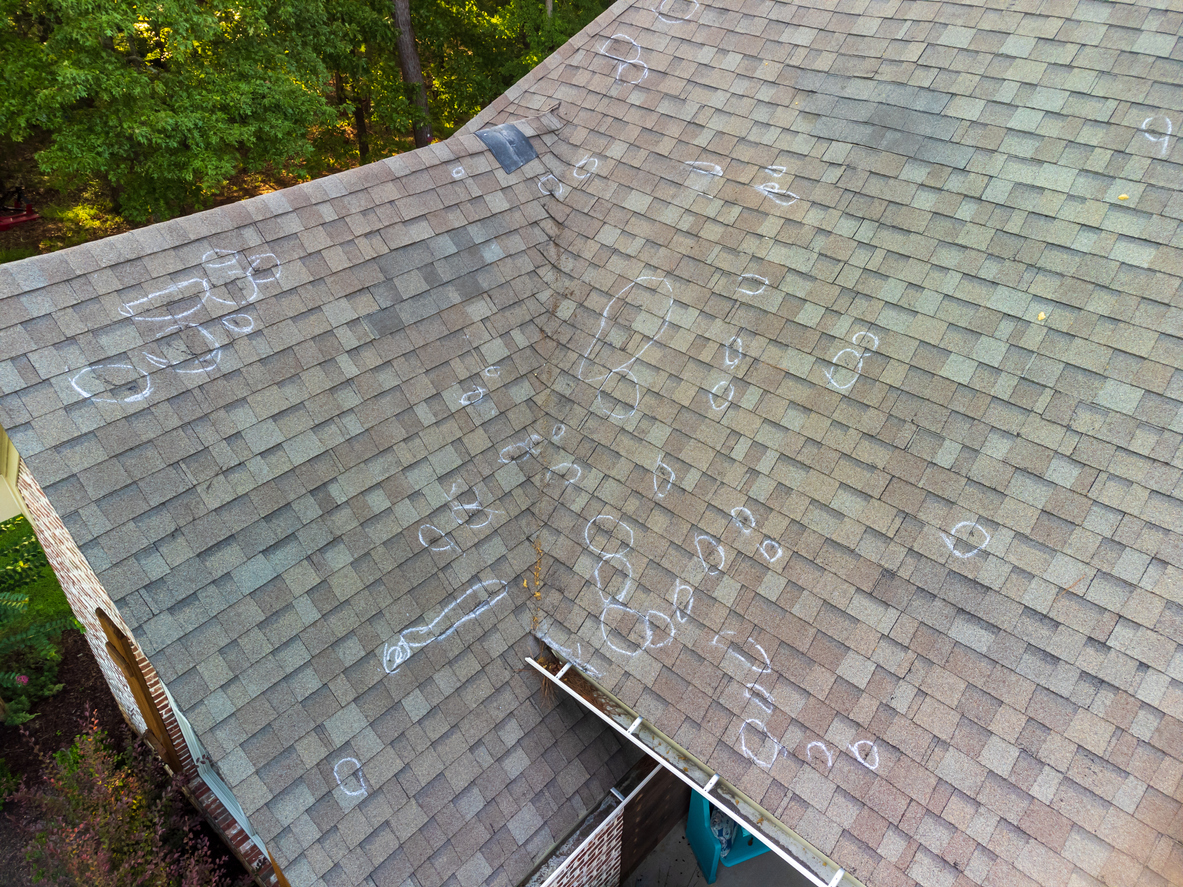
Roof with hail damage and markings from inspection

How To Properly Identify Hail Damage To Your Roof

It’s always a good idea to know how to identify hail damage on your roof, just in case you get hit by an unexpected hailstorm. The most common signs of hail damage are buckling shingles or tiles that have been popped off the roof and broken window panes. It’s also possible for there to be holes in the metal flashing around chimneys, vents, skylights, or pipes. If you see any of these signs on your home after a storm, it may be time to contact a professional to assess damages and repairs. Although hailstorms can be destructive, the amount of damage they cause can vary greatly depending on a number of important factors.

  • Hail Size and Density – The size of the hailstones can greatly affect the degree of damage to your property. A hailstone can be as small as a pea, or as large as a softball. Most hailstones do not have smooth edges, which can also impact the type of damage they cause.
  • Wind – The speed and direction of the wind during a hail event plays a role in how much, if any, damage will occur.
  • Building Materials – Different types of building materials absorb the impact of hail strikes differently. Hail can cause very noticeable dings and knicks in aluminum siding, gutters, or asphalt shingles, but can actually crack vinyl siding. Very large hail even has the ability to puncture a roof under certain circumstances.

What Does Hail Damage To A Roof Look Like?

What to look for when trying to identify hail damage to a roof varies depending on the type of shingles. Hail damage to composition shingles can look very different than hail damage on wood shingles. It’s important to understand the way different shingle materials absorb hail impacts so that you can accurately assess the damage to your roof should it occur. The most common types of shingles are asphalt and composition or wood shingles.

Asphalt and Composition Damage:

  • Hail hits that are black in color
  • Exposure of the roof felt due to the loss of granules
  • Hail hits that are soft to the touch
  • Asphalt that appears shiny

Wood Shingle Damage:

  • Splits in the shingle that are brown or orange in color
  • Splits in the shingle that have sharp corners and edges
  • Dents or impact marks along the splits


What Looks Like Hail Damage Might Not Be

It’s not always easy to identify hail damage on a roof. There is plenty of other damage to shingles that can occur naturally due to other types of weather events or even just the age of the roof. If you suspect your home has been damaged by a hailstorm, the best thing to do is contact your insurance company as soon as possible and potentially file a claim. You may also want to get a good professional to take a look.  If you do file a hail damage claim and it’s denied, contact us for a free case review.