
By Chad T. Wilson Law Firm Staff, based on reporting by ClickOrlando / WKMG News 6, November 5, 2026. Read the original reporting here.
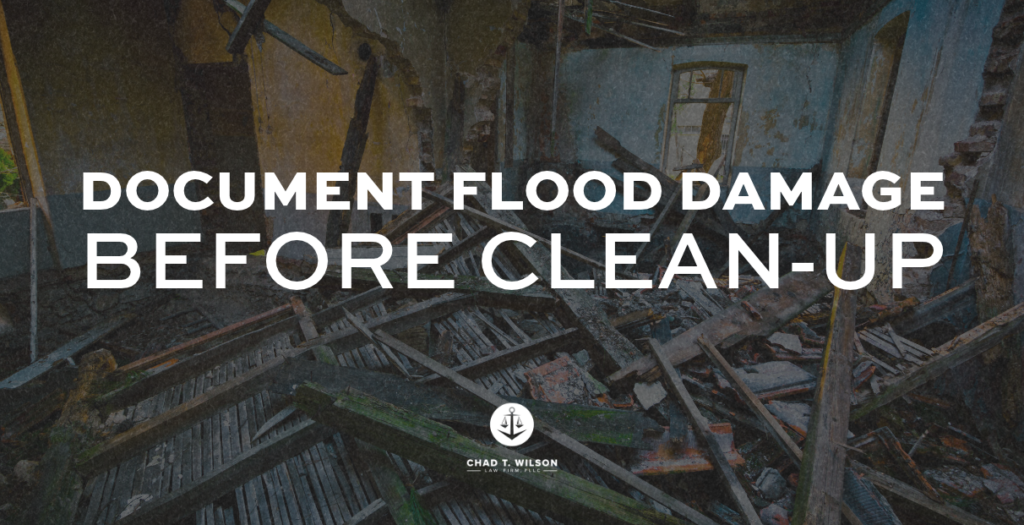
If floodwater reached your home in Brevard County, the cleanup cannot wait. Mud, soaked drywall, and ruined flooring have to go, and fast. Before any of it leaves the curb, take a little time to document flood damage before cleanup begins. Those photos and records can become the strongest proof you have when you file an insurance claim.
Historic rain fell across parts of southern Brevard on November 1 and 2, 2026. Some areas recorded more than 20 inches in about two days, and the National Weather Service described the event as extraordinarily rare. Governor Ron DeSantis declared a state of emergency on November 2, and the state later expanded that emergency to additional counties as the water spread.
On November 5, Brevard County opened a new online request portal that connects residents with volunteer organizations for flood cleanup. According to reporting, the volunteers may help remove mud, ruined furniture, wet flooring, and damp drywall. Households can submit one request, and the county asks residents to include photos of the damaged areas. County officials said the information will help connect residents with trusted partners for safe, effective cleanup. The help is free, but it is not guaranteed, since it depends on volunteer availability and identified need.
Here is the hard part. The moment wet drywall, flooring, furniture, and insulation leave your property, the physical proof of the loss leaves with them. An insurance adjuster may not inspect your home for days or even weeks, and by then the evidence could be gone. That is why it pays to document flood damage before cleanup crews or volunteers start hauling material to the curb.
Before anything is removed, try to capture:
One safety note. Do not hold on to unsafe or contaminated materials just to preserve evidence. Photograph them in place, then follow public health and local disposal instructions. A clear set of photos does the same job and keeps your family safe.
The danger is not over. As of this week, the St. Johns River near Cocoa was forecast to reach major flood stage, and levels are expected to stay high into next week. River flooding can create a second wave of damage after the initial rain flooding starts to recede. If your home takes on water twice, treat it as two separate events. Keep separate dates, separate high-water marks, and notes on which materials were already wet and which were newly soaked. Those details help your claim tell an accurate story.
Whether any of this is covered depends on your policy. Flood damage is often handled under a separate flood policy rather than a standard homeowners policy, so read your coverage carefully and ask questions in writing. Coverage is not guaranteed, and the specific language of your policy controls.
If you have already filed and the response feels wrong, slow down and protect your position:
At Chad T. Wilson Law Firm, we have resolved more than 6,000 property insurance claims for policyholders. From our headquarters in Webster, Texas, we represent homeowners and business owners across the country. If your flood loss turns into a fight over coverage or payment, our team can review your policy and take on your water damage claims from start to finish. As a property damage lawyer firm, we work on contingency, which means no recovery, no fee. Keep your records close, because they are the anchor of a strong claim. Denied, delayed, or underpaid? Call us at (833) 942-0678. We cannot stop the river, but we can keep your insurance company from unjustly shortchanging a claim you already paid for with your premiums.
This article is for general information only and is not legal advice. Coverage depends on the terms of your individual policy, and no outcome is guaranteed. Weather forecasts and emergency declarations can change, and any emergency order does not by itself create insurance coverage.
Sources: ClickOrlando / WKMG News 6, Weatherboy, Brevard County Storm Center